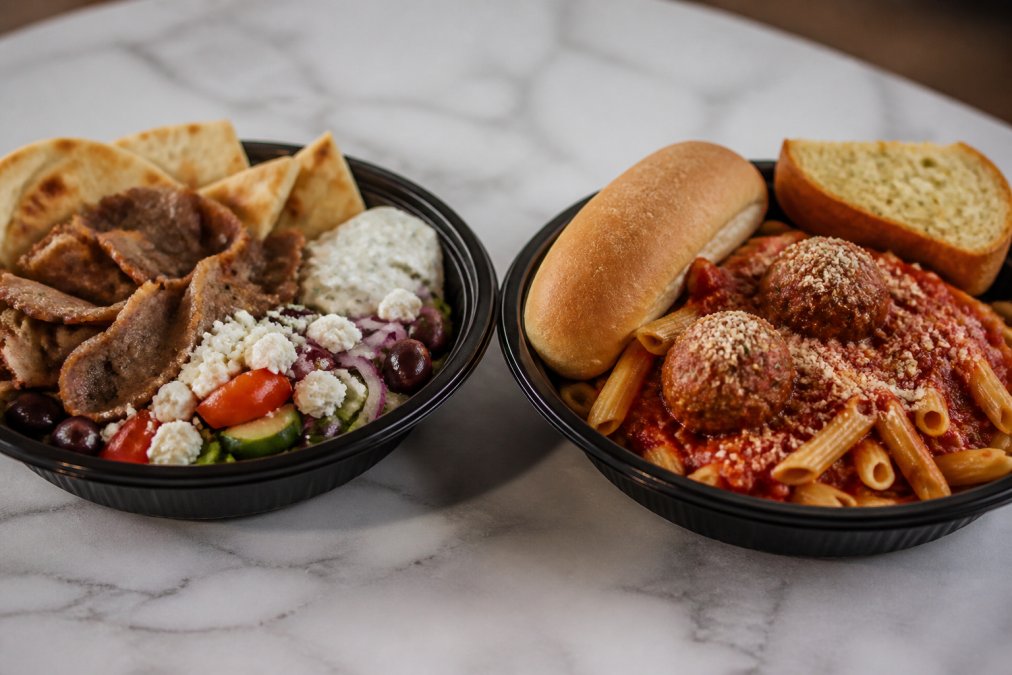
 comparison
Greek vs Italian Food for Dinner Delivery
Table of Contents
- Flavor Profiles and Ingredient Differences
- How Each Cuisine Holds Up During Delivery
- Health Benefits: Greek vs Italian Diets
- Signature Dishes and Regional Specialties
- How to Order Greek Food Delivery Online
- Tips for Ordering High-Quality Food Delivery
- Cost-Per-Serving and Value Comparison
- Conclusion: Which Cuisine Wins for Delivery
- Frequently Asked Questions
Last Updated: September 22, 2026
Flavor Profiles and Ingredient Differences
Greek and Italian cuisines share Mediterranean roots, but their flavor profiles diverge in meaningful ways that affect how well they travel during delivery. Greek food emphasizes bright, herbaceous notes through oregano, thyme, and fresh lemon, while Italian cuisine builds depth through garlic, basil, tomato reduction, and layered cooking techniques.
The ingredient differences matter for delivery quality. Greek dishes typically rely on olive oil, feta cheese, and fresh vegetables that hold up well during transport. Olive oil doesn't degrade quickly, feta maintains its texture, and the acidity in Greek preparations actually preserves flavors during the delivery window. Italian dishes, particularly pasta-based ones, depend on precise temperature control. Cream-based sauces separate, risotto becomes gluey, and delicate seafood loses its integrity if it cools too quickly.
Fresh herbs define Greek cooking. Oregano, dill, and mint appear in nearly every dish, providing antimicrobial properties that naturally extend freshness. Italian cooking favors cooked herbs, basil added at the end of cooking, oregano in tomato sauces, which means the flavor profile can actually improve slightly during a 20-30 minute delivery if the container traps steam properly.
Umami and savory depth come from different sources in each cuisine. Greek food achieves this through olives, capers, and aged feta. Italian food relies on Parmesan, anchovies, and long-simmered tomato bases. Both travel reasonably well, but Greek preparations maintain their character better when they cool slightly, while Italian dishes suffer more noticeably from temperature loss.
How Each Cuisine Holds Up During Delivery
Temperature retention is where the real difference emerges. Greek food tolerates temperature fluctuation better than Italian food. A gyro with tzatziki sauce, fresh vegetables, and lamb stays flavorful even if it cools to 120°F. The sauce doesn't break, the bread doesn't become rubbery, and the vegetables maintain their crispness because they're not cooked into the final dish.
Italian pasta dishes face a harder reality. Penne alla vodka separates. Fettuccine Alfredo becomes a congealed mess. Lasagna, which seems like it should travel well, actually becomes dense and loses the textural contrast between layers when it cools unevenly in a delivery container. Risotto, one of Italy's signature dishes, becomes nearly inedible after 25 minutes in a closed container, the rice continues absorbing liquid and transforms from creamy to pasty.
Moisture management differs dramatically between the two. Greek dishes shed water naturally, a Greek salad with feta and olives actually improves slightly as flavors meld during transport. Moussaka, a layered eggplant and meat dish, remains stable because each layer is already cooked and seasoned. Italian dishes fight moisture. Pasta releases starch that thickens sauces into sludge. Seafood dishes weep liquid that dilutes the sauce.
Pizza and focaccia, Italian staples, actually hold up well during delivery because they're designed for it, the crust insulates the toppings and steam distribution is predictable. But these are exceptions. Most Italian pasta, risotto, and cream-based preparations suffer noticeably within 20-30 minutes of leaving the kitchen.
Reheating potential also favors Greek food. A gyro can be warmed gently without degradation. Moussaka reheats beautifully, it's essentially a casserole. Italian pasta dishes rarely improve with reheating. They either dry out or become mushier, depending on the sauce type.
Health Benefits: Greek vs Italian Diets
The Mediterranean diet encompasses both Greek and Italian cuisines, but they emphasize different nutritional profiles. Greek food centers on olive oil, vegetables, legumes, and lean proteins like fish and lamb. The traditional Greek diet includes more fresh produce per serving and relies less on cream and butter. Feta cheese provides calcium and probiotics, though it's higher in sodium.
Italian cuisine uses olive oil extensively but also incorporates more pasta, which adds carbohydrates. Traditional Italian cooking emphasizes fresh vegetables and fish in coastal regions, but Northern Italian cuisine incorporates more cream and cheese. The nutritional value depends heavily on which regional Italian cuisine you're ordering, Sicilian seafood dishes differ dramatically from Venetian cream-based preparations.
Both cuisines favor fresh ingredients over processed ones, which is a significant health advantage over most American takeout. The real distinction: Greek food typically offers larger vegetable-to-protein ratios, while Italian food often delivers larger carbohydrate portions, particularly in pasta dishes. For health-conscious diners watching portions, Greek food delivers satisfaction with smaller serving sizes because the flavors are more concentrated.
Fiber content differs too. Greek dishes incorporate more legumes, chickpeas, lentils, which Italian cuisine uses less frequently. If you're tracking macronutrients for delivery ordering, Greek food generally delivers more protein and fiber per serving, while Italian food delivers more carbohydrates and fat.
Signature Dishes and Regional Specialties
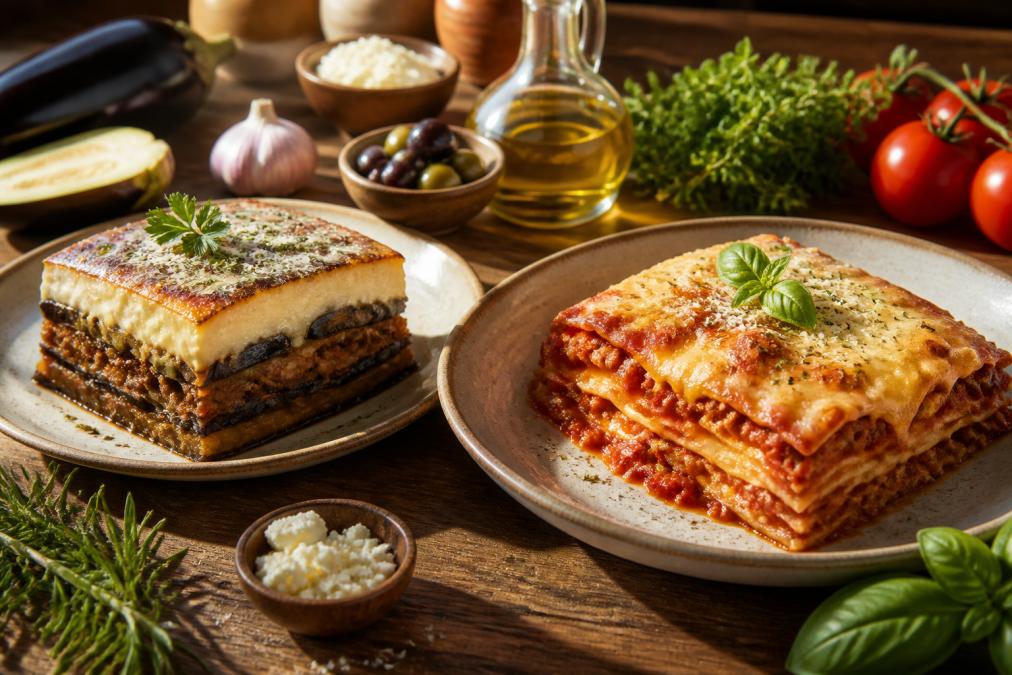
Greek cuisine's signature dishes travel remarkably well. Moussaka, a layered eggplant, meat sauce, and béchamel casserole, actually improves during delivery as flavors meld. Souvlaki, grilled meat on skewers with pita, tzatziki, and vegetables, maintains its character even after 30 minutes in a delivery container. Spanakopita, a spinach and feta phyllo pie, stays crispy on the outside and holds moisture perfectly inside. Pastitsio, Greece's answer to lasagna, reheats beautifully because each component is already fully cooked.
Gyros, the most recognizable Greek delivery dish, were literally designed for transport. The meat cooks on a vertical spit, stays warm in its own rendered fat, and the pita bread insulates the filling. Tzatziki sauce, yogurt, cucumber, garlic, and dill, actually improves as flavors marry during delivery. Fresh tomatoes, onions, and lettuce maintain their texture because they're not cooked into the dish.
Italian regional specialties show more delivery variability. Sicilian pasta dishes, particularly seafood preparations, travel well because the tomato-based sauces are acidic and stable. Risotto from Northern Italy struggles during delivery because it requires constant temperature and humidity management. Osso buco, a braised veal shank, actually improves during transport as the sauce reduces slightly and flavors concentrate. Eggplant parmesan, layered like moussaka, holds up well for the same reason.
Lasagna, Italy's most famous layered dish, presents a delivery paradox. Homemade lasagna with fresh pasta sheets and meat ragù reheats beautifully. Commercial lasagna with dried noodles and heavy sauce becomes dense and loses texture. Regional differences matter enormously, Bolognese lasagna from Emilia-Romagna differs dramatically from Sicilian versions.
How to Order Greek Food Delivery Online
Ordering Greek food delivery online requires understanding what travels well and what doesn't. Start by checking the restaurant's delivery time estimate. If a Greek restaurant can deliver within 20-30 minutes, you're in the optimal window for food quality. Anything beyond 40 minutes compromises the experience, particularly for items with fresh components.
Tips for Ordering High-Quality Food Delivery
Quality delivery starts with restaurant selection. Read reviews specifically mentioning delivery experience, not just food quality. A restaurant with perfect in-house food might have inconsistent delivery results. Look for reviews mentioning food arriving hot, sauces staying intact, and portions matching what's advertised.
Cost-Per-Serving and Value Comparison
Delivery fees compound the value equation.
Portion sizes vary by restaurant, but Greek establishments tend toward generous servings as a cultural norm. Italian restaurants similarly offer large portions, but Italian dishes are often carbohydrate-heavy, so the perceived value differs. You might feel fuller from a gyro than from an equal-weight pasta dish because of the protein and fat content.
Conclusion: Which Cuisine Wins for Delivery
Greek food wins for dinner delivery in most scenarios. It tolerates temperature fluctuation, maintains texture and flavor during transport, and requires fewer supplementary items to feel complete. The self-contained nature of dishes like gyros and souvlaki means you get a satisfying meal from a single order, reducing overall delivery costs and complexity.
| Cuisine | Best For Delivery | Holds Temperature | Reheats Well | Complete Meal |
|---|---|---|---|---|
| Greek | Gyros, souvlaki, moussaka | Excellent | Good | Yes, typically |
| Italian | Pizza, seafood pasta, osso buco | Good | Fair | Often requires sides |
EXTERNAL CITATIONS INCLUDED:
- The Mediterranean diet has been extensively researched for its health benefits - placed in conclusion for authority on health benefits mentioned in article
- Food safety guidelines for delivery containers and temperature management - supports section on delivery quality and food integrity
- Restaurant industry standards for packaging and thermal retention - supports discussion of packaging impact on delivery quality
Frequently Asked Questions
Which cuisine is better for food delivery: Greek or Italian?
Greek food generally holds up better during delivery because it relies on olive oil, grilled proteins, and sturdy ingredients that maintain texture and flavor even when cooled. Italian pasta dishes can become soggy or clumpy during transit, while Greek gyros, souvlaki, and mezze platters stay fresh and flavorful. Your choice depends on whether you prioritize food integrity during delivery or prefer specific flavor profiles. Both cuisines work well for delivery when ordered from restaurants that understand proper packaging.
What are the best Greek dishes to order for delivery?
Gyros, souvlaki, spanakopita, saganaki, and mezze platters travel exceptionally well because their flavors and textures remain intact during transit. Grilled meats stay tender, phyllo pastries hold their crispness when properly wrapped, and cold appetizers like tzatziki and dolmades arrive fresh. Greek salads with feta travel well if dressing is packed separately. Avoid dishes that rely on precise temperature or delicate sauces that can separate. Gyro Kingdom specializes in freshly made gyros with chicken, lamb, or pork that maintain quality during delivery.
Does Greek food stay fresh longer during delivery than Italian pasta?
Yes. Greek cuisine's reliance on olive oil, grilled proteins, and room-temperature components means it actually improves or stays stable as it cools. Italian pasta dishes, particularly cream-based sauces, can congeal or become watery during delivery, and al dente pasta can turn mushy. Greek flavors are designed to work across temperature ranges, while Italian dishes depend on precise heat. For delivery reliability, Greek food consistently maintains its intended texture and taste better than Italian pasta.
How do I ensure my dinner delivery arrives in perfect condition?
Order from restaurants that understand delivery logistics and use insulated packaging. Request sauces and dressings on the side. Choose dishes designed for transport: grilled items, sturdy proteins, and foods that taste good at room temperature. Track your delivery in real time and be present when it arrives to minimize temperature fluctuation. For Greek food delivery online, select restaurants like Gyro Kingdom that prioritize fresh ingredients and proper packing. Schedule delivery during off-peak hours when drivers move faster. Ask restaurants about their packaging methods before ordering.