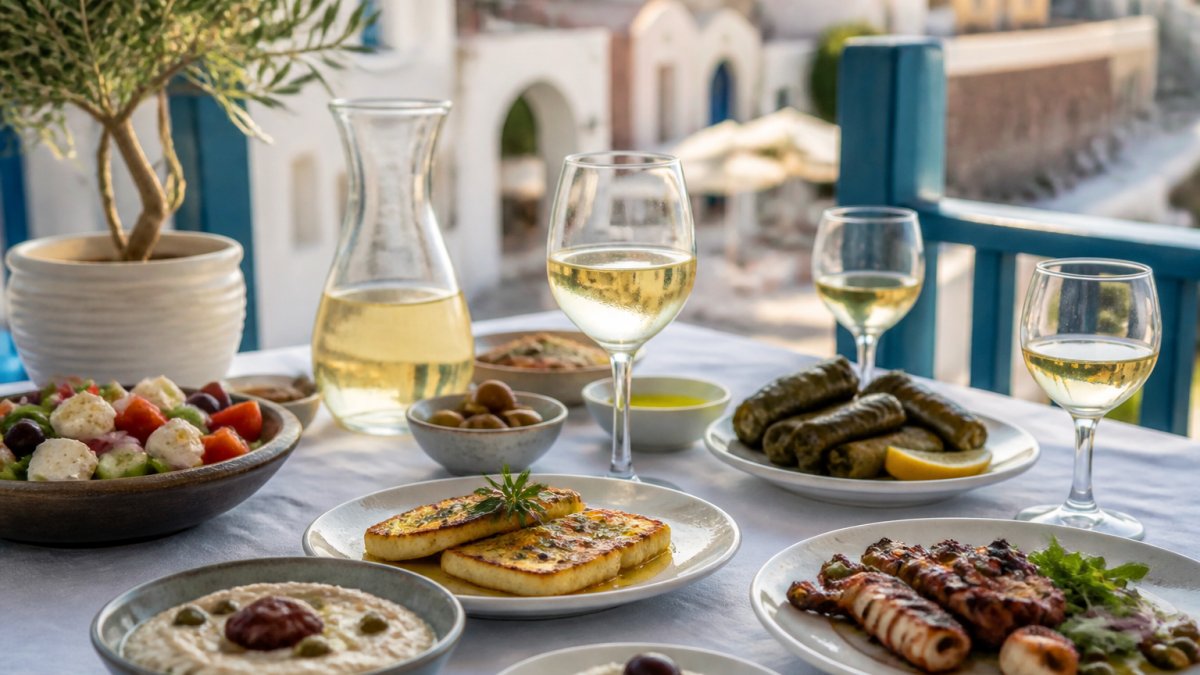
 ultimate-guide
Pairing Greek Wine With Traditional Dishes
Table of Contents
- Understanding Greek Wine Varietals for Beginners
- Pairing Greek Wine With Lamb Gyros and Meat Dishes
- Greek Wine Pairings With Seafood and Grilled Fish
- Wine and Mezze: Appetizers That Match Mediterranean Flavors
- The Role of Acidity and Terroir in Greek Wine Selection
- Greek Wine With Vegetarian and Plant-Based Mediterranean Dishes
- Regional Pairings: Santorini Wines Versus Nemea Selections
- Conclusion
- Frequently Asked Questions
Last Updated: September 27, 2026
Understanding Greek Wine Varietals for Beginners
Pairing Greek wine with traditional dishes starts with knowing the wines themselves. Greek viticulture produces distinctive varietals shaped by volcanic soils, sea breezes, and intense sunlight, creating mineral-driven wines with crisp acidity that distinguish them from other Mediterranean producers.
White Wines: Assyrtiko and Moschofilero
Assyrtiko stands as Greece's most versatile white wine for food pairing. This varietal thrives on volcanic islands like Santorini, where mineral-rich soils impart a briny, citrus-forward character. The wine typically displays stone fruit notes and a pronounced saline finish that cuts through rich dishes without overwhelming delicate flavors.
Moschofilero, grown in the Peloponnese region, offers floral aromatics and crisp acidity that work well with lighter seafood and vegetable-forward mezze. Both varietals share high acidity, making them natural partners for the Mediterranean diet's emphasis on olive oil, lemon, and fresh herbs.
Red Wines: Xinomavro and Agiorgitiko
Xinomavro, from Nemea and northern regions, is a full-bodied red with complex tannins and savory, herbal notes that pair well with lamb, grilled meats, and aged cheeses.
Agiorgitiko offers a more approachable red with medium body, smooth tannins, and dark fruit flavors with subtle smoky undertones, ideal for those new to Greek reds.
Pairing Greek Wine With Lamb Gyros and Meat Dishes
Lamb gyros demand a wine with enough structure to match their bold, seasoned profile and richness.
Xinomavro is the premier choice for lamb gyros and grilled meats, with savory character and herbal notes that echo Mediterranean seasonings. Its tannin structure cleanses the palate between bites without overwhelming the meal. This structural intensity makes the wine an ideal companion for various marinated grilled meats that benefit from a bold, acidic counterpoint.
For lighter meats like pork and chicken gyros, a young Agiorgitiko works well, with fruit-forward profile that complements poultry without heaviness. At Gyro Kingdom, our freshly made gyros showcase quality meat preparation.
Decanting younger reds for 30 minutes before serving softens tannins and opens aromatics, enhancing the pairing experience.
Greek Wine Pairings With Seafood and Grilled Fish
Seafood is the most natural pairing category for Greek wines, which evolved specifically to complement Mediterranean fish and shellfish preparations.
Assyrtiko stands unmatched for grilled fish and seafood, with briny minerality that mirrors ocean salinity and crisp acidity that cuts through olive oil-based preparations. Grilled octopus pairs exceptionally well with its stone fruit notes and clean finish.
For lighter seafood preparations like steamed or raw fish, Moschofilero provides an elegant alternative with floral character and natural acidity that enhances freshness.
A lighter Agiorgitiko pairs well with grilled swordfish or tuna, where the fish's meatier texture and smoky char align with the wine's profile.
Wine and Mezze: Appetizers That Match Mediterranean Flavors
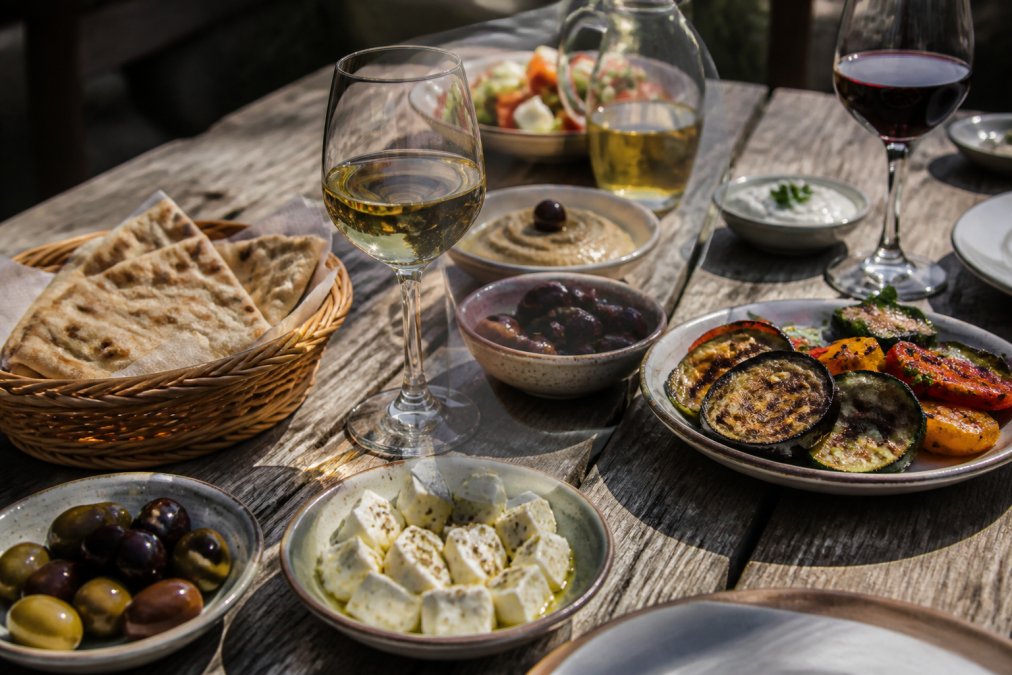
Mezze culture defines Greek dining, and wine pairing with these small plates requires wines with enough complexity to navigate the variety of salty, acidic, herbal, and rich flavors without fatigue.
Assyrtiko excels as a mezze wine, refreshing the palate between bites of salty feta, briny olives, and herb-forward dips. Its mineral character complements tzatziki and lemon-dressed vegetables, while citrus notes cut through fried cheese without overwhelming it.
For mezze platters featuring grilled vegetables and roasted peppers, Moschofilero provides excellent support, with subtle aromatics that enhance rather than mask delicate flavors. Both white varietals work across the entire mezze spectrum without requiring wine changes.
A lighter Agiorgitiko complements mezze featuring cured meats, aged cheeses, spiced meatballs, and richly flavored dips without dominating lighter elements.
The Role of Acidity and Terroir in Greek Wine Selection
Acidity forms the backbone of successful Greek wine pairing. Greek wines benefit from cool nights and variable growing conditions that preserve natural acid levels, which cleanse the palate between bites and prevent flatness alongside acidic ingredients like lemon and vinegar.
Terroir shapes each Greek wine's character and pairing success. Volcanic soils in Santorini produce mineral-driven whites with briny qualities, while the Peloponnese's limestone-rich soils create wines with different mineral expressions.
Mountain regions like Nemea experience temperature variations that develop complexity in red wines. Cool nights preserve acidity and prevent excessive alcohol, creating wines with structure and elegance.
When selecting wines for pairing, prioritize acidity level. High-acid wines work with acidic dishes featuring lemon, vinegar, or tomato. Medium-acid wines pair with neutral or slightly rich preparations.
Greek Wine With Vegetarian and Plant-Based Mediterranean Dishes
Plant-based Greek cuisine deserves equal attention in pairing discussions, particularly because Greek olive oil plays a dominant role in flavor development. Mediterranean vegetable preparations showcase how olive oil's richness and peppery finish interact with wine selection differently than meat or seafood pairings.
Understanding Olive Oil as a Pairing Variable
Greek cuisine relies on olive oil as a primary flavor component, with typical dishes containing 2-4 tablespoons per serving. Extra virgin olive oil adds peppery, grassy, or fruity notes depending on harvest timing, variables that directly influence wine compatibility.
Early-harvest olive oils display grassy, herbaceous character with peppery finish, pairing best with high-acid whites like Assyrtiko or Moschofilero. Late-harvest oils develop buttery, fruity character, pairing better with medium-acid wines like Agiorgitiko.
For olive oil-heavy dishes, prioritize acidity over fruit intensity. Seek wines with mineral-driven character that cuts through fat while adding complexity.
Specific Plant-Based Pairings With Olive Oil Considerations
Fava Dip (Yellow Split Pea Preparation): This traditional Santorini dish combines pureed yellow split peas with generous olive oil. Moschofilero excels here with floral notes and crisp acidity that brighten the dish. Assyrtiko works equally well, its briny minerality adding savory complexity.
Saganaki (Fried Cheese) with Olive Oil Drizzle: Assyrtiko's citrus notes cut through fried richness while its salinity complements cheese. Avoid fuller-bodied whites; their lower acidity makes the pairing feel heavy.
Roasted Vegetable Platters (Eggplant, Zucchini, Peppers): A light Agiorgitiko provides structure without heaviness, with dark fruit character that complements charred vegetable notes. Moschofilero's floral character and lighter body work well, particularly with fresh herbs.
Spanakopita (Spinach and Feta Pie) with Olive Oil Crust: Assyrtiko is the natural choice, with briny minerality that echoes feta's saltiness and acidity that cleanses the palate. Avoid light reds; they will seem thin alongside the pie's richness.
Lentil and Bean Dishes: Moschofilero works well with its floral notes adding complexity without briny intensity that might overwhelm earthy legumes. A light Agiorgitiko provides adequate structure while its fruit character complements the dish's earthiness.
Budget Considerations for Plant-Based Entertaining
Plant-based menus often feature multiple small dishes, making wine selection both more challenging and more economical. Rather than purchasing multiple bottles for different courses, select a single versatile wine that bridges multiple preparations. Moschofilero ($16-$26 for quality bottlings) offers the best versatility across plant-based dishes, its floral character and moderate acidity working across fava, roasted vegetables, and legume preparations without requiring course-by-course wine changes.
For budget-conscious entertaining, Moschofilero from smaller producers ($14-$20) delivers authentic character without premium pricing. Premium selections ($28-$40) offer greater complexity and aging potential, suitable for special occasions featuring extended plant-based menus.
Regional Pairings: Santorini Wines Versus Nemea Selections
Greek wine pairing reaches its highest expression when wines and dishes share the same regional origin. Centuries of culinary coevolution mean that local wines were developed specifically to complement local cuisine, a principle that transcends generic pairing rules.
Santorini: Volcanic Whites and Seafood-Centric Pairing
Santorini's unique volcanic terroir, pumice-rich soils, intense sun exposure, and sea-influenced breezes, produces Assyrtiko and Vinsanto wines with mineral profiles unmatched elsewhere in Greece. The island's signature white, Assyrtiko, develops 12.5-13.5% alcohol with pronounced salinity and citrus character, making it the natural partner for Santorini's seafood-dependent cuisine.
Specific Santorini pairings include grilled octopus with charred tentacles (Assyrtiko's briny minerality cuts through the char), raw sea urchin and oysters (the wine's saline finish mirrors the ocean), and fava dip made with local yellow split peas (the wine's stone fruit notes balance the legume's earthiness).
Nemea: Cool-Climate Reds and Meat-Forward Tradition
Nemea, located in the northern Peloponnese at elevations between 1,800 and 2,600 feet, produces Xinomavro and Agiorgitiko reds shaped by cooler nights and limestone-rich soils. The region's cooler microclimate (average growing season temperatures 5-7°F lower than lowland regions) preserves acidity while developing complex tannin structures. Xinomavro from Nemea typically reaches 12-13% alcohol with tannin levels comparable to Barolo or Bordeaux blends, making it Greece's most serious red wine.
Building Regional Menus and Mixed-Region Strategies
When planning a Greek-themed dinner, committing to a single region simplifies wine selection and creates thematic coherence. A Santorini menu naturally emphasizes seafood, light vegetables, and white wine throughout. A Nemea menu highlights meat dishes, aged cheeses, and red wine pairings.
Conclusion
Pairing Greek wine with traditional dishes transforms casual meals into memorable dining experiences. Understanding the fundamental characteristics of Greek varietals, Assyrtiko's mineral-driven acidity, Xinomavro's savory complexity, Moschofilero's floral elegance, and Agiorgitiko's approachable fruit, provides the foundation for successful pairings across the entire spectrum of Mediterranean cuisine.
Frequently Asked Questions
What Greek dishes pair best with Assyrtiko wine?
Assyrtiko, a mineral-driven white wine from Santorini, pairs exceptionally well with seafood, grilled fish, and briny appetizers like saganaki (fried cheese). Its crisp acidity and citrus notes cut through rich dishes and complement the fresh Mediterranean flavors found in traditional Greek cuisine. It also works beautifully with lighter mezze selections and tzatziki-based dishes.
Does red or white wine go better with lamb gyros?
Red wine is the superior choice for lamb gyros. Xinomavro and Agiorgitiko offer the tannin structure and savory depth needed to stand up to lamb's richness. Xinomavro's herbal notes and full-bodied character complement the spices in gyro meat, while Agiorgitiko provides a smoother finish. White wines lack the body to balance lamb's intensity.
What are the most popular Greek wine varietals for beginners?
Start with Assyrtiko for white wines, it's approachable, versatile, and pairs with most Greek dishes. For reds, Agiorgitiko is more forgiving than Xinomavro and offers fruit-forward flavors that don't require much wine knowledge. Moschofilero is another excellent white option with floral notes that appeal to newcomers. These varietals represent Greek terroir without overwhelming complexity.
How does Greek olive oil influence wine pairing choices?
Greek olive oil's bold, peppery finish affects wine selection significantly. High-quality extra virgin olive oil adds savory, herbal layers to dishes, requiring wines with comparable acidity and structure. Crisp white wines like Assyrtiko or full-bodied reds like Xinomavro cut through the oil's richness. Lighter wines may be overpowered, making oil-heavy dishes better suited to wines with mineral-driven or smoky characteristics.