 listicle
Simple Greek Dessert Recipes for Beginners: 7 Easy Sweets
Table of Contents
- Essential Ingredients and Equipment for Simple Greek Dessert Recipes
- How to Make Rizogalo: Creamy Greek Rice Pudding Step by Step
- No-Bake Greek Dessert Recipes: Easy Treats Without an Oven
- Quick Greek Dessert Ideas: Ready in Under 30 Minutes
- Semolina and Custard Classics: Galaktoboureko, Halva, and More
- Tips for Working with Phyllo Dough and Troubleshooting Common Issues
- Make-Ahead, Storage, and Dietary Adaptations for Greek Desserts
- Frequently Asked Questions
Last Updated: September 26, 2026
Essential Ingredients and Equipment for Simple Greek Dessert Recipes
Simple Greek dessert recipes for beginners start with a short list of pantry staples: semolina, phyllo dough, eggs, sugar, milk, butter, and citrus. Master those and most classic Greek sweets become reachable in a single afternoon.
Greek baking leans on simple ingredients and repeatable technique, not fancy equipment.
Here is what to keep on hand before you start:
- Fine semolina for halva, galaktoboureko, and revani
- Frozen phyllo dough (thawed overnight in the fridge)
- Whole milk and eggs for custard-based desserts
- Granulated sugar and honey for syrup and drizzles
- Unsalted butter for brushing phyllo layers
- Citrus zest from oranges and lemons
- Ground cinnamon and cloves for aroma
- A whisk, a heavy saucepan, and a rimmed baking sheet
Equipment matters less than people think.
How to Make Rizogalo: Creamy Greek Rice Pudding Step by Step
Rizogalo is a creamy Greek rice pudding made by simmering short-grain rice in milk, thickening it with a cornstarch slurry, and finishing it with sugar, vanilla, and citrus zest. The whole process takes about 35 minutes, and it is one of the most forgiving desserts a beginner can make.
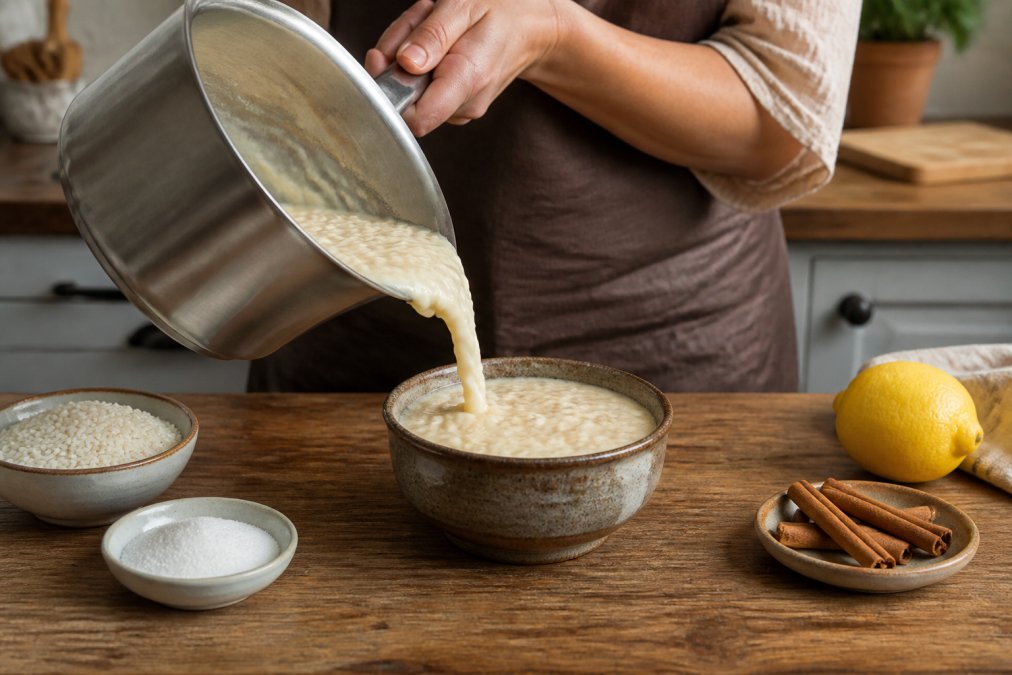
Here is the sequence that works:
- Rinse 1/2 cup short-grain rice under cold water until the water runs clear.
- Simmer the rice in 2 cups water for 10 minutes, until softened.
- Add 4 cups whole milk, 1/2 cup sugar, and a pinch of salt. Stir constantly over medium-low heat.
- Whisk 2 tablespoons cornstarch into 1/4 cup cold milk, then stream it into the pot.
- Cook 8-10 minutes more, stirring, until the mixture coats the back of a spoon.
- Off heat, stir in 1 teaspoon vanilla, 1 teaspoon orange zest, and 1 tablespoon butter.
- Pour into bowls and dust with cinnamon once cooled.
Key Steps for Silky Rizogalo
The two steps that decide your texture are the cornstarch slurry and the stirring. Add the slurry to cold liquid before it hits the pot, or it clumps instantly. Then keep the spoon moving, because milk scorches fast at the bottom of a saucepan.
No-Bake Greek Dessert Recipes: Easy Treats Without an Oven
No-bake Greek dessert recipes rely on chilling and assembly rather than baking, which makes them ideal when your oven is occupied or the weather is too warm to turn it on. Two classics lead the category: Greek Napoleon cake and frigania.
No-Bake Greek Napoleon Cake
This simplified take on mille-feuille layers store-bought puff pastry or graham-style crackers with a whipped cream and custard filling, then chills for several hours. The layers soften into a cake-like texture overnight, which is exactly what you want.
Frigania: 15-Minute No-Bake Dessert
Frigania is a chilled Greek dessert built from layers of soaked rusks or biscuits, vanilla custard, and whipped cream, traditionally finished with a drizzle of honey and toasted nuts. Prep takes about 15 minutes, then it chills while you eat dinner.
Quick Greek Dessert Ideas: Ready in Under 30 Minutes
Quick Greek dessert ideas lean on syrup, citrus, and store-bought pastry so you can go from craving to plate in half an hour. Portokalopita is the best example.
Portokalopita (Orange Phyllo Cake)
Portokalopita is a syrup-soaked orange cake made with shredded phyllo, yogurt, eggs, and plenty of orange zest, then drenched in a warm citrus syrup. Because the phyllo is torn rather than layered, there is no delicate handling involved.
Semolina and Custard Classics: Galaktoboureko, Halva, and More
Semolina and custard form the backbone of the most traditional Greek desserts. Both ingredients are inexpensive, shelf-stable, and forgiving, which is why they appear in so many family recipes.
Galaktoboureko: Custard in Crispy Phyllo
Galaktoboureko is a baked custard pie wrapped in buttered phyllo and finished with a lemon syrup. The custard sets firm enough to slice, and the phyllo stays crisp underneath the syrup if you pour the syrup at the right moment.
| Dessert | Main Ingredient | Oven Needed | Active Time | Best For |
|---|---|---|---|---|
| Rizogalo | Rice and milk | No | 35 min | First-time bakers |
| Frigania | Custard and biscuits | No | 15 min | Hot-weather gatherings |
| Portokalopita | Phyllo and orange | Yes | 30 min | Citrus lovers |
| Galaktoboureko | Semolina custard | Yes | 50 min | Special occasions |
| Halva | Semolina | No | 20 min | Pantry-only nights |
Tips for Working with Phyllo Dough and Troubleshooting Common Issues
Phyllo dough is the ingredient that intimidates beginners most, and the fear is understandable. The sheets tear, dry out, and stick together if you look at them wrong. A few habits prevent nearly every problem, and knowing how to diagnose the ones that still happen is what separates a stressful first attempt from a repeatable one.
Setup Habits That Prevent Most Failures
- Keep unused sheets under a lightly damp towel (not wet, a wet towel makes them gummy) while you work
- Brush melted butter, not cold butter, between layers; cold butter rips the sheets
- Work quickly and accept small tears, since they disappear in the bake
- Never refreeze thawed phyllo, the ice crystals that form on the second freeze shred the gluten structure
- Use a sharp knife and cut before baking for clean slices
- Count your layers before you start; most beginner recipes want 6-10 sheets per side, and running out mid-assembly is the most common panic moment
Troubleshooting: What Went Wrong and How to Fix It
Soggy bottom on galaktoboureko or portokalopita. This almost always means the syrup went on at the wrong temperature. The rule is hot syrup over a hot (just-out-of-the-oven) cake, or cooled syrup over a cooled cake, never mix temperatures. If the bottom is already soggy, slice and serve within a day; it will not recover.
Make-Ahead, Storage, and Dietary Adaptations for Greek Desserts
Storage behavior varies sharply by dessert type, and knowing which category you are dealing with prevents most waste. Syrup-soaked desserts keep far better than custard-based ones, and the make-ahead window is different for each.
Storage by Dessert Type
- Syrup-soaked cakes and phyllo pastries (portokalopita, galaktoboureko): room temperature, covered, 3-4 days. Refrigeration makes the phyllo soggy, so only refrigerate if you live somewhere humid or the dessert contains a perishable custard.
- Custard desserts (rizogalo, galaktoboureko custard): refrigerate, covered, up to 3 days. Press plastic wrap directly onto the surface of rizogalo to prevent a skin from forming.
- No-bake layered desserts (frigania, Napoleon cake): refrigerate, covered, 2-3 days. These actually improve on day two as the layers soften.
- Semolina halva: refrigerate, up to 1 week. It slices cleanly cold and is arguably better the next day.
Make-Ahead Timeline for Hosting
If you are cooking for a gathering, the order matters more than the recipes themselves.
- Two to three days ahead: make halva. It holds, slices clean, and frees up stovetop space.
- One day ahead: assemble galaktoboureko unbaked, cover tightly, and refrigerate. Bake it fresh the day you serve. Assemble frigania and let it chill overnight, the layers need the time.
- Day of, morning: make rizogalo. It needs at least 4 hours to chill and thicken properly.
- Day of, one hour before serving: bake portokalopita and pour the syrup while both are still warm.
Dietary Adaptations That Actually Work
Most traditional Greek desserts were not built for dietary restrictions, but several swaps hold up without wrecking texture. The key is knowing which ones change the result and which ones do not.
USDA FoodSafety.gov guidance on refrigerating and storing prepared foods
Frequently Asked Questions
What is the easiest Greek dessert for a beginner to make?
Rizogalo (Greek rice pudding) is one of the easiest because it uses simple ingredients like rice, milk, sugar, and cinnamon. You just simmer and stir, no baking required. Another great option is a no-bake Greek Napoleon cake using store-bought puff pastry or phyllo. Both are forgiving and let you practice without pressure. Start with these simple Greek dessert recipes for beginners to build confidence.
Do I need special equipment to make Greek desserts?
Most Greek desserts need only basic kitchen tools: a whisk, saucepan, baking sheet, and mixing bowls. For phyllo-based recipes, a pastry brush helps apply butter or oil evenly. A stand mixer is nice for whipped cream but not required. If you are making rizogalo or no-bake desserts, you can skip the oven entirely. Start with simple recipes and add tools as you go.
How do I keep phyllo dough from tearing or drying out?
Phyllo dries out quickly, so keep unused sheets covered with a damp towel or plastic wrap while you work. Work on a clean, dry surface and brush each sheet with melted butter or oil before layering. If a sheet tears, just patch it; the layers will hide small imperfections. For beginners, recipes like galaktoboureko or portokalopita are more forgiving than intricate shapes.
Can I make Greek desserts ahead of time and store them?
Yes, many Greek desserts store well. Custard-based desserts like galaktoboureko should be refrigerated and eaten within 2 days for best texture. No-bake desserts like frigania often taste better the next day as flavors meld. Always cool completely before storing to avoid sogginess.