 listicle
Why Choose Mediterranean Food for Catering
Table of Contents
- Why Mediterranean Food Works for Any Event
- Health Benefits That Guests Actually Notice
- Mediterranean Catering Menu Ideas for Every Occasion
- Accommodating Dietary Restrictions With Mediterranean Catering
- Buffet vs. Plated Service: What Works Best
- Fresh Ingredients and Seasonal Sourcing
- The Logistics That Make Mediterranean Catering Easy
- Conclusion
- Frequently Asked Questions
Last Updated: September 23, 2026
Why Mediterranean Food Works for Any Event
When you're planning an event, the menu becomes the centerpiece of the guest experience. Why choose Mediterranean food for catering? It's simple: Mediterranean cuisine delivers on every front that matters for events, health-conscious options, dietary flexibility, visual appeal, and logistical ease all in one approach.
Mediterranean food has become the go-to choice for event planners who want to impress without overcomplicating things. The approach centers on fresh ingredients, plant-forward dishes, and lean proteins that work for nearly every dietary preference. Whether you're hosting a corporate lunch, family celebration, or community gathering, Mediterranean catering adapts to your needs.

Authentic Mediterranean food, freshly prepared gyros, traditional Greek dishes, and wholesome sides, gives your guests a memorable experience without requiring them to compromise on taste or nutrition.
The real advantage goes deeper than just flavor. Mediterranean catering solves three problems that plague event planners: satisfying diverse dietary needs, managing logistics efficiently, and delivering food that looks and tastes exceptional. Most other cuisines force you to choose between one or two of these. Mediterranean gives you all three.
Health Benefits That Guests Actually Notice
Your guests care about what they eat. Mediterranean cuisine aligns with how most people want to eat today, nutrient-dense, anti-inflammatory, and genuinely satisfying.
The Mediterranean diet has earned recognition for supporting heart health and overall wellness. Dishes built on olive oil, legumes, whole grains, and lean proteins create meals that leave guests feeling energized rather than sluggish. This matters especially for corporate events where afternoon productivity matters or family gatherings where you want people comfortable and engaged.
Fresh vegetables, grilled fish and poultry, and fiber-rich legumes form the foundation of Mediterranean catering. These aren't health-food compromises, they're the actual foundation of Mediterranean culinary tradition. Guests get real flavor alongside real nutrition.
The anti-inflammatory properties of olive oil and the heart-healthy fats in fish and nuts mean your menu supports long-term wellness, not just the event itself. When guests notice they feel good after eating, they remember your event positively.
Mediterranean Catering Menu Ideas for Every Occasion
Building a Mediterranean catering menu means thinking about variety without complexity. The cuisine naturally accommodates different tastes and dietary needs through its core ingredients and preparation methods.
A strong Mediterranean catering menu includes multiple protein options: grilled chicken, lamb, beef, or seafood prepared simply to highlight quality ingredients. Add vegetable-forward sides like roasted seasonal produce, fresh salads with olive oil vinaigrette, and legume-based dishes. Include bread, rice, or whole grain options. Finish with fresh fruit or traditional Mediterranean desserts.
For corporate events, focus on items that travel well and don't require constant temperature management. Grilled proteins, room-temperature salads, and hearty grain dishes work better than delicate preparations. For family celebrations, you can incorporate warmer items and more elaborate presentations.
The key is offering enough variety that every guest finds something appealing. Mediterranean cuisine makes this easy because the flavor profiles work across different dietary approaches, vegetarian guests find plenty of options in the vegetable and legume dishes, while meat-eaters get quality proteins prepared with Mediterranean techniques.
Accommodating Dietary Restrictions With Mediterranean Catering
One of the biggest advantages of Mediterranean catering is built-in flexibility for dietary restrictions. The cuisine doesn't depend on any single ingredient, it's a philosophy of cooking with fresh, wholesome foods.
Vegetarian and vegan guests find abundant options in Mediterranean menus. Legumes like chickpeas and lentils provide protein and satisfy plant-based diets. Roasted vegetables, grain-based salads, and olive oil-based dressings create complete meals without meat. Gluten-free guests can focus on grilled proteins, vegetables, and rice-based dishes while skipping bread. Dairy-free options come naturally since Mediterranean cooking uses olive oil as its primary fat source.
Guests with specific allergies, nuts, shellfish, or others, can be accommodated through simple menu adjustments. The Mediterranean approach doesn't rely on hidden ingredients or complex sauces that might contain allergens. Everything stays visible and simple.
When you're planning catering for a diverse group, Mediterranean food removes the stress of managing conflicting dietary needs. You're not trying to force one cuisine to work for everyone. Mediterranean naturally works for everyone.
Buffet vs. Plated Service: What Works Best
The logistics of how you serve matter as much as what you serve. Mediterranean catering works beautifully in both buffet and plated formats, but each serves different event types.
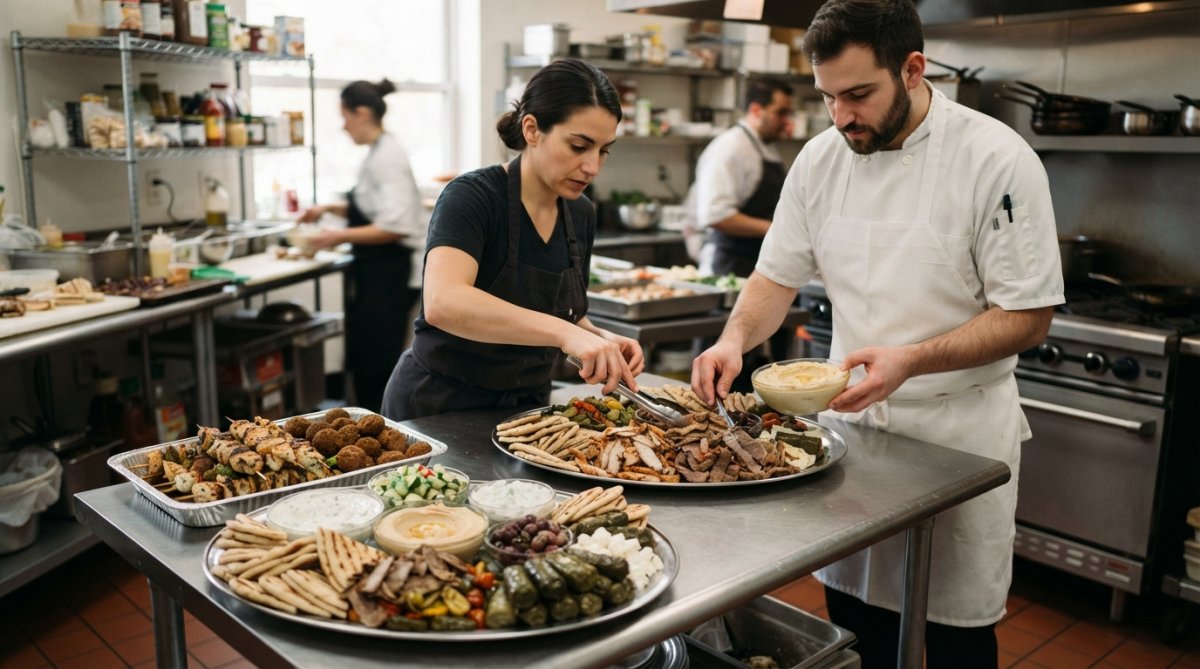
Buffet service suits larger events and casual gatherings. Guests control portion sizes and can try multiple items. Mediterranean buffets look visually stunning, colorful vegetables, golden-grilled proteins, and fresh herbs create an appealing display that encourages guests to eat well. Buffet service also requires less staff and works better for events where guests arrive at staggered times.
Plated service works best for formal events, smaller dinners, or situations where you want to control portions and presentation. Mediterranean plated meals look elegant, a piece of grilled protein, seasonal vegetables, and grain arranged thoughtfully on the plate. This format works well for corporate dinners or milestone celebrations where presentation matters.
The choice depends on your event size, formality level, and logistics. Buffet handles larger groups more efficiently. Plated service creates a more curated experience and works better for intimate gatherings.
Fresh Ingredients and Seasonal Sourcing
Mediterranean catering stands out because it celebrates fresh, seasonal ingredients rather than fighting against them. This approach keeps food flavorful, supports sustainability, and often reduces costs compared to sourcing out-of-season items. More importantly, it delivers measurable environmental benefits that matter to event planners managing corporate sustainability goals.
Seasonal sourcing means your menu changes throughout the year. Spring features fresh greens and lighter preparations. Summer brings tomatoes, zucchini, and grilled items. Fall offers heartier vegetables and grain-based dishes. Winter emphasizes storage crops and warming preparations. This natural rhythm keeps the menu interesting and the food at peak flavor.
But the sustainability advantage runs deeper. Plant-forward Mediterranean menus, heavy on vegetables, legumes, and whole grains with smaller portions of protein, carry a significantly lower carbon footprint than meat-centric cuisines. A Mediterranean catering menu that emphasizes these ingredients naturally aligns with corporate environmental commitments without requiring special requests or premium pricing.
Local and regional sourcing amplifies this benefit. Mediterranean cuisine thrives on ingredients that grow well in temperate climates across much of the country, tomatoes, olives, herbs, legumes, and stone fruits. A caterer sourcing these items regionally rather than importing them year-round reduces transportation emissions. When you work with a Mediterranean caterer committed to seasonal menus, you're automatically reducing your event's environmental footprint compared to cuisines that demand consistent access to specialty or imported ingredients.
Quality ingredients matter more in Mediterranean cooking than in cuisines that rely on complex sauces or heavy preparation. A tomato salad is only as good as the tomatoes. Grilled fish depends on fish quality. Olive oil becomes a star ingredient.
The Logistics That Make Mediterranean Catering Easy
Event planning involves countless details. Mediterranean catering simplifies the logistics side in ways other cuisines struggle with, and does so across multiple budget tiers without sacrificing quality.
Budget Flexibility Without Compromising Quality
| Logistics Factor | Mediterranean Advantage |
|---|---|
| Advance preparation | Most items prepared ahead; minimal on-site cooking |
| Temperature management | Many dishes taste excellent at room temperature |
| Portion flexibility | Easy to scale quantities without changing menu |
| Serving format options | Works equally well buffet, plated, or family-style |
| Staff requirements | Straightforward service; no complex plating needed |
| Transport stability | Grilled proteins and salads travel well |
| Budget scalability | Maintains quality across $15-$45 per-person range |
| Equipment needs | No specialized kitchen equipment required on-site |
Conclusion
Choosing Mediterranean food for your next event means choosing a cuisine that delivers on health, flexibility, logistics, and genuine flavor. The approach works for corporate gatherings, family celebrations, casual events, or formal dinners. Your guests get wholesome, delicious food. You get simplified planning.
Frequently Asked Questions
What makes Mediterranean food unique for catering?
Mediterranean catering centers on fresh, nutrient-dense ingredients like olive oil, legumes, whole grains, and lean proteins that require minimal preparation and pair naturally with sharing plates. This style accommodates diverse dietary restrictions, vegetarian, gluten-free, and plant-forward diets fit seamlessly into the same menu. The flavor profiles are bold and satisfying without heavy sauces, meaning your guests feel energized rather than sluggish after eating. The culinary tradition emphasizes quality ingredients over complex cooking, making buffet and plated service equally impressive.
How does Mediterranean catering handle dietary restrictions?
Mediterranean cuisine is inherently inclusive. Vegetarian guests can build full meals from hummus, falafel, roasted vegetables, legumes, and whole grain sides. Gluten-free diners have grilled proteins, salads, and vegetable dishes without modification. Those watching portions find nutrient-dense options that satisfy without excess. The plant-forward nature means vegan guests aren't eating a separate menu, they're eating the same celebrated dishes. Most Mediterranean caterers, including those offering authentic Greek preparations, design menus where dietary customization feels natural, not like an afterthought.
What's the difference between buffet and plated Mediterranean catering?
Buffet service works well for casual events and lets guests customize portions and flavor combinations from sharing plates of appetizers, grilled items, and sides. It's cost-effective and creates a relaxed, social atmosphere. Plated service suits formal events and corporate gatherings, the caterer controls portions, presentation, and timing, reducing guest wait times. Mediterranean food looks equally striking plated or buffet-style because of its natural colors and textures. Choose buffet for flexibility and guest interaction; choose plated for polish and efficiency.
Why is Mediterranean catering more expensive than other options?
Authentic Mediterranean catering relies on fresh, high-quality ingredients sourced for peak flavor and nutrition, not frozen or pre-made components. Fresh vegetables, quality olive oil, lean proteins, and whole grains cost more than processed alternatives. The culinary expertise required to balance flavors and prepare items fresh for your event adds value. You're paying for ingredients that deliver both taste and health benefits, plus reliable service and presentation that make your event memorable. Pricing depends on quantity, dates, and delivery; contact your caterer for a specific quote.