 listicle
Best Greek Appetizers for Office Lunches
Table of Contents
- Best Greek Appetizers for Office Lunches: A Practical Guide
- Dips and Spreads That Travel Well
- Spinach and Feta Pastries for a Crowd
- Building Your Greek Meze Platter
- Vegetarian Greek Appetizers That Satisfy
- Greek Catering for Office Lunch: What to Order
- No-Mess, No-Utensil Choices for Busy Offices
- Frequently Asked Questions
Last Updated: October 21, 2026
Best Greek Appetizers for Office Lunches: A Practical Guide
Planning an office lunch around Greek appetizers transforms a routine meal into something memorable. The beauty of Greek cuisine lies in its simplicity and portability, flavors that travel well, dishes that don't require constant refrigeration, and options that satisfy everyone at the table.
At Gyro Kingdom, we understand what makes an office lunch work: food that tastes fresh, holds up during transport, and doesn't leave your desk looking like a disaster zone. Greek appetizers check all these boxes. Below, we'll walk you through the appetizers that actually work in an office setting, plus the practical details that separate a successful lunch from a forgettable one.
Dips and Spreads That Travel Well
Dips are the backbone of any Greek appetizer spread. They're portable, shareable, and they buy you time while people settle in. The key is choosing dips that don't separate, don't require constant stirring, and actually taste better after sitting for an hour.
Tzatziki: Cool, Tangy, and Mess-Free
Tzatziki is the most forgiving Greek dip for office settings. Made from Greek yogurt, cucumber, garlic, and dill, it's cool, tangy, and stays stable throughout the day.
Transport it in a sealed container and keep it on the side of your spread until people are ready to eat. Pair it with pita bread, vegetables, or use it as a dip for grilled meats if you're adding protein.
One practical note: tzatziki works best when made a few hours ahead. The flavors need time to develop, and the cold temperature keeps it fresh without refrigeration for 2-3 hours in a standard office environment.
Spicy Feta (Tirokafteri) and Skordalia
Spicy feta brings heat and richness to the table. It's feta blended with roasted red peppers and a touch of heat, bold enough to stand out but not so aggressive that it dominates the spread.
Both travel exceptionally well. They're thicker than tzatziki, which means less risk of spilling in a bag or on your desk.
Make these the day before if possible. They taste better after sitting overnight, and you'll have one less thing to worry about on lunch day. Store in airtight containers and they'll hold their character for a full workday.
Spinach and Feta Pastries for a Crowd
Pastries are where Greek appetizers become memorable. Phyllo-wrapped spinach and feta (spanakopita) is the classic, but the smaller versions (spanakopitakia) are better for office settings. They're individual bites, not slices you have to cut and plate.
Spanakopita and Spanakopitakia
Spanakopita is spinach and feta wrapped in crispy phyllo. The traditional version is a large pie you cut into squares; spanakopitakia are small triangular pastries, one or two bites each. For office lunches, spanakopitakia wins every time.
The phyllo stays crisp for hours at room temperature, and the filling holds its temperature well. Spinach and feta don't require refrigeration the way cream-based fillings do, which matters when your office kitchen is already packed with leftovers.
These can be made fresh the morning of, or baked and reheated gently before serving. Either way, they're one of the few warm appetizers that actually improve the office lunch experience instead of becoming a logistical headache.
Make-Ahead Timing and Storage
Here's where spanakopitakia become indispensable for office planning: they can be assembled 1-2 days ahead and frozen, then baked fresh the morning of your lunch. Bake them at 375°F for about 20 minutes until golden. They'll stay warm for 1-2 hours and taste nearly as good at room temperature.
If you're buying rather than making, most Greek restaurants and catering services offer spanakopitakia by the dozen. Order them baked and ready to go. They travel well in a standard container and don't require any setup beyond placing them on a plate.
| Timing | Task | Notes |
|---|---|---|
| 2 days before | Assemble and freeze | Can hold frozen up to 1 week |
| Morning of | Bake fresh | 20 minutes at 375°F |
| 1-2 hours before | Transport to office | Stays warm in insulated container |
| At lunch | Serve room temperature | Taste is still excellent |
Building Your Greek Meze Platter
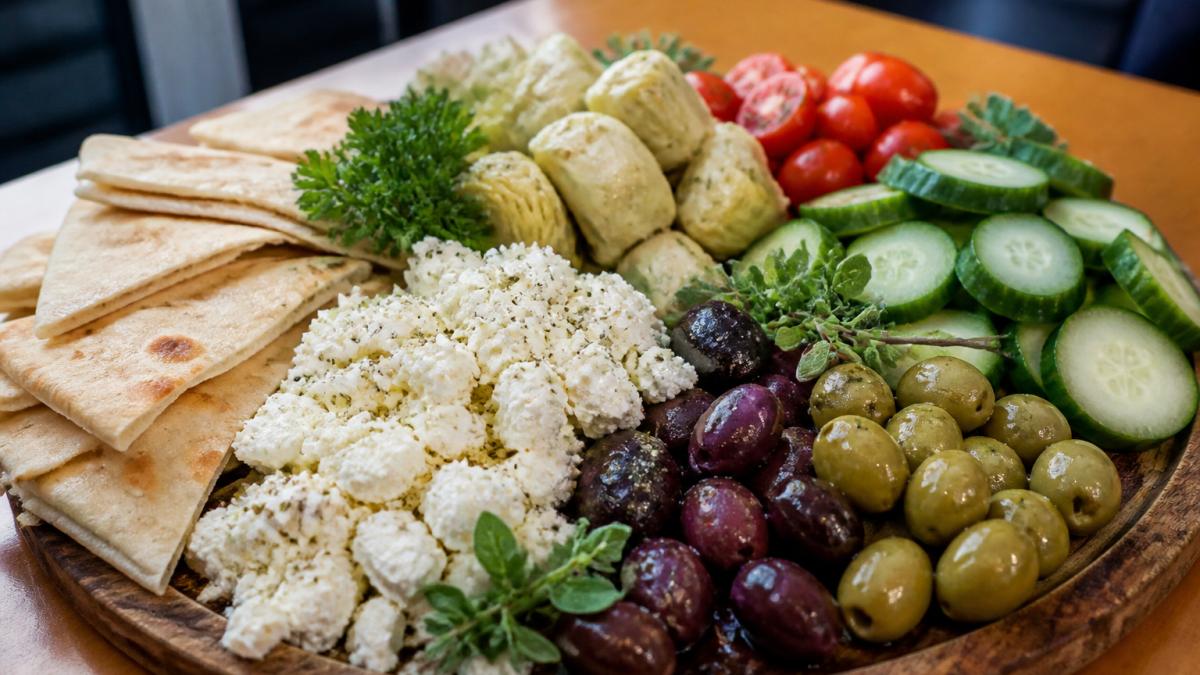
A meze platter is the easiest way to create a Greek appetizer spread without cooking. Meze means "small bites" in Greek, a collection of cheeses, olives, vegetables, and bread arranged for sharing. The beauty is that everything can be prepared hours ahead and assembled just before serving.
Cheese, Olives, and Marinated Vegetables
Start with feta cheese, crumbled or in chunks. Add a mix of Kalamata and green olives. Include marinated vegetables like artichoke hearts, roasted red peppers, and cucumbers.
Add fresh tomatoes, cucumbers, and bell peppers for color and crunch. Olives and marinated items actually taste better after sitting for a few hours as flavors meld. Feta stays firm and doesn't deteriorate at room temperature for a full workday.
The key to a successful meze platter is variety, aim for at least 5-6 different items. This gives people options and makes the spread feel abundant without requiring you to prepare multiple dishes.
Portion Planning for Office Groups
For a group of 10-12 people, plan for about 2-3 ounces of cheese per person, a small handful of olives, and a selection of vegetables. That's roughly:
- 1.5-2 pounds of feta (crumbled or chunked)
- 1 pound mixed olives
- 2-3 cups marinated vegetables
- 3-4 fresh cucumbers, sliced
- 2-3 bell peppers, sliced
- 1 pint cherry tomatoes
- 2-3 loaves of pita bread
This creates a platter that feels generous without being wasteful. People will graze throughout the lunch, so err on the side of abundance. It's better to have leftovers than to run out halfway through.
If your group is larger, scale proportionally. For 20 people, double these amounts. For 30, triple them. The math is straightforward, and having a concrete guide prevents the common mistake of underestimating how much people actually eat when appetizers are the main event.
Vegetarian Greek Appetizers That Satisfy
Not everyone eats meat, and Greek cuisine has exceptional vegetarian options. These aren't afterthoughts, they're centerpieces of any serious Greek spread.
Saganaki, Grilled Feta, and Halloumi
Saganaki is fried cheese, typically Kaseri or Graviera, breaded and pan-fried until golden and crispy on the outside, warm and slightly melted inside. It's rich, satisfying, and absolutely worth including if you have access to it. Grilled feta is feta wrapped in foil and grilled until it softens and develops char marks.
All three can be prepared ahead and reheated gently. They don't require constant attention and they're substantial enough to feel like real food, not just nibbles. For offices where people are hungry and want something more than vegetables and dips, these deliver.
Stuffed Grape Leaves and Vegetable Bites
Dolmades (stuffed grape leaves) are grape leaves wrapped around a filling of rice, herbs, and sometimes pine nuts or meat. They're individual bites, portable, and they taste better at room temperature or slightly cool.
Vegetable bites can include roasted eggplant (melitzanosalata), which is a dip made from charred eggplant, garlic, and olive oil. It's earthy, smoky, and different enough from tzatziki to justify its place on the platter.
These options ensure that vegetarian guests feel like the spread was planned with them in mind, not as an afterthought. That matters for office culture.
Greek Catering for Office Lunch: What to Order
If you're not preparing food yourself, ordering from a Greek restaurant or catering service makes sense. The question is knowing what to order and how to navigate the options.
Selecting Ready-Made Options
When ordering Greek appetizers for office delivery, focus on items that travel well: spanakopitakia, dolmades, saganaki, grilled feta, and meze platters. Avoid items that rely on crispness or careful plating, fried items that will get soggy, delicate salads that wilt, or dishes that require last-minute assembly.
Ask the restaurant how they package items. Will spanakopitakia arrive in a container they can sit in, or do they need to be transferred? Will the meze platter come pre-assembled or as separate components?
Gyro Kingdom offers Greek appetizers designed for office delivery and catering. We can prepare spanakopitakia, grilled feta, and meze components that travel well and taste fresh when they arrive.
Dietary Needs and Allergen Labeling
Always ask about ingredients, especially for common allergens: nuts (pine nuts in some dolmades), dairy (present in most Greek appetizers), and gluten (in phyllo pastries and most breads). Most restaurants can provide this information, and many can accommodate modifications.
If your office has people with specific dietary needs, communicate those when ordering. Many Greek restaurants can prepare vegetarian versions of dishes, offer gluten-free bread or phyllo alternatives, or adjust spice levels. The key is asking ahead, not hoping it works out on the day of.
Document any allergen information and share it with your office. People need to know what they're eating, and you need to know you've done due diligence.
No-Mess, No-Utensil Choices for Busy Offices
The best office appetizers are ones people can eat with their hands while working or talking. Anything requiring a fork, knife, or plate creates friction.
Pita bread is your foundation here. It's sturdy enough to hold dips and toppings without falling apart, and it's eaten by hand naturally.
Avoid items that drip, require cutting, or leave residue on hands. Grilled octopus, for example, is delicious but it's messy in an office setting. Salads that require dressing are logistical nightmares.
The goal is food people can grab, eat, and get back to work without becoming a distraction. That's what separates an office lunch from a catering event.
Frequently Asked Questions
What are the best Greek appetizers for office lunches that don't require utensils?
Spanakopitakia (spinach and feta phyllo triangles), marinated olives, cubed feta with herbs, and pita bread with tzatziki dip are all no-utensil options. Stuffed grape leaves also work well. These choices keep hands clean and require minimal mess at a desk or conference table, making them ideal for office settings.
How far in advance can you prepare Greek appetizers for an office lunch?
Most Greek appetizers can be made 1-2 days ahead. Spanakopita and spanakopitakia freeze well and can be baked fresh the morning of your event. Dips like tzatziki, tirokafteri, and skordalia keep for 3-4 days refrigerated. Marinated olives and vegetables improve with time. Grilled feta is best prepared a few hours before serving. Plan your prep schedule around your office lunch date to ensure everything tastes fresh.
What should you include in a Greek meze platter for an office group?
A balanced Greek meze platter includes feta cheese, marinated olives, pita bread, tzatziki, spicy feta spread, fresh vegetables (cucumber, tomatoes, bell peppers), grilled feta, spanakopita bites, stuffed grape leaves, and marinated artichoke hearts. Aim for variety in texture, temperature, and flavor. Include both vegetarian and protein-forward options. Plan 4-6 pieces per person for a light lunch, or 8-10 pieces if it's the main offering.
How many Greek appetizers should you order per person for an office lunch?
Plan for 8-10 pieces per person if appetizers are the main meal, or 4-6 pieces if they're served alongside sandwiches or other items. A typical office group of 10-15 people benefits from a mixed platter with 100-150 total pieces, combining dips, pastries, cheeses, olives, and vegetables. Consider your team's appetite and how long the lunch will last; longer events may need more variety to maintain interest.
Are Greek appetizers suitable for people with common food allergies?
Many Greek appetizers are naturally gluten-free (olives, feta, marinated vegetables), but phyllo-based dishes like spanakopita contain gluten. Nuts are not standard in most appetizers, but always check labels. Tree nuts and sesame seeds may appear in some spreads. Ask your caterer for allergen information and ingredient lists, especially for dips and prepared items. Clearly label each dish with allergens so office guests can make informed choices safely.
The difference between a forgettable office lunch and one people remember comes down to thoughtfulness. Greek appetizers give you options that are authentic, practical, and actually good to eat. Whether you're assembling a meze platter yourself or ordering from Gyro Kingdom, focus on items that travel well, taste good at room temperature, and don't require constant attention. Your team will notice the difference, and your lunch will actually feel like a break instead of another obligation.