 how-to
How to Make Authentic Tzatziki at Home
Table of Contents
- What You'll Need: Ingredients and Equipment
- How to Strain Yogurt for Tzatziki
- Step-by-Step Instructions for Authentic Tzatziki
- How to Keep Tzatziki From Getting Watery
- Tips for the Best Texture and Flavor
- What to Serve With Tzatziki Sauce
- Storage and Shelf Life
- Variations and Flavor Customization
- Frequently Asked Questions
Last Updated: September 30, 2026
What You'll Need: Ingredients and Equipment
Making authentic tzatziki at home requires just a handful of fresh ingredients and basic kitchen tools, no fancy equipment needed.
Ingredients:
- Full-fat Greek yogurt (2 cups)
- English cucumber (1 medium)
- Fresh garlic (3-4 cloves)
- Fresh dill (2 tablespoons, chopped)
- Fresh mint (1 tablespoon, chopped)
- Extra virgin olive oil (2 tablespoons)
- Red wine vinegar (1 tablespoon)
- Salt and pepper to taste
Equipment you'll need:
- Cheesecloth or fine mesh strainer
- Colander or fine-mesh sieve
- Coarse grater or box grater
- Garlic press (optional but helpful)
- Mixing bowl
- Whisk
- Measuring spoons and cups
The quality of your yogurt matters most. Look for full-fat Greek yogurt without additives, this creamy base is essential for authentic tzatziki and its signature tangy, refreshing flavor.
How to Strain Yogurt for Tzatziki
Straining yogurt removes excess whey and creates the thicker, more luxurious texture that defines authentic tzatziki.
Here's the process:
Line your colander with cheesecloth, pour in yogurt, and refrigerate for 30 minutes to 2 hours. Most prefer 1 hour as the sweet spot.
Straining removes moisture and concentrates yogurt solids, preventing watery sauce and keeping tzatziki thick and flavorful for days.
Step-by-Step Instructions for Authentic Tzatziki
Preparing the Cucumber
Raw cucumber releases water into your sauce, making it diluted. Salt extraction solves this.
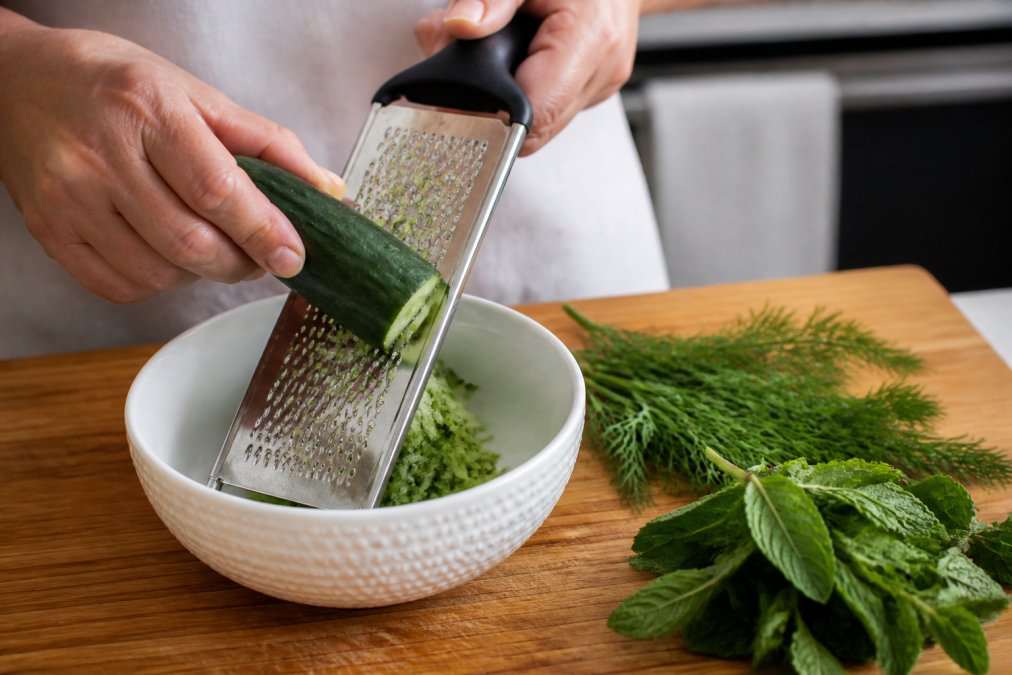
Grate your English cucumber, place in a fine-mesh strainer, sprinkle with salt, and let sit 10-15 minutes. Then squeeze firmly to remove excess moisture, this step is essential for authentic tzatziki.
English cucumbers have thinner skin and fewer seeds, resulting in less bitterness and refined texture.
Combining and Seasoning
Start with strained yogurt in a mixing bowl. Press 3-4 garlic cloves through a garlic press for even distribution without harsh chunks.
Fold in salt-extracted cucumber, then add fresh dill and mint. Fresh herbs are essential, don't substitute dried. They define authentic tzatziki's Mediterranean flavor.
Drizzle in olive oil and red wine vinegar, whisk until smooth, then taste and adjust salt and pepper.
How to Keep Tzatziki From Getting Watery
Watery tzatziki stems from a simple chemistry problem. Understanding water separation explains why each step matters.
The science of emulsion breakdown:
Tzatziki is a temporary emulsion where fat globules suspend in water. Cucumber and salt release additional water through osmosis. When too much free water accumulates, it separates from fat and protein solids, a physics problem, not spoilage.
Every recipe step targets water removal: straining removes whey, salting draws out cellular water, and squeezing removes extracted moisture.
Prevention strategies (ranked by impact):
-
Strain your yogurt thoroughly before mixing. This is the single most important step. Straining for 2 hours removes enough whey to prevent separation for days. Rushing this step (under 30 minutes) is why most homemade tzatziki fails.
-
Salt-extract your cucumber aggressively. Grate, salt, wait 10-15 minutes, then squeeze hard. Gentle squeezing leaves moisture behind and removes only 60-70% of water content.
-
Use full-fat yogurt exclusively. Fat stabilizes the emulsion. Low-fat yogurt lacks sufficient fat globules and creates a thinner, separation-prone sauce.
-
Store in an airtight container at consistent temperature. Temperature fluctuations cause condensation inside the container, adding moisture. Airtight storage prevents air exposure, which can cause oxidation and further separation.
If your tzatziki has already become watery:
-
Drain and restore: Pour off separated liquid and stir in 2-3 tablespoons of fresh strained yogurt to re-stabilize the emulsion.
-
Strain again: Pour through cheesecloth-lined strainer for 30-45 minutes to remove excess whey and restore thickness.
-
Use it differently: Watery tzatziki works as a marinade or salad dressing.
Homemade tzatziki will eventually separate if stored longer than 5-6 days, even with perfect technique. Commercial versions use stabilizers; homemade ones don't. Make fresh batches 1-2 times per week for superior flavor.
Tips for the Best Texture and Flavor
Texture tips: Use full-fat yogurt exclusively for luxurious mouthfeel. Strain long enough. Fold ingredients gently, aggressive mixing incorporates air and creates graininess.
Flavor tips: Fresh herbs are non-negotiable, dried taste inferior. Use a microplane for garlic if available. Don't skip red wine vinegar; it defines authentic tzatziki's tangy note. Taste and adjust for variations in ingredient moisture and acidity.
Refrigerate tzatziki for at least 30 minutes before serving to allow flavors to meld and reach perfect consistency.
What to Serve With Tzatziki Sauce
Authentic tzatziki works across proteins and vegetables when you understand pairing mechanics based on flavor and texture.
Pairing by protein type and flavor intensity:
Lamb (the classic pairing): Lamb's rich, gamey fat profile needs the cool acidity and herbaceous brightness of tzatziki to balance. The tangy yogurt cuts through lamb's heaviness and cleanses the palate between bites. This pairing works because the flavors are complementary opposites, warm richness meets cool brightness. Grilled lamb chops, lamb kebabs, or slow-roasted lamb shoulder all benefit equally. The dill in tzatziki specifically echoes Mediterranean lamb preparations, creating flavor coherence.
Chicken (the versatile protein): Chicken's mild, neutral flavor profile means tzatziki acts as the primary flavor carrier rather than a balance. This is why chicken + tzatziki works so well in wraps and sandwiches, the sauce defines the dish. Grilled chicken breast is lean and can taste dry; tzatziki adds moisture and flavor simultaneously. For best results, use chicken thighs instead of breast when possible. The higher fat content in thighs pairs better with the cool sauce, creating a more cohesive bite. Drizzling a small amount of high-quality olive oil over the finished dish bridges the gap between the succulent meat and the yogurt base, enhancing the overall richness of the meal.
Fish and seafood (the underutilized pairing): Grilled white fish (halibut, cod, sea bass) pairs beautifully with tzatziki because the sauce's acidity complements the delicate, slightly sweet flavor of fish. The mint in tzatziki especially enhances seafood. Shrimp, when grilled or pan-seared, becomes more interesting with a dollop of tzatziki on the side. This pairing is less common in restaurants but works exceptionally well at home.
Beef (the bold pairing): Beef's strong, savory profile can overpower delicate tzatziki. Use a mint-forward variation (more mint, less dill) when serving with beef. The brighter mint cuts through beef's richness better than dill alone. Ground beef in gyros or burgers benefits from tzatziki's cooling effect.
Pairing by vegetable type and cooking method:
Grilled vegetables (zucchini, eggplant, bell peppers): Grilling creates char and caramelization on vegetables, adding depth and slight bitterness. Tzatziki's cool creaminess and herbaceous notes balance this perfectly.
Pairing by meal context:
Flavor pairing principle to remember:
Storage and Shelf Life
Proper storage keeps your homemade tzatziki fresh and safe to eat. Unlike commercially produced versions, homemade sauce contains no preservatives.
Refrigerator storage:
Freezing:
Signs of spoilage:
Pro tip:
Variations and Flavor Customization
While authentic tzatziki follows a classic formula, thoughtful variations let you customize it to your taste. The foundation stays the same. The herbs and seasonings become your canvas.
Dill-forward version:
Mint-dominant variation:
Garlic intensity:
Lemon variation:
Spiced version:
Frequently Asked Questions
What is the secret to thick and creamy authentic tzatziki?
The secret lies in using full-fat Greek yogurt and properly straining regular yogurt if you start with that. Removing excess water content from cucumbers through salt extraction is equally critical. Grate your cucumber on a fine grater, salt it generously, and let it sit for 10 minutes before squeezing out all moisture with cheesecloth or a clean kitchen towel. This prevents your tzatziki from becoming watery. Whisking the yogurt until smooth and emulsifying it with extra virgin olive oil creates the creamy texture that makes authentic tzatziki so appealing.
Can I use regular yogurt instead of Greek yogurt for authentic tzatziki?
Yes, but you'll need to strain it first. Regular yogurt contains more water than Greek yogurt, so wrap it in cheesecloth and let it drain in the refrigerator for 4-8 hours or overnight. This concentrates the yogurt and removes whey, giving you the thick, creamy consistency that defines authentic tzatziki. After straining, you'll have roughly half the original volume, but the result will closely match full-fat Greek yogurt in texture and tang.
How long does homemade tzatziki last in the refrigerator?
Properly stored homemade tzatziki keeps for 3-5 days in an airtight container in the refrigerator. The tangy flavor actually deepens as it sits, so it's often better on day two or three. To extend shelf life, store it in a glass container rather than plastic, and keep the temperature consistently cold. Always use a clean spoon when scooping to prevent contamination. If you notice any off smell or mold, discard it immediately.
Do you peel the cucumber for tzatziki?
For authentic tzatziki, leave the skin on an English cucumber, which has thinner, more tender skin than standard slicing cucumbers. The skin adds color, texture, and nutrients. Use a coarse grater to grate the cucumber with skin intact. If you prefer a smoother consistency or are using a thicker-skinned variety, you can peel it partially or fully, but traditional Greek recipes keep the skin for visual appeal and nutritional benefit.
Making authentic tzatziki at home is simpler than most people think. Master the technique of straining yogurt, salt-extracting your cucumber, and folding fresh herbs together. Your homemade sauce will rival anything you find at a restaurant. At Gyro Kingdom, we serve authentic Greek cuisine made with the freshest ingredients. Try our freshly made gyros with homemade tzatziki today and experience the difference quality ingredients and proper technique make.