 how-to
How to Plan Gluten-Free Mediterranean Lunches for the Week
Quick Summary
A gluten-free Mediterranean lunch is built on naturally gluten-free staples like quinoa, brown rice, chickpeas and lentils, plus vegetables, olive oil, fish and chicken. Plan three recipes, cook them in two batches, and reuse the same dressing and herbs across five workday lunches.
- Build your base from quinoa, brown and wild rice, millet, potatoes, corn, chickpeas and lentils.
- Avoid regular couscous, bulgur, pita and most flatbreads, since they contain wheat.
- Cook quinoa and rice on Sunday, roast vegetables, and grill chicken for the week.
- Make a lemon-olive oil dressing from scratch to avoid hidden gluten in store-bought versions.
- Pack dressing on the side and store gluten-free food separately from wheat products.
Table of Contents
- Why Gluten-Free and Mediterranean Eating Work Well Together
- Building a Gluten-Free Mediterranean Lunch Meal Plan for the Week
- Gluten-Free Mediterranean Lunch Recipes With Portions and Cooking Times
- Gluten-Free Lunch Meal Prep: Batch Cooking, Storage and Food Safety
- Preventing Cross-Contact in a Celiac-Safe Kitchen
- Gluten-Free Mediterranean Lunch Ideas for Work and Portable Assembly
- Booking Your Next Greek Lunch or Catering Order in Brick
- Frequently Asked Questions
Gluten-free and Mediterranean eating fit together more easily than most people expect. The Mediterranean pattern centers on vegetables, fruit, legumes, nuts, olive oil and fish, and most of those foods are naturally gluten-free. Planning gluten-free Mediterranean lunches for the week comes down to choosing the right grains, prepping ahead, and watching for cross-contact.
Last Updated: October 30, 2026
Why Gluten-Free and Mediterranean Eating Work Well Together
A gluten-free Mediterranean lunch is built from foods that were never wheat-based to begin with. The plate leans on produce, lean protein and healthy fats, with a grain or starch as a supporting player, so you spend less time reading labels.
The main challenge is avoiding processed foods that hide wheat. Sauces, marinades, and some pre-made salad dressings can contain gluten, so check labels before you buy.
Naturally gluten-free grains and starches to build on
Several staples are naturally gluten-free and work well in Mediterranean lunches:
- Quinoa
- Brown and wild rice
- Millet and buckwheat
Choose these as your base and you will rarely need a substitute.
Foods to eat and foods to limit
Build most of your lunch from these foods:
- Leafy greens, cucumbers, tomatoes and peppers
- Olives, avocado and extra virgin olive oil
- Fish, chicken and legumes for protein
Watch for these hidden gluten sources:
- Regular couscous and bulgur, which contain wheat
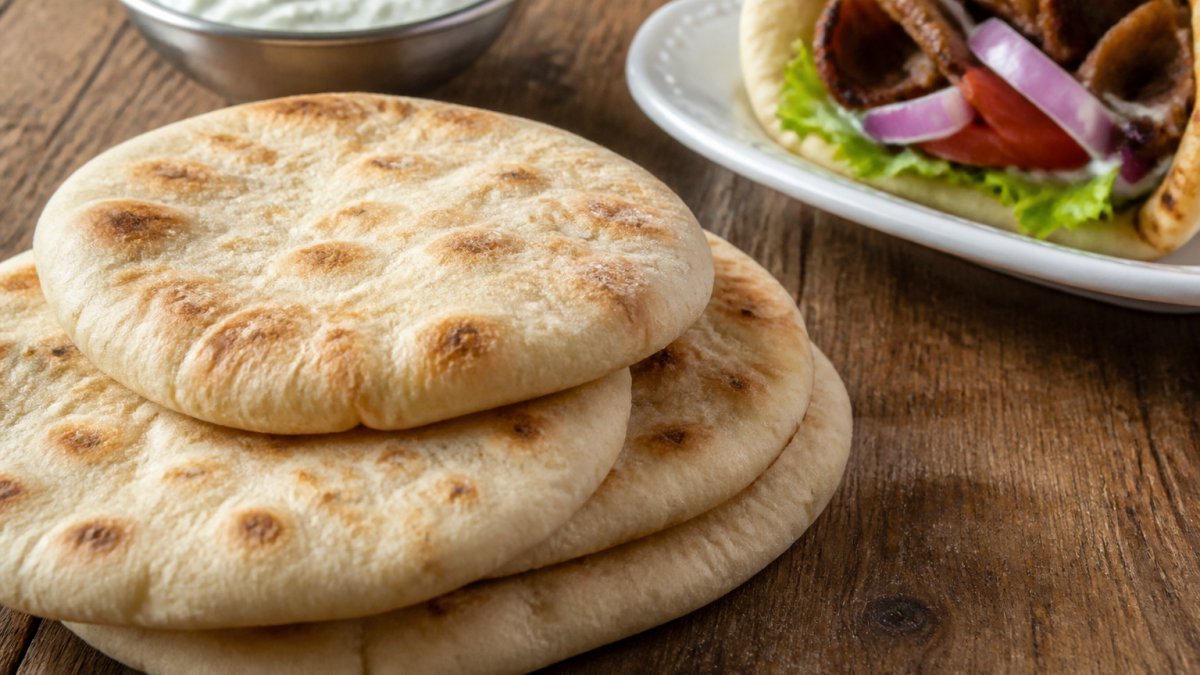
- Pita bread and most flatbreads
- Some falafel mixes that use wheat flour
Read the ingredient list on dressings and seasoning blends, since some contain wheat-based fillers.
Building a Gluten-Free Mediterranean Lunch Meal Plan for the Week
A lunch-only plan works better than a full-day plan when your goal is to stop buying lunch five days a week. The structure below plans three core recipes, cooks them in two batches, and rotates them across five workdays so you shop once and waste little. It is built for one adult eating about 500 to 600 calories at lunch; scale portions as needed.
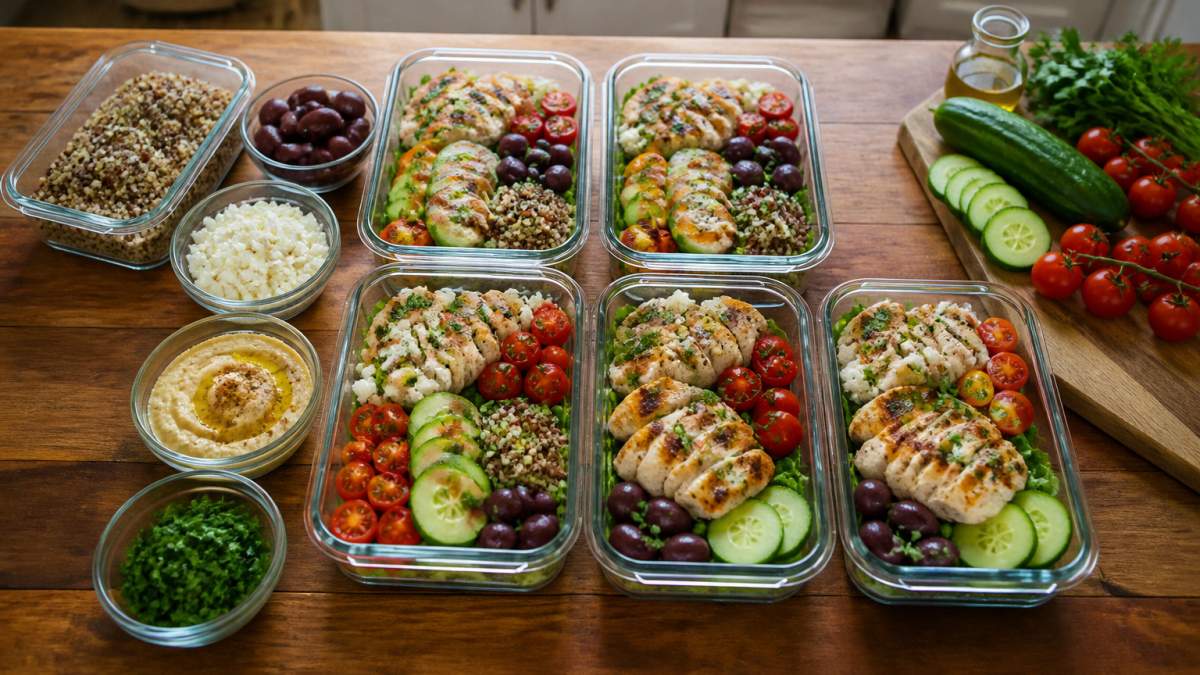
The five-day lunch plan with portions and approximate nutrition
| Day | Lunch | Portion guide | Approx. calories | Approx. protein | Approx. fiber |
|---|---|---|---|---|---|
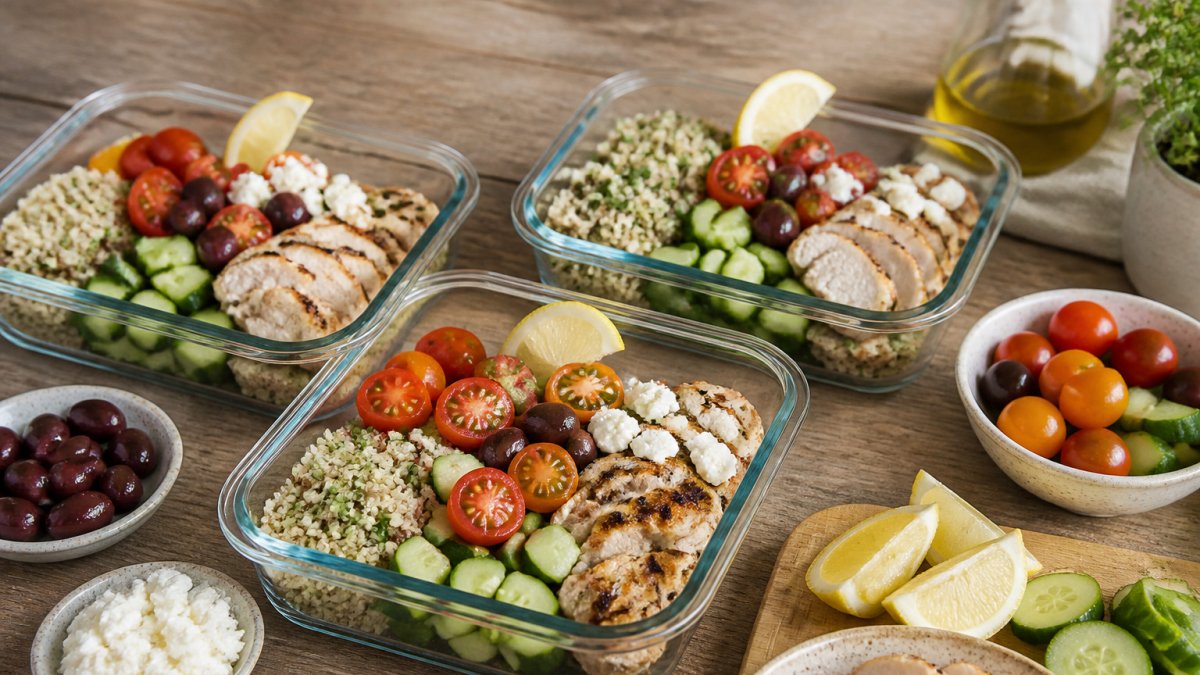
| Monday | Grilled chicken quinoa bowl with cucumber, tomato and feta | 4 oz cooked chicken, 3/4 cup cooked quinoa, 1 cup vegetables, 1 oz feta | 520 | 38 g | 8 g |
| Tuesday | Chickpea salad with tomatoes, olives and olive oil | 3/4 cup chickpeas, 2 cups greens, 1/2 cup chopped vegetables, 1 tbsp olive oil | 480 | 16 g | 12 g |
| Wednesday | Baked salmon with brown rice and roasted zucchini | 4 oz salmon, 1 cup cooked brown rice, 1 cup roasted zucchini | 560 | 32 g | 7 g |
| Thursday | Lentil and roasted pepper bowl with lemon dressing | 1 cup cooked lentils, 1 cup roasted vegetables, 1 tbsp olive oil | 500 | 20 g | 14 g |
| Friday | Greek chicken salad with avocado and herbs | 4 oz cooked chicken, 2 cups greens, 1/4 avocado, 1 tbsp olive oil dressing | 510 | 36 g | 9 g |
The two-batch prep schedule
Sunday (about 60 minutes):
- Cook 1 1/2 cups dry quinoa (yields roughly 4 1/2 cups cooked) and 1 cup dry brown rice (yields about 3 cups cooked). Cool and refrigerate in separate containers.
- Grill or bake 1 1/2 lb chicken thighs or breasts seasoned with lemon, oregano, garlic and olive oil. Slice and refrigerate.
- Roast 2 cups zucchini and 2 cups bell peppers on a sheet pan at 400 degrees F for 20 to 25 minutes.
Wednesday (about 25 minutes):
- Bake two 4 oz salmon fillets at 400 degrees F for 12 to 15 minutes; eat one Wednesday and chill the second for a Thursday or Friday swap if you prefer.
- Simmer 1 cup dry lentils in water for about 20 minutes until tender; drain and cool.
Shopping list built for reuse
Proteins: 1 1/2 lb chicken, 2 salmon fillets (about 8 oz total), 1 can or 1 1/2 cups cooked chickpeas, 1 cup dry lentils.
Grains and starches: 1 1/2 cups dry quinoa, 1 cup dry brown rice.
Produce: 5 to 6 cups mixed greens, 2 cucumbers, 4 tomatoes, 2 bell peppers, 2 zucchini, 1 red onion, 1 bunch parsley, 1 bunch mint, 2 lemons, 1 avocado, 1 head garlic.
Dairy and pantry: 4 oz feta, 1 jar Kalamata olives, extra virgin olive oil, dried oregano, salt and pepper.
Cook the quinoa and rice in the same pot on Sunday if you are short on burners: start the rice first, add the quinoa to a steamer basket or second pot ten minutes later, and both finish within a few minutes of each other.
Customizing the plan
- Higher protein: add 1/2 cup Greek yogurt as a side or bump chicken to 5 oz on training days.
- Plant-based: swap the chicken and salmon for an extra 1/2 cup chickpeas or lentils plus 2 tbsp hemp seeds; protein drops by roughly 10 to 15 g per lunch, so plan a protein snack.
- Lower carbohydrate: replace rice and quinoa with extra roasted vegetables and greens; fiber stays high but calories fall by about 100 per lunch.
Why a lunch-only plan beats a full-day plan
Full-day Mediterranean plans tend to bury lunch in a long menu you will not follow. Planning only the midday meal keeps the decision count low, makes the shopping list short enough to execute in one trip, and leaves breakfast and dinner flexible. If you want to extend the pattern, repeat the same three-recipe rotation the following week with one new recipe swapped in so you do not tire of it.
Plan three recipes, cook them in two batches, and reuse the same dressing, herbs and aromatics across all five lunches. That is the whole system, and it is what makes a gluten-free Mediterranean lunch plan actually stick.
Gluten-Free Mediterranean Lunch Recipes With Portions and Cooking Times
These recipes take 30 minutes or less once your base ingredients are ready.
- Greek chicken quinoa bowl (25 minutes): Season chicken with lemon, oregano and olive oil. Grill or bake at 400 degrees F for 15 minutes. Serve over quinoa with cucumber, tomato and crumbled feta.
- Chickpea Mediterranean salad (10 minutes): Toss drained chickpeas with diced tomato, red onion, olives, parsley and olive oil. Add lemon juice and salt to taste.
- Baked salmon with rice (20 minutes): Bake a 4 oz salmon fillet at 400 degrees F for 12 to 15 minutes. Serve with brown rice and roasted zucchini.
- Lentil and vegetable bowl (30 minutes): Simmer lentils until tender, about 20 minutes. Mix with roasted peppers and a lemon-olive oil dressing.
Each recipe makes two to three lunches, which helps with batch cooking.
Gluten-Free Lunch Meal Prep: Batch Cooking, Storage and Food Safety
Batch cooking saves time, but food safety matters. Cooked chicken, fish and grains should be refrigerated promptly after cooking and eaten within a few days.
Use airtight containers and label each one with the date. Freeze portions you won't eat within four days.
- Cool food quickly by spreading it in shallow containers
- Keep your fridge at 40 degrees F or below
- Store raw meat on the bottom shelf to prevent drips
Common mistake: Packing salads with dressing on the bottom. The greens wilt within a few hours. Pack dressing on the side instead.
Preventing Cross-Contact in a Celiac-Safe Kitchen
Cross-contact is the difference between a gluten-free lunch and a celiac-safe lunch. For someone with celiac disease, trace amounts of wheat can trigger symptoms and intestinal damage, so the goal is not just choosing gluten-free ingredients but keeping them from touching gluten at any step: shopping, storage, prep, packing and reheating (Eating, Diet, & Nutrition for Celiac Disease). The guidance below is written for a shared kitchen, which is the realistic situation for most households.
Start with the label, not the ingredient name
In the United States, a product labeled "gluten-free" must meet the FDA's gluten-free labeling rule (the FDA). That label is your strongest signal.
Read the full ingredient list for these common hidden sources:
- Wheat flour, wheat starch, malt, malt extract and malt vinegar
- Barley, rye, triticale and spelt (spelt is a wheat species)
- Soy sauce and most teriyaki or stir-fry sauces
When a label is ambiguous, contact the manufacturer and ask whether the product is made on shared lines and whether they test for gluten. Keep a running list of verified products so you are not re-checking every shopping trip.
Set up a two-zone kitchen
You do not need a separate kitchen, but you do need separate tools for the items that are hardest to clean:
- A dedicated cutting board, ideally a different color from the gluten board
- A dedicated colander and strainer, because gluten gets trapped in the holes
- A dedicated toaster or toaster bags; shared toaster slots are a well-known cross-contact source
Wash shared stainless steel, glass and ceramic items thoroughly with hot soapy water, and run them through the dishwasher if you have one. Scrub cutting boards and countertops before gluten-free prep, not after.
Shared fryer oil, shared pasta water, and shared grill surfaces are three of the most common cross-contact points. If you fry falafel or grill pita in the same oil or on the same grates as wheat items, the gluten-free version is no longer celiac-safe.
Prep order and surface habits
- Prep gluten-free foods first, before any wheat flour comes out, and cover surfaces you cannot fully clean.
- Keep gluten-free grains in sealed containers on a separate shelf from wheat flour, bread and pasta.
- Use a clean utensil every time you scoop from a shared container; never reuse a knife that touched bread.
Packaged and prepared ingredients
Pre-made salad dressings, marinades, sauces and seasoning blends are the most frequent hidden-gluten sources in a Mediterranean lunch. Make your own dressing from olive oil, lemon, garlic and herbs when you can; it takes two minutes and removes the label risk entirely. For canned chickpeas and lentils, rinse them well, and choose plain versions over seasoned ones when possible. Feta, olives, fresh produce, plain meat and fish, and plain nuts and seeds are generally low-risk, but check any flavored or marinated version.
Restaurant and workplace lunches
When you eat away from home, ask specific questions rather than "Is this gluten-free?" Ask whether the grill is shared, whether the fryer is dedicated, whether the pita and the meat are cooked on the same surface, and whether the rice or quinoa is cooked in shared water.
At work, keep your lunch cold in a labeled container, use your own utensils, and avoid shared microwaves if possible, or cover your food. Wipe the microwave turntable before use if you cannot avoid it.
A quick celiac-safe lunch checklist
- Every packaged item is labeled gluten-free or verified with the manufacturer
- Gluten-free grains stored separately from wheat products
- Dedicated colander, toaster and cutting board used
Celiac-safe lunch planning is mostly about systems, not willpower: separate tools, a verified product list, a prep order that puts gluten-free food first, and a short script of questions for restaurants. Build those habits once and every lunch in the plan above becomes safer to repeat.
Gluten-Free Mediterranean Lunch Ideas for Work and Portable Assembly
Lunches for work need to travel well. Choose recipes that hold up at room temperature for a few hours.
Pack components separately: greens in one container, protein in another, and dressing in a small jar. Assemble just before eating.
Many people also prefer ready-made options on busy days. Local restaurants can be a good backup when your prep runs short.
Booking Your Next Greek Lunch or Catering Order in Brick
Sometimes cooking for the week is not realistic, and that is fine. Gyro Kingdom serves freshly made gyros and traditional Mediterranean dishes in Brick, and our menu includes gluten-conscious options you can ask about when you order. Gyro Kingdom offers catering for gatherings; contact us or visit our website for details on catering orders. Pricing depends on quantity, date and delivery, so contact us or visit our website for a current quote.
Frequently Asked Questions
Can you provide a gluten-free meal plan for the Mediterranean diet?
A gluten-free Mediterranean lunch plan builds each day around a protein such as grilled chicken, fish or falafel, plus vegetables, olive oil, legumes and a naturally gluten-free grain such as quinoa, rice or potatoes. Rotate three or four proteins across the week so the plan stays varied, and prepare components in batches on the weekend. Check every packaged ingredient, including sauces, broths and spice blends, for gluten-containing additives, since labels change. Start with a five-day lunch-only plan and adjust portions to your appetite and activity level.
Is a Mediterranean diet good for gluten-free eaters?
Yes. The core of the Mediterranean diet is vegetables, fruit, legumes, nuts, seeds, fish, lean poultry and olive oil, and most of these foods are naturally gluten-free. The main risk is wheat-based bread, pasta, couscous, bulgur and some pita, which must be swapped for gluten-free versions or replaced with rice, quinoa or potatoes. Oats are only gluten-free when they are certified as such. Read labels on processed foods, since gluten can appear in marinades, seasoning blends and some soups.
How do you avoid cross-contact when preparing gluten-free lunches?
Cross-contact happens when gluten-free food touches gluten through shared surfaces, utensils, toasters, oil or water. Use separate cutting boards, colanders and toasters, wash shared pans thoroughly, and keep gluten-free items on clean shelves away from crumbs. Cook gluten-free fried foods in fresh oil rather than oil used for breaded items. When eating out or buying from a shared kitchen, ask how orders are prepared. For celiac disease, even small amounts can cause symptoms, so these steps matter.