 how-to
7 Tips for Serving Warm Greek Appetizers at Home
Last Updated: October 29, 2026
Quick Summary
Warm Greek appetizers stay best when you plan timing and holding methods in advance. Match each dish to a holding method, such as a 200°F oven for phyllo pastries or a warming tray for meatballs, and swap trays in batches so food never sits out too long.
- Hold phyllo pastries uncovered in a 200°F oven for up to 20 minutes so the layers stay crisp.
- Serve saganaki immediately, since the cheese firms and turns rubbery within about 5 to 7 minutes.
- Keep meatballs and skewers in a covered 200°F oven with a splash of broth for up to 45 minutes.
- Swap in a fresh warm tray when the current one is about two-thirds empty, every 20 to 30 minutes.
- Discard any warm items that have been out beyond the two-hour limit.
Table of Contents
- Why Warm Greek Appetizers Need a Plan
- How to Keep Appetizers Warm Without Drying Them Out
- Which Greek Appetizers Are Best Served Warm
- Pairing Hot Dishes With Cold Dips and Room-Temperature Sides
- Planning Quantities and Timing for a Greek Appetizers for a Party Spread
- Make-Ahead, Reheating and Serving Steps for Guests
- Order Your Warm Greek Platters From Gyro Kingdom
- Frequently Asked Questions
Greek appetizers taste best when they arrive hot, crisp and fragrant, yet most home cooks lose that window within minutes of setting the platter down.
Warm Greek appetizers are a fixture at gatherings across the country, from backyard get-togethers to holiday tables. A tray of spanakopita that sat out too long turns soggy, and a saganaki that cooled too far turns rubbery. Browse Greek catering menu picks for parties in Brick to see crowd-friendly options.
Why Warm Greek Appetizers Need a Plan
Warm appetizers are a different job from cold ones. Cold dips and olives can sit out for an hour without much change. Hot dishes lose heat and moisture quickly once they leave the oven or pan.
A simple plan makes the difference. Decide which dishes will be served hot, which will be served at room temperature and when each one comes out.
Watch out: Leaving hot appetizers on the counter while guests mingle is the most common mistake. Food that sits between roughly 40°F and 140°F for too long can become unsafe, so keep the timing tight (the FDA).
How to Keep Appetizers Warm Without Drying Them Out
Holding warm food for a party is a balance between two failure modes: food that drops into the temperature danger zone and food that dries out or overcooks while you wait. Food held at room temperature for too long can become unsafe, so keep warm items above the danger zone and limit how long they sit out.
Match the Holding Method to the Dish
No single method works for every Greek appetizer. Use this dish-by-dish guide:
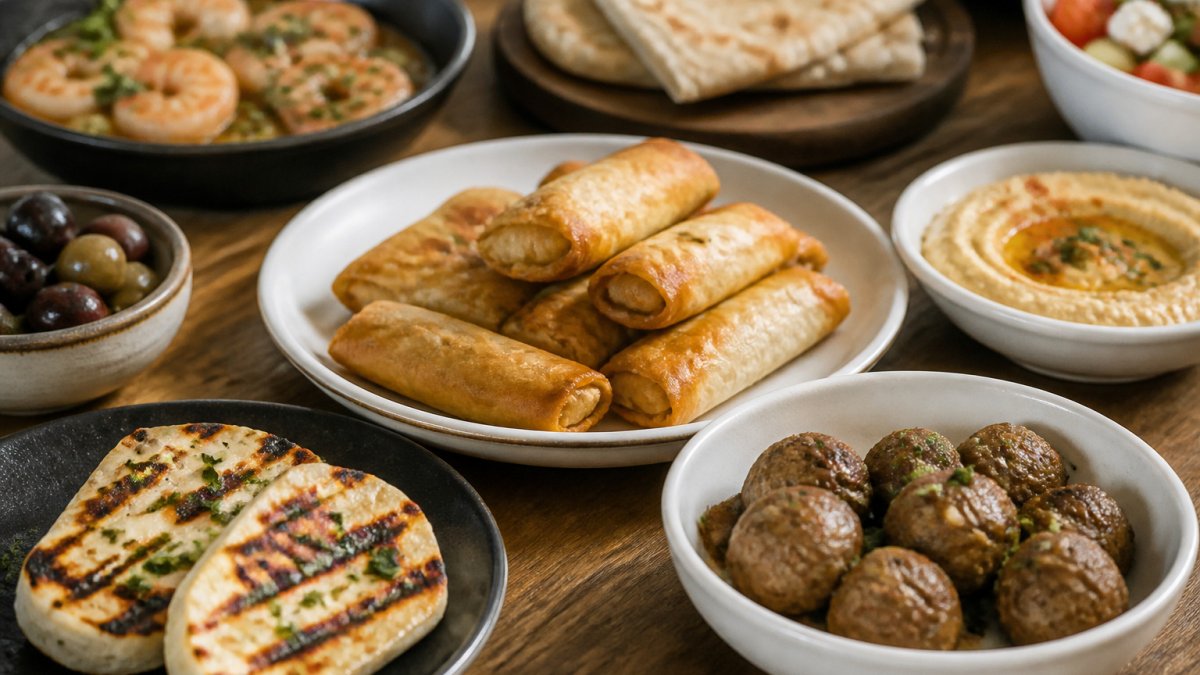
- Phyllo pastries (spanakopita, tiropita): Hold in a 200°F oven on a wire rack, uncovered, for up to 20 minutes. Covering traps steam and softens the phyllo; leaving them uncovered keeps the layers crisp. Beyond 20 minutes the filling starts to dry at the edges.
- Fried cheese (saganaki): This is a serve-immediately dish. The cheese firms and turns rubbery within about 5 to 7 minutes of leaving the pan. Fry in small batches and walk it to the table, or sear it in a cast-iron dish at the table.
- Meatballs and small skewers: Hold in a covered 200°F oven with a splash of broth or tomato sauce in the pan for up to 45 minutes. The moisture prevents the exterior from drying while the cover keeps the center warm.
Equipment Trade-Offs
- Warming trays and chafing dishes: Best for meatballs, skewers, and dips. The water bath keeps food at a steady 150°F to 165°F without further cooking. They add setup time and take up table space.
- Low oven (200°F): Best for pastry and anything that benefits from dry heat. It ties up your oven, so plan oven space before you plan the menu.
- Slow cooker on warm: Best for dips and saucy dishes. It is the most forgiving option for a long party.
The Batch-and-Hold Routine
Cook in batches sized to what your guests will eat in 20 to 30 minutes. For keeping food hot in transit or storage, see how to properly seal takeout containers for heat. Hold the next batch in the oven or a warming tray while the current one is on the table, and swap trays when the first is about two-thirds empty.
Which Greek Appetizers Are Best Served Warm
Some Greek starters are at their best hot, while others suffer when heated. Choose warm items that hold their texture well.
Good candidates for warm service include:
- Fried or baked cheese dishes
- Phyllo-wrapped pastries
- Stuffed grape leaves served warm
- Meatballs and small skewers
Saganaki, Spanakopita and Dolmades
Saganaki is best served the moment it leaves the pan, because the cheese firms as it cools. Spanakopita holds up well for about 20 minutes in a warm oven, but phyllo gets soft if it waits longer. Dolmades are often served warm or at room temperature, and they reheat gently in a covered dish with a splash of broth.
Heating Feta Cheese Without Melting It Into Puddles
Feta is delicate. Heat it too fast and it loses its shape and turns oily. Warm it gently in a small pan or a low oven, and stop as soon as it softens. Serve it with a little olive oil and herbs so it stays moist.
Pairing Hot Dishes With Cold Dips and Room-Temperature Sides
A good spread balances hot and cold. Pair warm pastries with tzatziki, hummus and olives, which hold well at room temperature. Put the dips on a separate plate so they do not warm up and lose their tang.
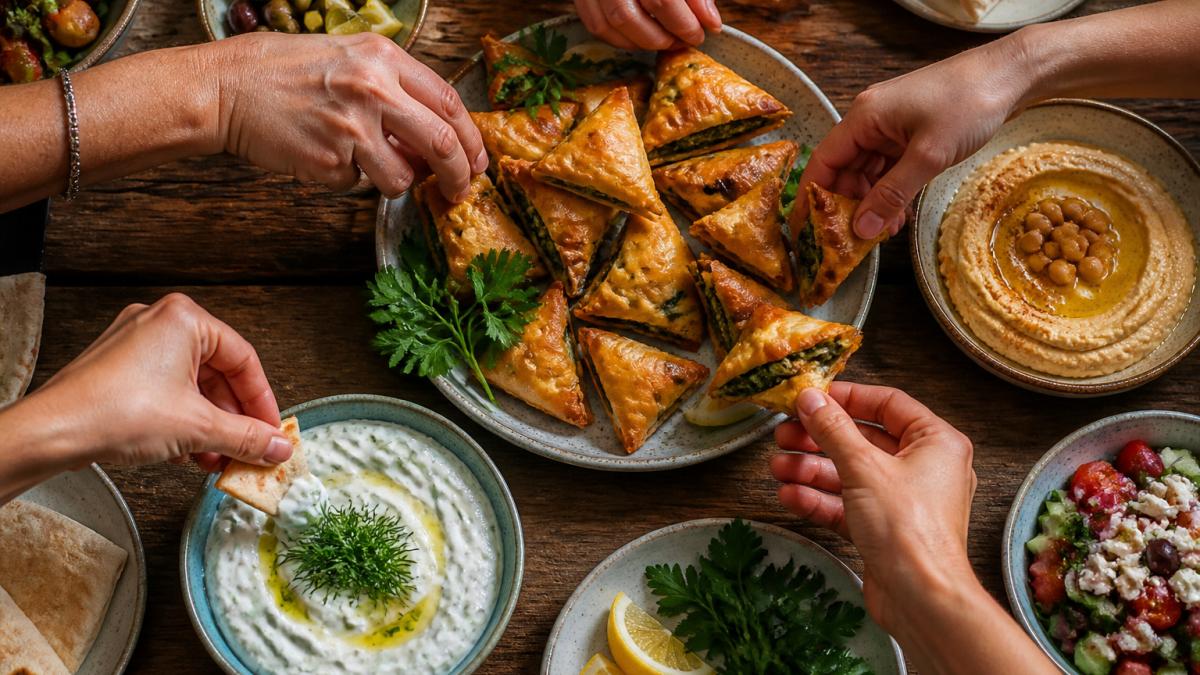
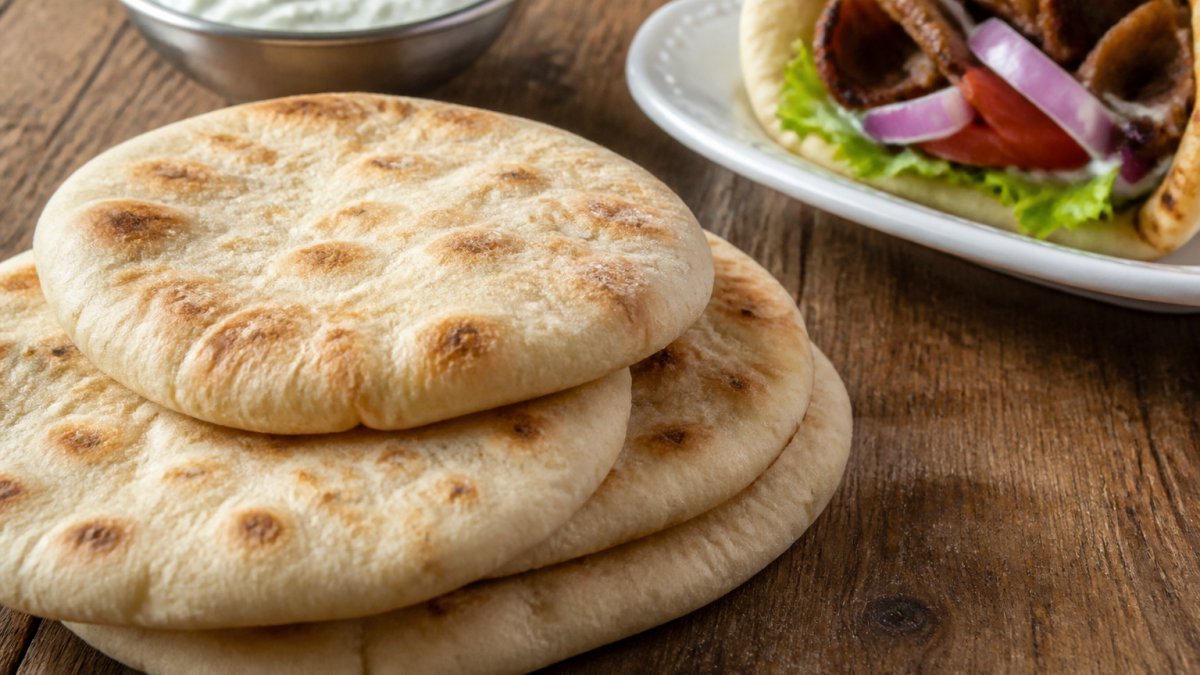
Pita bread works well either way. Warm it briefly in foil, then set it beside the dips. A light salad on the side adds freshness between bites of rich, fried food.
Planning Quantities and Timing for a Greek Appetizers for a Party Spread
Most party-planning advice stops at a single pieces-per-guest number. Learn how to choose the best Greek catering for events if you want help matching the spread to your occasion. A Greek spread needs a more specific plan because warm items, cold dips, and breads are consumed at different rates and have different holding limits.
How Much to Make Per Guest
A common pattern among caterers is to plan appetizer counts by category rather than as one total:
- Before a meal (1 to 2 hours): 6 to 8 pieces per guest total, split roughly 3 to 4 warm pieces, 2 to 3 cold or room-temperature pieces, and 1 to 2 bread or dip servings.
- Appetizer-only party (3 or more hours): 10 to 12 pieces per guest, with warm items making up about half. Guests graze longer, so plan for replenishment rather than one large initial setout.
- Cocktail hour before a seated dinner: 4 to 6 pieces per guest is usually enough, since dinner follows within an hour.
For dips, plan about 2 to 3 tablespoons per guest of each dip, or roughly 1 cup of tzatziki or hummus per 8 to 10 guests. For pita, plan 1 to 2 pieces per guest, cut into wedges.
Timing the Warm Batches
Work backward from guest arrival rather than from the party start time on the invitation. A practical sequence:
- 60 minutes before guests arrive: Assemble cold dips and set out olives and bread. Preheat the oven to 200°F for holding.
- 30 minutes before: Bake the first batch of phyllo pastries and hold in the warm oven.
- 10 minutes before: Fry the first batch of saganaki or other serve-immediately items.
- At arrival: Set out the first warm tray alongside the cold dips. Keep the next batch holding.
- Every 20 to 30 minutes: Swap in a fresh warm tray when the current one is about two-thirds empty. Replenish dips when they drop below half.
How Long Warm Items Can Sit Out
The two-hour rule applies to each tray, not to the party as a whole. Track when each warm tray hits the table and pull it once it has been out too long. If guests are still eating, replace it with a fresh batch rather than extending the same tray. Cold dips and room-temperature items like olives and bread can generally stay out longer, but they should still be refreshed and kept out of direct sun or heat.
Adjusting for the Crowd
A crowd that is drinking alcohol or standing and mingling tends to eat more finger food than a seated group. Mastering the logistics of keeping food warm ensures that your spanakopita and tiropita remain crisp and inviting throughout the entire evening, a challenge that requires careful attention to thermal management techniques.
Here is a quick reference for the per-guest counts and holding limits covered in this section.
| Item | Value | Note |
|---|---|---|
| Pieces per guest (before a meal) | 6-8 | About 3-4 warm, 2-3 cold, 1-2 bread or dip |
| Pieces per guest (appetizer-only party) | 10-12 | Warm items about half; replenish during party |
| Pieces per guest (cocktail hour) | 4-6 | Dinner follows within an hour |
| Dip per guest | 2-3 tablespoons | Roughly 1 cup per 8-10 guests |
| Pita per guest | 1-2 pieces | Cut into wedges |
| Warm tray swap | Every 20-30 minutes | When about two-thirds empty |
| Maximum time warm items sit out | Two hours | Applies to each tray |
Make-Ahead, Reheating and Serving Steps for Guests
Many Greek appetizers can be prepared ahead. Assemble pastries and cover them, then bake just before guests arrive. Reheating is simplest when the food is still slightly undercooked, since it will finish in the oven.
Use this simple routine:
- Assemble the dishes earlier in the day and refrigerate
- Preheat the oven 20 minutes before guests arrive
- Bake the first batch and hold it in a warm oven
- Set out cold dips and bread at room temperature
- Refill the hot platters as they empty
Order Your Warm Greek Platters From Gyro Kingdom
If you would rather spend the party with your guests than in the kitchen, Gyro Kingdom in Brick can help. Pricing depends on quantity, dates and delivery, so check the Gyro Kingdom website for current prices or a quote before you plan your menu. With a little planning, you can serve warm Greek appetizers that taste as good as they should.
Frequently Asked Questions
What appetizers can be served at room temperature?
Several Greek appetizers hold up well at room temperature, which makes them easy to combine with warm dishes. Olives, marinated feta, Greek salad bites, stuffed grape leaves (dolmades), and hummus with pita all taste good when they are not cold from the fridge. Take cold items out ahead of time so the flavors open up. Keep dips in shallow bowls so they do not sit out too long, and refresh them if they start to warm past comfortable serving temperature. Pairing room-temperature items with one or two hot dishes gives guests variety without overloading the table.
Is it okay to heat up feta cheese?
Yes, feta can be heated, but it needs gentle handling. Feta is a brined cheese with a crumbly structure, so high heat makes it weep liquid and lose its texture. For warm appetizers, warm it briefly with a drizzle of olive oil and herbs, just until it softens and turns slightly golden. Serve it right away, since feta firms back up as it cools. Block feta holds its shape better under heat than crumbled feta. Heated feta works well alongside honey, lemon zest, or warm pita.
How do you keep appetizers warm during a party?
Use a chafing dish, slow cooker set to warm, or a low oven around 200°F to hold food safely. Keep hot items hot enough to stay out of the danger zone. Cover dishes loosely so they do not dry out, and stir or rotate trays every 20 to 30 minutes. Replace platters in small batches rather than leaving one tray out for hours, which keeps food fresher and lets guests enjoy items at their best. Label each dish so guests know what they are eating, and clear the trays when they are mostly empty.
How far ahead can you prepare Greek appetizers?
Many Greek appetizers can be prepared ahead and finished just before serving. Assemble spanakopita or dolmades, cover them, and refrigerate. Bake or reheat them shortly before guests arrive. Dips such as tzatziki are best made a day ahead so the flavors blend, while fresh herbs and lemon should be added right before serving. Fried items are best fried close to serving time, since they lose crispness as they sit.