 how-to
How Do You Eat Like a Local at a Greek Restaurant?
Quick Summary
Greek dining etiquette starts with slowing down, since meals are social events that are not rushed. Wait to be seated, greet staff with "Yia sas," share several meze in the middle of the table, and ask for the check only when you are ready.
- Greek meals are social events, so guests often talk and linger for a long time.
- Greet staff with "Yia sas" and wait to be seated in a taverna or family-run spot.
- Bread is for the table: tear it by hand and use it to scoop tzatziki or olive oil.
- Taste your food before reaching for the salt, since Greek cooking is seasoned deliberately.
- The bill won't arrive until you ask, so say "To logariazmo, parakalo" when you're ready.
Table of Contents
- Why Greek Meals Move at Their Own Pace
- Greek Table Manners to Know Before You Sit Down
- How to Order at a Greek Restaurant Step by Step
- Greek Food Sharing Etiquette at the Table
- A First-Visit Sequence: From Arrival to Paying
- Tipping Etiquette in Greece and How It Differs From the US
- Planning Your Next Greek Meal in Brick, NJ
- Frequently Asked Questions
Why Greek Meals Move at Their Own Pace
Last Updated: November 1, 2026
Eating like a local at a Greek restaurant starts with one thing: slowing down, which is the core of greek dining etiquette. Greek meals are not rushed, and a table may sit for a long time as guests talk and linger. Understanding the pace of a Greek meal helps you enjoy every course.
In Greece, a meal is a social event. People talk, share food and linger. Servers often give guests space, so it helps to signal when you are ready for the next course or the bill.
Here is what to expect in many Greek restaurants:
- Courses often arrive as they are ready, not in a fixed order
- Plates may come out before everyone at the table is seated
- Servers may check in only now and then
- The bill often comes when you ask for it
Greek Table Manners to Know Before You Sit Down
Good manners start before the food arrives, and following greek dining etiquette begins with a simple "Yia sas" (hello) to the staff, which goes a long way. Keep your voice warm but not loud, since Greek dining rooms often have a lively atmosphere, and conversation is part of the meal.
Here are the habits that matter most at a Greek table, with the reasoning behind each so you can apply them naturally rather than memorizing rules:
- Wait to be seated. In a taverna or family-run spot, let the host or server guide you to a table. Standing in the doorway scanning the room can read as impatient.
- Keep your wrists, not your elbows, on the table. Resting your forearms on the table between bites is normal and friendly; planting elbows while eating is the part to avoid.
- Use the fork in your left hand and the knife in your right when cutting meat. Once cut, many diners switch the fork to the right hand to eat, either style is fine, but pick one and stay consistent.
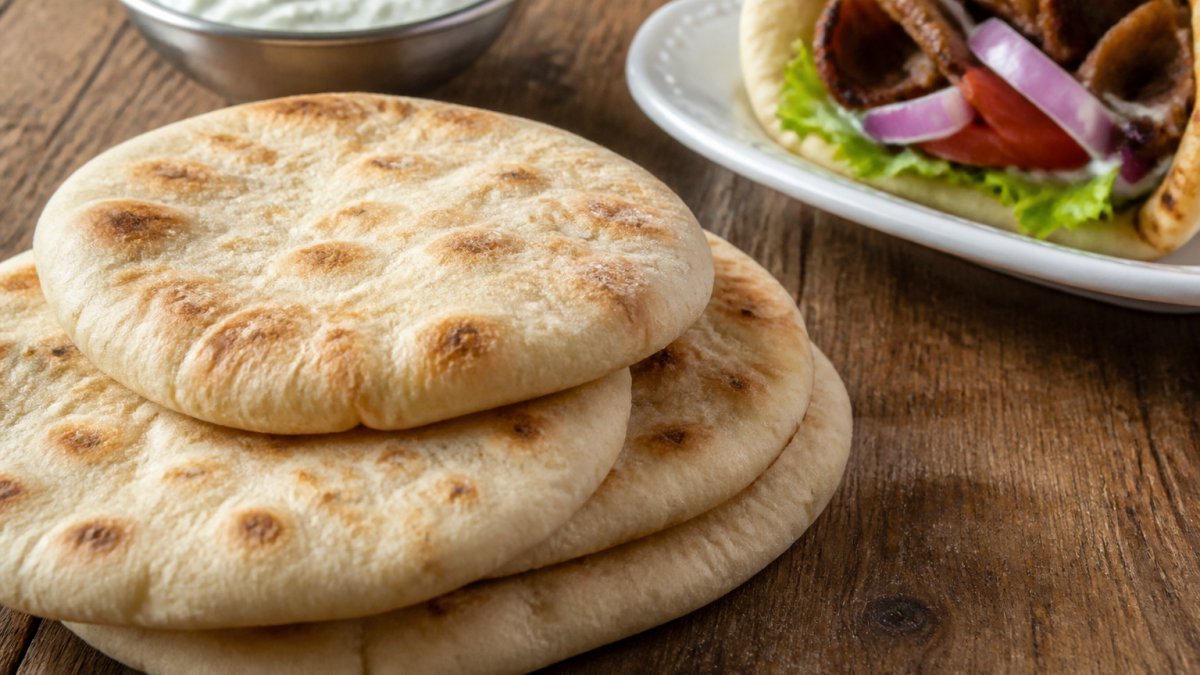
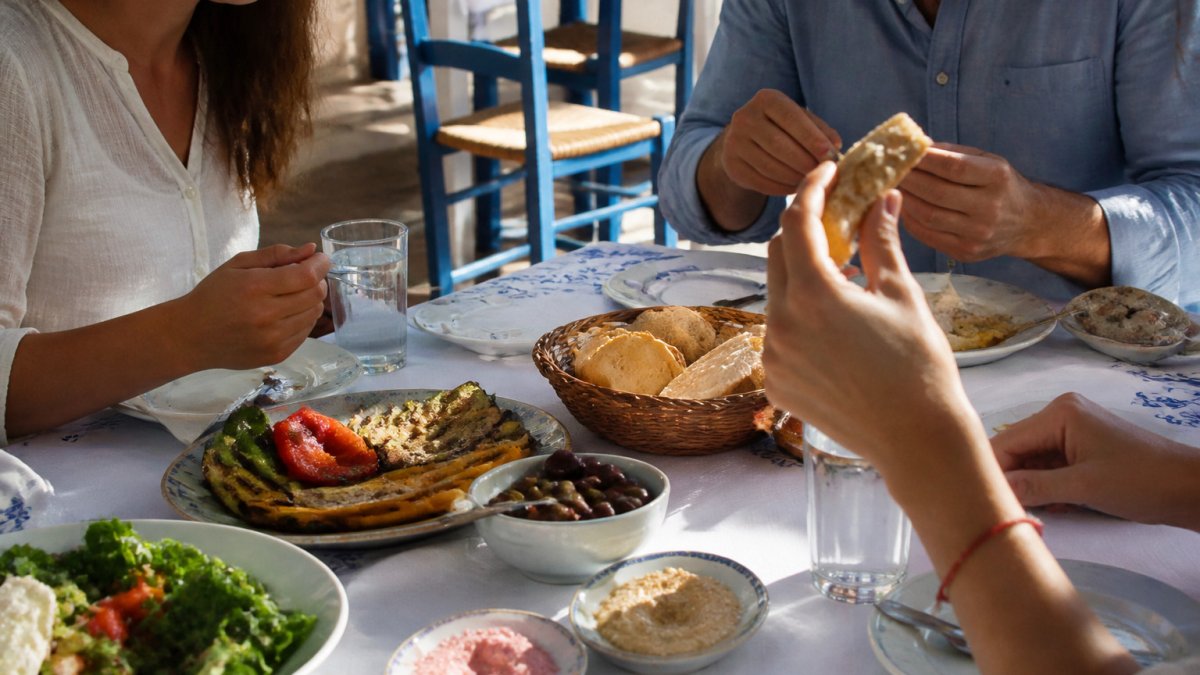
- Bread is for the table, not your plate. Tear off a piece with your hands rather than biting into a whole slice, and use it to scoop tzatziki or soak up olive oil. Don't butter bread at a Greek meal; olive oil is the default.
- Taste before you salt. Greek cooking is seasoned deliberately, and reaching for the salt shaker before trying a dish can quietly signal that you assume it needs fixing.
- Try a little of everything offered. Refusing a dish outright can feel like a rebuff. Take a small portion even if you are unsure, and compliment the cook, people genuinely appreciate it.
- Keep your napkin on your lap, and leave it folded loosely on the table when you finish, not crumpled on the plate.
- Toothpicks are common at the end of the meal. If one is offered, it is normal to use it at the table; there is no need to excuse yourself.
Watch out: Don't treat these as rigid laws. A casual souvlaki counter and a sit-down family taverna have different expectations, and a relaxed lunch may skip half of these habits entirely. The point is to be considerate, not formal.
How to Order at a Greek Restaurant Step by Step
Ordering at a Greek restaurant is easier than it looks. Most menus list meze, salads, grilled meats and mains. A good plan is to order a few shared starters, then one or two mains for the table.
Follow these steps:
- Ask the server for recommendations. Staff know which dishes are fresh that day.
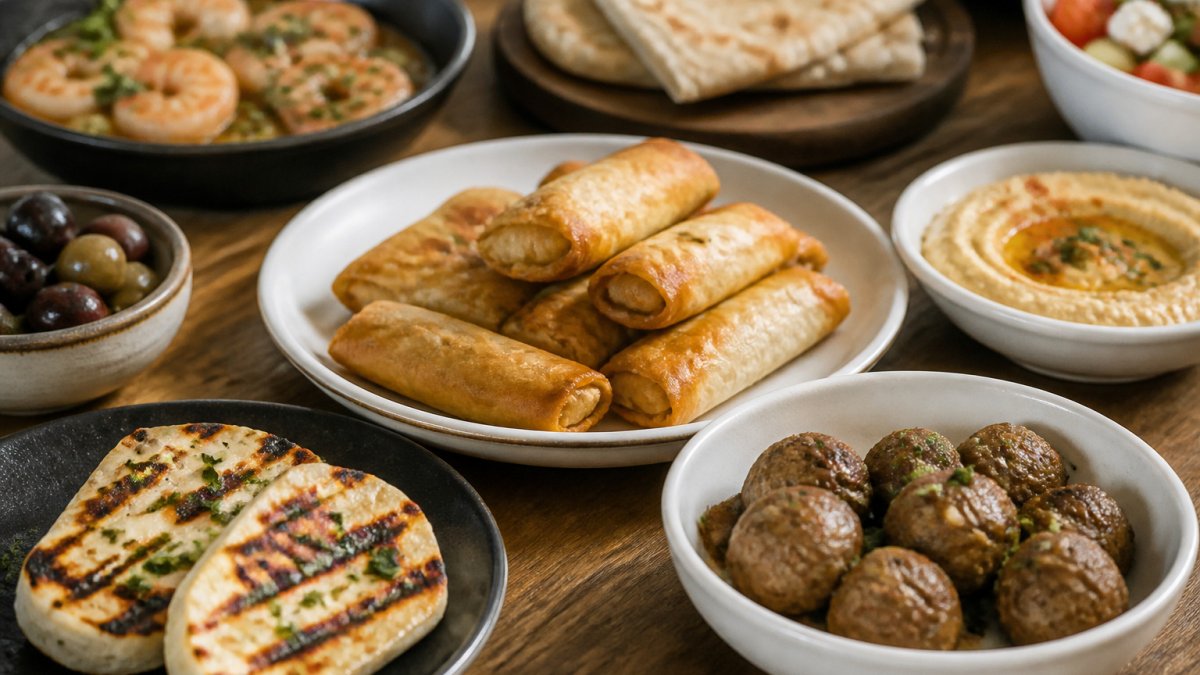
- Order several meze or appetizers to share, such as tzatziki, saganaki or dolmades.
- Add a Greek salad or horiatiki for the table.
- Pick one or two main dishes, like a gyro platter or grilled lamb.
- Order more later if you are still hungry. Extra plates can usually be requested.
| Course | Typical Choice | Best For |
|---|---|---|
| Meze | Tzatziki, hummus, dolmades | Sharing |
| Salad | Greek salad | Fresh start |
| Main | Gyro, grilled lamb, souvlaki | Hearty eating |
| Dessert | Baklava, yogurt with honey | Sweet finish |
Portions are often generous, so ordering in stages often works better than ordering everything at once.
Greek Food Sharing Etiquette at the Table
Sharing is the heart of Greek dining. In Greek dining, dishes are often placed in the middle of the table, and everyone helps themselves. Use the serving spoon or tongs that come with each plate instead of your own fork.
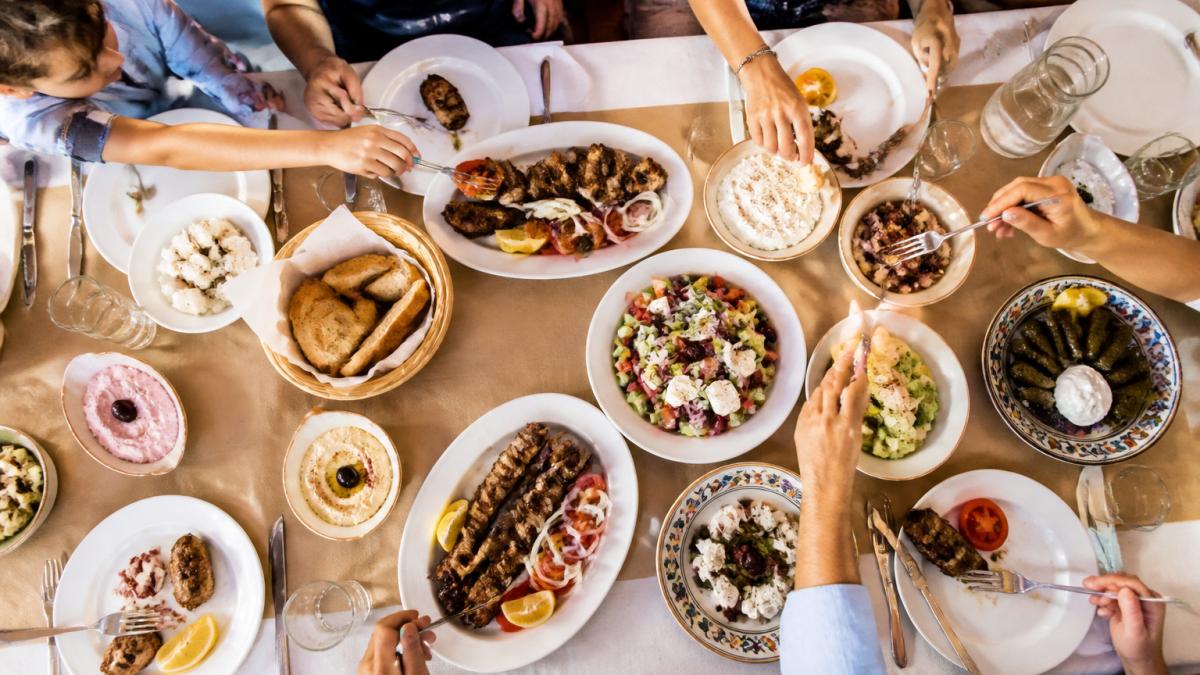
Keep sharing simple:
- Take a reasonable amount from each dish, then pass it along.
- Offer food to others before serving yourself a second helping.
- Don't reach across the table. Ask someone to pass it.
- Cut bread and meze pieces only if they are small enough to share.
People often expect to split the bill as well, though customs vary. Ask the table before you decide how to pay.
A First-Visit Sequence: From Arrival to Paying
Most etiquette guides give you scattered tips. This is the whole visit in order, so a first-timer knows what happens next and what to do at each stage.
- Arrive and wait to be seated. Greet the host with a smile and "Yia sas." If the room looks full, it is fine to ask how long the wait is. Don't seat yourself unless there is a clear sign telling you to.
- Settle in and ask about specials. Once seated, your server will usually bring water and take a drink order. This is the moment to ask what is fresh that day, staff know which dishes are worth ordering.
- Order drinks and starters first. Water, wine, or a beer are common openers. Order a few meze to share rather than committing to the whole meal at once; Plates often come out in stages.
- Let the meal unfold at its own pace. Dishes arrive as they are ready, not in a fixed order. Share plates, talk, and don't wait for a formal "main course" signal. If you want another dish later, just ask, adding plates mid-meal is normal.
- Decide on dessert or coffee when you're ready. If you want something sweet, ask for the dessert menu or order baklava and a coffee. If you're full, it is fine to move straight to the bill.
- Request the bill when you're done. Say "To logariazmo, parakalo" (the check, please). The check will not come until you ask, so don't wait for it to appear.
- Pay at the table or at the counter, depending on how the restaurant works. Watch what other tables do, or ask your server. Keep cash and cards handy in case you need either.
A note on pacing: A long meal is normal in Greek dining, not slow service. If you are on a tight schedule, let your server know when you order. Otherwise, plan for a leisurely visit and enjoy it.
Tipping Etiquette in Greece and How It Differs From the US
Tipping in Greece is more relaxed than in the United States. Service charges are often included, so a smaller tip is common. Rounding up or leaving a few euros for good service is typical.
In the US, tipping is expected. A tip of 18 to 20 percent is standard at sit-down restaurants. In the United States, tipping your server for table service is the customary practice.
Some visitors wonder whether they must tip at all. In the US, a missing tip is noticed. A thoughtful amount shows appreciation.
Planning Your Next Greek Meal in Brick, NJ
If you are ready to try Greek dining, start with a family-owned favorite that values fresh food and friendly service. Why Choose Family Owned Greek Restaurants in 2026 explains what sets these spots apart.
For local picks, Authentic Greek Food in Brick NJ: Where to Eat in 2026 covers where to find traditional dishes. You can also compare options in Best Greek Restaurants Near Brick, NJ: A Local Guide.
Stop in, order a few meze to share, and take your time. Try it today and see how a true Greek meal should feel.
Frequently Asked Questions
What are the basic dining etiquette rules in Greece?
Meals in Greece are relaxed and social, so expect to linger rather than rush. Wait for the host or server to bring food, since dishes often arrive as they are ready rather than all at once. Share plates family-style, offer others a taste before taking more, and keep conversation going between courses. Greeks often toast with the word yamas and make eye contact when clinking glasses. Use your fork and knife for most dishes, and ask for bread or extra plates if you need them.
Is it polite to finish your plate at a Greek meal?
Finishing your plate is generally fine and shows you enjoyed the food, but it is not required. Greek hosts often keep offering more, so leaving a small amount can signal that you are full rather than unsatisfied. Do not feel pressured to clear everything, especially with large shared spreads. If you want to compliment the cooking, saying the food is delicious (nóstimo) goes a long way.
How should you order food at a Greek restaurant for the first time?
Start by asking the server for recommendations, since many tavernas have daily specials that are not printed on the menu. Order a few meze or appetizers to share, then add one or two main courses for the table rather than one main per person. Ask about portion sizes if you are unsure, because some dishes are meant for sharing. Be clear about allergies or dietary needs when you order, and it is fine to ask how a dish is prepared before you choose it.
Is tipping expected at Greek restaurants?
Tipping in Greece is appreciated but not as strictly expected as it is in the United States. Many restaurants include a service charge in the bill, so check the receipt before adding anything. If service was good and no service charge appears, rounding up or leaving a few euros in cash for the server is a common gesture. Tips are typically given in cash, directly to the server, rather than added to a card payment.