 how-to
How to Properly Seal Takeout Containers for Heat
Last Updated: October 22, 2026
Quick Summary
To seal takeout containers for heat, align lidding film over the container opening, position your heat sealer to contact both the film and container rim, apply firm even pressure for 1-2 seconds at the recommended temperature (300-350°F for polypropylene), then let cool before moving. A proper seal should feel smooth and solid with no gaps or loose edges.
- Polypropylene and PET are the best heat-sealable materials for food containers.
- Temperature, pressure, and dwell time are the three critical factors that determine seal quality.
- Always smooth the film and clean the container rim before sealing to prevent weak bonds.
- Test seals by running your finger along the edge and gently squeezing the container.
- Warn customers to vent sealed containers by peeling back one corner before microwaving to prevent steam pressure buildup.
Table of Contents
- Understanding Heat Sealing and Why It Matters for Takeout
- How to Heat Seal Food Containers: Materials and Preparation
- Heat-Safe Takeout Containers: What to Use and Avoid
- Step-by-Step Guide to Sealing Takeout Containers
- How to Keep Takeout Food Hot During Delivery and Storage
- Can You Microwave Takeout Containers After Sealing?
- Troubleshooting Common Sealing Problems
- Checking Seal Quality and Preventing Leaks
- Frequently Asked Questions
Understanding Heat Sealing and Why It Matters for Takeout
Heat sealing is the process of using heat and pressure to join two layers of plastic film together, or to seal takeout containers by sealing a plastic film to the rim. When done correctly, it creates an airtight seal that locks in freshness and prevents food from drying out during delivery and storage.
For takeout containers, proper heat sealing matters because it preserves food quality. A good seal keeps moisture in, prevents air exposure, and protects against contamination. We understand that customers expect their food to arrive hot, fresh, and in perfect condition, and the seal is what makes that possible.
The seal works by melting the thermoplastic material slightly so the surfaces bond together. The heat softens the plastic, and the pressure holds it in place while it cools and hardens into a solid joint.
How to Heat Seal Food Containers: Materials and Preparation
Before you seal anything, you need the right materials. Not all plastic containers and films work the same way. Some are designed for heat sealing, others are not. Using incompatible materials is the fastest way to ruin a batch of takeout.
Choosing the Right Packaging Material
The most common heat-sealable materials for food containers are polypropylene (PP) and polyethylene terephthalate (PET). Both are thermoplastic, meaning they soften when heated and harden when cooled. This makes them ideal for creating airtight seals.
Polypropylene containers are the industry standard for hot food. They handle heat well and create strong seals. PET film works for cooler foods and is often used for lidding film over containers. Avoid polyethylene (PE) or low-density plastics unless they're specifically labeled as heat-sealable, they melt too easily and won't create reliable seals.
Check the container or film packaging for a heat-seal rating. It should list the recommended temperature range. If there's no rating, ask your supplier before ordering in bulk.
Preparing Your Container and Film
Clean, dry surfaces seal better than dirty ones. Any food residue, dust, or moisture on the sealing surface will weaken the bond or create an incomplete seal.
Before sealing, wipe down the container rim where the film will seal. If the container is hot from freshly cooked food, let it cool slightly first, not completely, but enough that condensation won't form on the rim. Condensation creates moisture that prevents a tight seal.
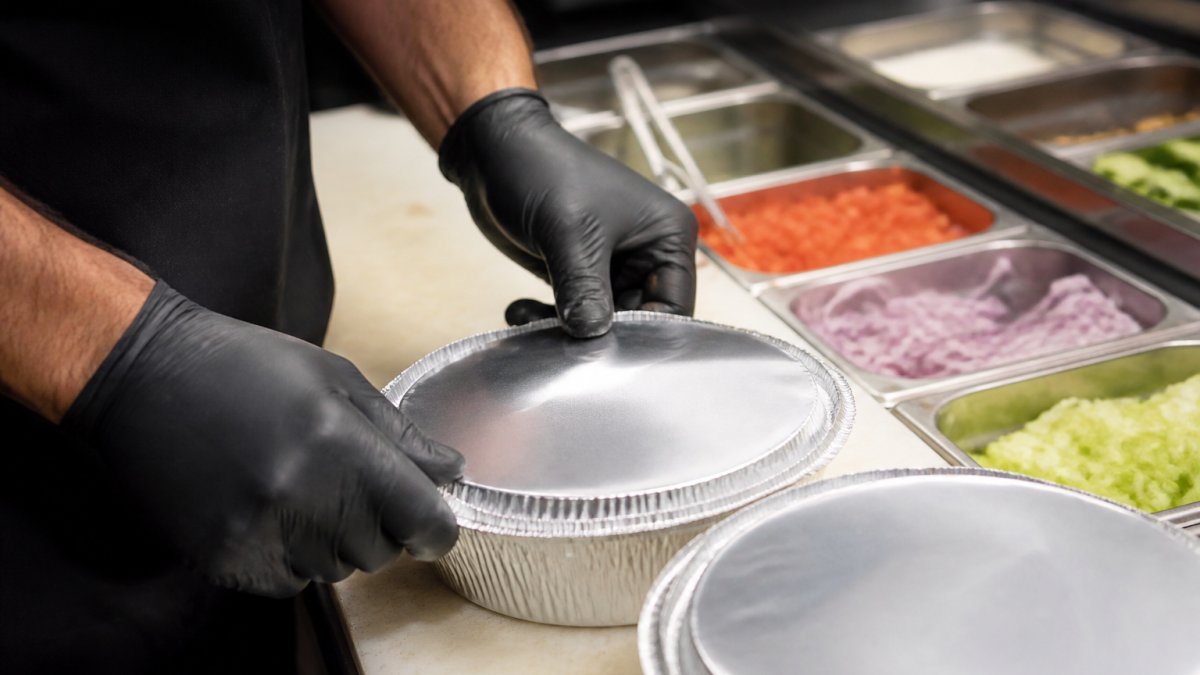
Align the film carefully over the container opening. The film should sit flat and centered, with no wrinkles or folds at the edges. Wrinkles trap air and create weak spots in the seal. Smooth the film down gently before applying heat.
Heat-Safe Takeout Containers: What to Use and Avoid
Not all containers are safe to seal and then reheat. Some plastics release harmful chemicals when heated repeatedly. Others warp or crack in the microwave.
Polypropylene (PP) containers are safe for reheating in the microwave after sealing. They can handle temperatures up to about 240°F without degrading.
Avoid PVC, polystyrene (foam), and low-density polyethylene for sealed hot food. These materials break down at lower temperatures and should never go in the microwave.
For delivery, choose containers with thick walls and tight-fitting lids. Thin plastic containers don't insulate well and allow heat to escape quickly. Thicker containers keep food hot longer, which means better quality when the customer opens it.
Step-by-Step Guide to Sealing Takeout Containers
Sealing takeout containers for heat requires focus and the right technique. Here's how to do it correctly.
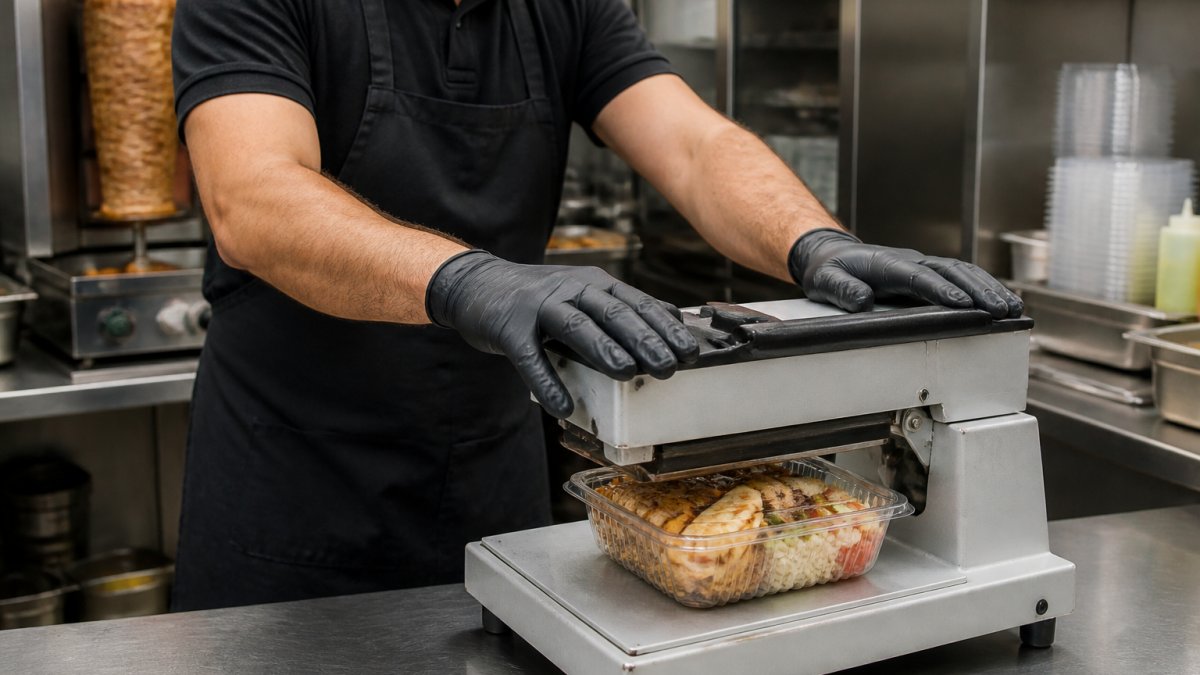
Step 1: Prepare the container and film Place the filled container on a flat surface.
Step 2: Position the heat sealer If using a manual heat sealer, align it with the container rim.
Step 3: Apply heat and pressure Lower the sealing bar onto the film and hold it steady.
Step 4: Release and cool Lift the sealing bar and let the container cool for a few seconds before moving it. The plastic needs time to harden.
Step 5: Inspect the seal Run your finger along the sealed edge. It should feel smooth and solid, not wrinkled or gummy.
Setting the Right Temperature and Pressure
Temperature is the most critical variable in heat sealing. Too low, and the plastic won't bond. Too high, and it burns or warps. Most heat sealers have adjustable temperature settings.
For polypropylene, typical sealing temperatures range from 300°F to 350°F. For PET, 250°F to 300°F is standard. Your specific equipment and film thickness may require adjustments within that range.
Pressure should be firm but not excessive. If you're using a manual heat sealer, apply steady downward force without forcing.
Dwell time is how long the heating element stays in contact with the film. Most sealers use 1-2 seconds. Longer dwell times create stronger seals but increase the risk of burning.
Applying the Seal Correctly
Consistency matters more than perfection. Every container should be sealed the same way using the same settings. This is why training matters if you're running a restaurant or catering operation.
Always seal the container while the food is still warm but not hot enough to burn your hands.
Work in a consistent rhythm. Seal one container, let it cool for 2-3 seconds, then move to the next. Don't rush. Rushing leads to misaligned seals and incomplete bonds.
If you're sealing containers for delivery, seal them as close to pickup time as possible. A seal that sits for hours may loosen slightly as the container cools.
How to Keep Takeout Food Hot During Delivery and Storage
A good seal keeps food hot, but it's only part of the solution. Container choice and packing method matter too.
Use insulated containers or bags for delivery. Polypropylene containers are decent insulators, but wrapping them in foil or placing them in an insulated delivery bag keeps heat in much longer.
Stack containers carefully. Don't stack them so tightly that you crush the seals. Leave a small gap for air circulation, but keep them close enough that they share warmth.
For longer deliveries, consider using heat packs or warming bags. These extend the time food stays hot and improve the customer experience.
Can You Microwave Takeout Containers After Sealing?
Yes, you can microwave sealed polypropylene and PET containers, but with caution. The sealed film will trap steam, which can build pressure inside the container.
Before microwaving, the customer should carefully peel back one corner of the film to let steam escape. This prevents the container from becoming a pressure cooker and the food from splattering.
Never microwave a fully sealed container. The pressure buildup can cause the seal to burst or the film to separate violently, creating a mess and potentially causing burns.
If the container is sealed with a tamper-evident seal (a shrink band that shows if the container has been opened), the customer should remove it before microwaving.
Troubleshooting Common Sealing Problems
Even with good technique, seals sometimes fail. Here's how to fix the most common problems.
Wrinkled seals happen when the film isn't smooth before sealing. The wrinkles trap air and create weak spots.
Incomplete seals mean part of the seal didn't bond.
Weak seals that peel apart easily mean the temperature or pressure was too low. Fix: Increase the temperature by 10-20°F and try again.
Burned or melted film means the temperature is too high. The plastic is charring instead of bonding. Fix: Lower the temperature by 10-20°F.
Leaking seals happen when the bond doesn't seal the entire rim. Food or liquid seeps out.
Gummy or sticky seals mean the plastic didn't cool enough before the container was moved.
Checking Seal Quality and Preventing Leaks
A visual inspection isn't enough. You need to test the seal to make sure it actually works.
Run your finger along the sealed edge. It should feel solid and smooth.
Gently squeeze the sealed container. If air leaks out or the seal separates, it's not good. A proper seal should hold firm pressure without any give.
For critical applications like soups or sauces, do a water test. Fill a sealed container with water, hold it over a sink, and invert it.
Keep records of your sealing settings. Document the temperature, pressure, and dwell time for each container type.
Train anyone who seals containers. Consistency comes from technique, not luck.
Proper heat sealing is what separates good takeout from great takeout. Whether you're running a restaurant, catering operation, or preparing food for delivery, mastering the technique of how to properly seal takeout containers for heat will improve your reputation and keep customers coming back.
Frequently Asked Questions
What temperature is safe for sealing takeout containers with hot food?
Safe sealing temperatures depend on your container material. Most food-grade plastic containers can handle 160-180°F without warping. For thermoplastic films, aim for 280-320°F on the sealing bar itself, the heat transfers to the film and container rim, creating an airtight seal without damaging the food inside. Always verify your specific container's heat rating before sealing hot food; some materials degrade at lower temperatures. Allow food to cool slightly before sealing if it exceeds 180°F to prevent condensation and steam damage inside the seal.
How do you know if a heat seal on a takeout container is strong enough?
A strong seal should feel firm and continuous around the entire rim, run your finger along the sealed edge and you should feel no gaps or weak spots. Gently try to peel the lidding film away; it should resist and not separate easily. Look for uniform color and texture along the seal line; wrinkles, discoloration, or thin spots indicate incomplete sealing. For tamper-evident seals, the band should sit flat and tight with no bubbles or loose edges. Test a few containers from each batch to catch seal failures early and adjust temperature, pressure, or dwell time before sealing a full batch.
Can you microwave sealed takeout containers?
Most food-grade plastic takeout containers are microwave-safe, but the seal itself may not be. If you need to reheat sealed food, carefully peel back or cut open the lidding film first to allow steam to escape. Microwaving a completely sealed container can cause pressure buildup and rupture. Check your container's label for microwave-safe markings. Once opened, transfer the food to a microwave-safe dish or remove the seal entirely before reheating. If the seal is tamper-evident or designed for cold storage only, do not microwave, these films may release harmful compounds at high temperatures.
Why do sealed takeout containers leak or sweat inside?
Leaking usually results from an incomplete or weak seal, gaps allow liquid to escape or air to enter. Sweating (condensation) occurs when hot food cools inside a sealed container; moisture condenses on the lid and drips back onto the food. To prevent this, allow food to cool to about 160°F before sealing, or leave a small gap in the seal while the container cools, then reseal once temperature drops. Wrinkles in the film also weaken the seal; ensure the film is taut and smooth before heat sealing. Check that the container rim is clean and dry, debris or food residue prevents a tight seal.