 how-to
How to Choose the Best Greek Catering for Events
Table of Contents
- Define Your Event Type and Size
- Explore Greek Catering Alternatives for Your Needs
- Understand Service Styles and Menu Customization
- How to Estimate Catering Portions Per Person
- Accommodate Dietary Restrictions and Preferences
- Key Questions to Ask Event Caterers
- Evaluate Experience, Reputation, and Logistics
- Plan Your Budget and Finalize Your Selection
- Frequently Asked Questions
Last Updated: September 18, 2026
Define Your Event Type and Size
Learning how to choose the best Greek catering for events starts with understanding your event type and size. A corporate lunch for 30 people requires different catering than a wedding for 150. Your headcount and event type determine menu options, service style, pricing, and which caterers can handle your needs.
Start with your exact headcount, this drives every decision. Small gatherings work with restaurant boxed lunches; large events need full-service operations with professional logistics. Many caterers have minimum orders or capacity limits, so confirm your number upfront.
Identify your event type: corporate lunch, family gathering, wedding, or community celebration. Each has different expectations for service style and presentation. Corporate events prioritize efficiency; weddings demand elegant plating. This clarity helps caterers understand whether they're the right fit.
Explore Greek Catering Alternatives for Your Needs
Greek catering comes in different forms. A local restaurant may lack capacity for 100 people; a full-service company may lack authentic flavors. Understanding your options helps match the right provider to your needs.
Restaurant-based catering is often most affordable. Established Greek restaurants deliver food from their kitchen with simpler setup. This works best for casual events. Gyro Kingdom offers exceptional catering with authentic Greek cuisine made with fresh ingredients and generous portions.
Full-service catering companies handle menu planning, preparation, delivery, setup, staffing, and cleanup. They cost more but provide professional event management ideal for formal events, large crowds, or when you want logistics handled so you can focus on guests.
Specialized Greek catering services focus exclusively on Mediterranean cuisine with authentic dishes and deeper customization than general caterers.
Choose based on budget, event size, and desired caterer involvement. Casual gatherings suit restaurant catering; formal weddings benefit from full-service expertise.
Understand Service Styles and Menu Customization
How your food arrives and gets served shapes the entire guest experience. Greek catering offers several service styles, each with different costs, staffing needs, and atmospheres.
Buffet Style Service
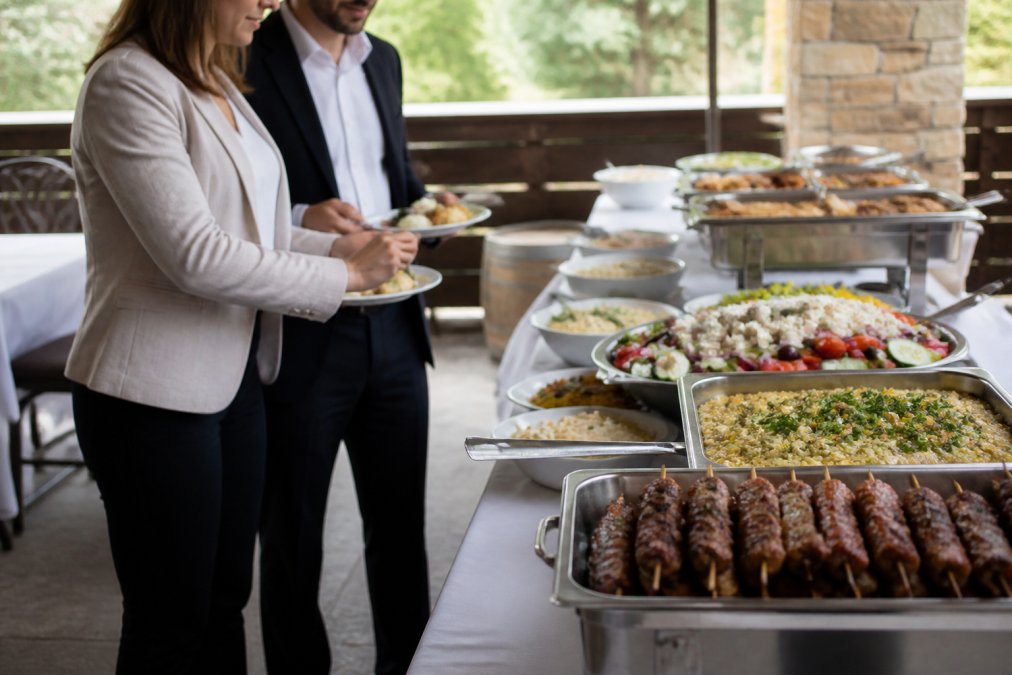
Buffet service lets guests serve themselves from Greek dishes, cost-effective and informal for casual events. Advantages: simplicity and lower staffing costs. Disadvantages: less portion control and casual feel. Works well for office lunches and family gatherings; less ideal for formal weddings.
Ask about food safety: how is hot food kept hot and cold food kept cold? Proper temperature control prevents foodborne illness (the CDC).
Boxed Lunches and Plated Service
Boxed lunches provide individual meals convenient for limited space or staggered eating. Plated service is more formal, staff serves individual plates with careful arrangement and consistent portions. Both allow menu customization by protein or dietary preference, eliminating waste.
Mobile Kitchen and On-Site Preparation
Some caterers bring mobile kitchens for on-site preparation, guaranteeing freshness and real-time customization. Guests watch food being prepared, creating an interactive experience. This requires adequate space and utilities but delivers a memorable experience.
How to Estimate Catering Portions Per Person
Getting portions right prevents two disasters: running out of food or having massive leftovers. The right amount depends on your event type, how long it lasts, and what else is being served.
Plan for 1 to 1.5 pounds of food per person for lunch or dinner. Reduce portions if appetizers are served; increase if Greek food is the only offering. Consider your guest mix: business lunches involve lighter eating than evening celebrations.
| Event Type | Portion Per Person | Total for 50 Guests | Notes |
|---|---|---|---|
| Office Lunch | 1 lb | 50 lbs | Light eating, shorter event |
| Casual Gathering | 1.25 lbs | 62.5 lbs | Moderate appetites, 2-3 hours |
| Evening Celebration | 1.5 lbs | 75 lbs | Heavier eating, longer duration |
| With Appetizers | 0.75 lbs | 37.5 lbs | Reduce main course portion |
Accommodate Dietary Restrictions and Preferences
Modern events require flexibility around food allergies, dietary preferences, and restrictions. Your caterer needs to handle this smoothly without creating stress or making guests feel excluded.
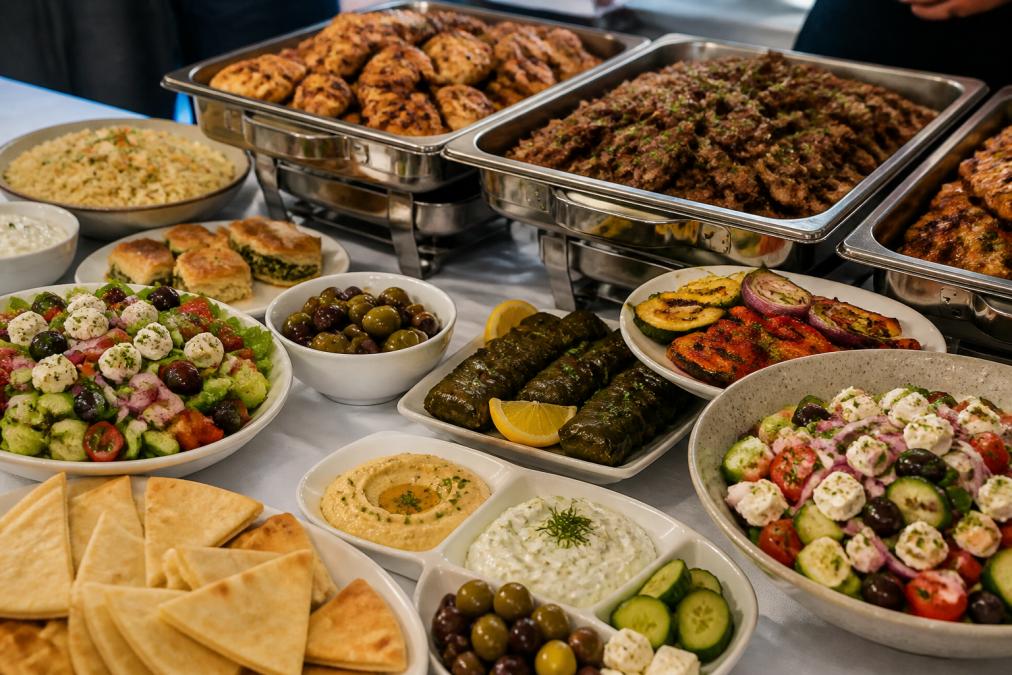
Collect dietary information in advance via RSVP form asking about vegetarian, vegan, gluten-free, and allergy needs. This gives your caterer time to plan and source ingredients.
Common Greek cuisine adaptations include:
- Vegetarian: Spanakopita (spinach pie), saganaki (fried cheese), Greek salads, roasted vegetables, falafel, hummus, and mezze platters without meat
- Vegan: Same vegetable dishes plus vegan versions of tzatziki and other sauces made without dairy
- Gluten-free: Grilled proteins, salads, roasted vegetables, and gluten-free pita or bread
- Food allergies: Discuss specific allergies directly with the caterer. Common ones include nuts, shellfish, dairy, and sesame
Ask how the caterer handles cross-contamination for severe allergies. Professional caterers use separate prep areas and dedicated utensils. Communicate quantities clearly, if 20 of 100 guests are vegetarian, ensure 20+ vegetarian meals are prepared.
Key Questions to Ask Event Caterers
Ask about experience (past events, references, largest event handled), menu (authentic dishes offered, customization, ingredient freshness, dietary accommodations), logistics (delivery radius, setup services, equipment provided, cancellation policy), and pricing (what's included, additional fees, payment terms, headcount changes). Professional caterers answer thoroughly and ask clarifying questions about your event.
Evaluate Experience, Reputation, and Logistics
Check References and Catering Experience
Ask for references from similar events. When contacting them, ask: Was the food fresh? Did they arrive on time? How was service quality? Were dietary restrictions handled properly? Would you hire them again? Listen for enthusiasm or hesitation.
Check online reviews on Google and Yelp. Look for patterns, multiple complaints about the same issue (cold food, late delivery, poor service) suggest a real problem.
Confirm Delivery Radius and Setup Services
Confirm the caterer delivers to your venue. Ask what setup services they provide: food only or full setup with serving stations and staff? What equipment do they bring? Full-service setup costs more but saves stress, worth the investment for formal events.
Review Contracts and Cancellation Policies
Get everything in writing. A contract should specify: date, time, location, headcount and change policy, menu items, price breakdown with all fees, payment terms, cancellation policy, dietary accommodations, and setup details. Communicate immediately if plans change.
Plan Your Budget and Finalize Your Selection
Determine your per-person budget, then find caterers in that range. Pricing varies by service level, menu complexity, and location. Contact 3-4 caterers with your headcount, date, venue, service preference, dietary needs, and budget. Compare quotes carefully, the cheapest isn't always best. Look at what's included. Schedule a tasting if possible to verify quality and flavor match your vision. Once decided, book immediately with deposit and signed contract.
Understanding how to choose the best Greek catering for events requires planning, but it's worth the effort. Define your needs clearly, understand your options, ask the right questions, and verify experience through references. When you find the right caterer, your guests will taste the difference. At Gyro Kingdom, we bring authentic Greek flavors and exceptional hospitality to every event. Our freshly made gyros, traditional Mediterranean dishes, and generous portions create memorable experiences for your guests. Contact us today to discuss your catering needs and get a custom quote for your next event.
Frequently Asked Questions
What should I ask a Greek caterer before booking?
Ask about their sourcing of ingredients, whether dishes are prepared fresh or pre-made, their experience with your event size, delivery radius, setup services, and how they handle dietary restrictions. Confirm their cancellation policy, whether they provide service personnel, and if they offer tasting sessions. Request references from similar events and clarify all costs upfront to avoid surprises.
How do I estimate catering portions per person for a Greek event?
Plan for 4-6 ounces of protein per person, plus sides like rice, pita bread, and salads. For a full meal, budget 1.5 to 2 pounds of total food per person. Appetizer-only events need about 6-8 pieces per person. Consider your guest list's appetite level and event duration. Discuss portion sizes with your caterer, as authentic Greek cuisine often features generous servings.
What makes one Greek catering service different from another?
Quality differs based on ingredient freshness, culinary expertise, customization flexibility, and service reliability. Look for caterers who offer authentic meze platters and traditional dishes like moussaka, and provide transparent communication about delivery times and setup. Experience with events your size, strong references, and clear contracts also distinguish reliable caterers from inconsistent ones.
What are common catering mistakes to avoid when planning a Greek event?
Avoid underestimating headcount, which leads to running out of food. Don't overlook dietary accommodations for vegan, gluten-free, and allergy-conscious guests. Failing to confirm delivery radius and setup times can result in cold food or delays. Skip caterers without clear cancellation policies or written contracts. Don't assume all Greek caterers offer the same menu quality or sourcing standards. Always request a tasting session before committing to a large order.