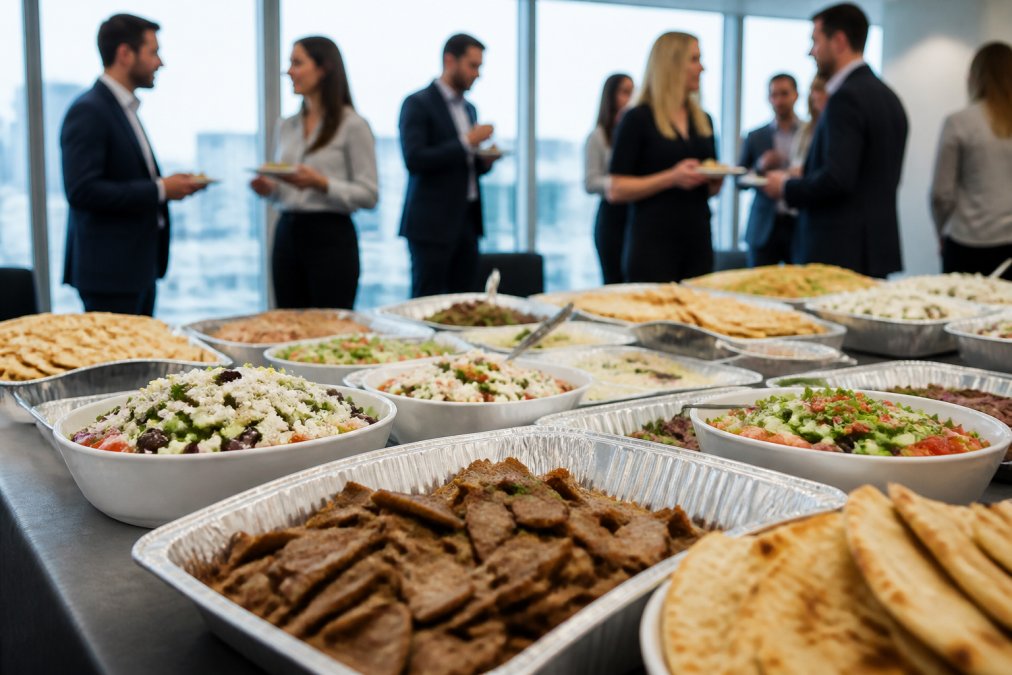
 ultimate-guide
Greek Restaurant Catering for Corporate Events
Table of Contents
- Why Greek Catering Works for Corporate Events
- Greek Restaurant Catering Menu Options for Corporate Gatherings
- How to Calculate Catering Portions for Corporate Events
- Corporate Catering Dietary Restriction Checklist
- Kostas Grill Alternatives for Catering Services
- Full-Service Catering vs. Drop-Off Options
- Ordering Process and Timeline for Corporate Events
- Conclusion
- Frequently Asked Questions
Last Updated: August 20, 2026
Why Greek Catering Works for Corporate Events
Greek restaurant catering for corporate events has become a go-to choice for professionals planning gatherings because it delivers authenticity, flexibility, and an experience that feels elevated without requiring extensive customization. The Mediterranean approach to hospitality, generous portions, fresh ingredients, and a focus on shared dining, aligns naturally with how corporate teams want to feel during events: welcomed, nourished, and connected.
What makes Greek catering particularly effective for business settings is its built-in versatility. Whether you're hosting a 20-person departmental lunch or an 80-person client reception, Greek restaurants can scale their offerings without sacrificing quality. The menu structure itself encourages variety: appetizers that work as standalone bites during networking, entrees that satisfy different dietary preferences, and platters designed for sharing that break down formal dinner hierarchies.
At Gyro Kingdom, we've seen firsthand how corporate clients return repeatedly for catering because the food speaks for itself. Fresh ingredients, authentic recipes, and generous portions create an impression that lasts beyond the event. The hospitality standard in Greek dining means your guests experience genuine warmth from the team delivering the meal, that matters more than most event planners realize.
The practical advantage is equally important: Greek cuisine doesn't demand last-minute adjustments. Your menu can be confirmed weeks in advance without the anxiety that comes with more temperamental cuisines. The flavors hold up whether service happens immediately or with slight delays, and the food remains appetizing at room temperature, which eliminates logistical pressure during setup.
Greek Restaurant Catering Menu Options for Corporate Gatherings
A well-designed Greek restaurant catering menu for corporate events balances crowd-pleasing familiarity with authentic Mediterranean flavors. The best menus offer enough variety that vegetarians, meat eaters, and dietary-restricted guests all find something substantial, not just sides.
Appetizers and Starters
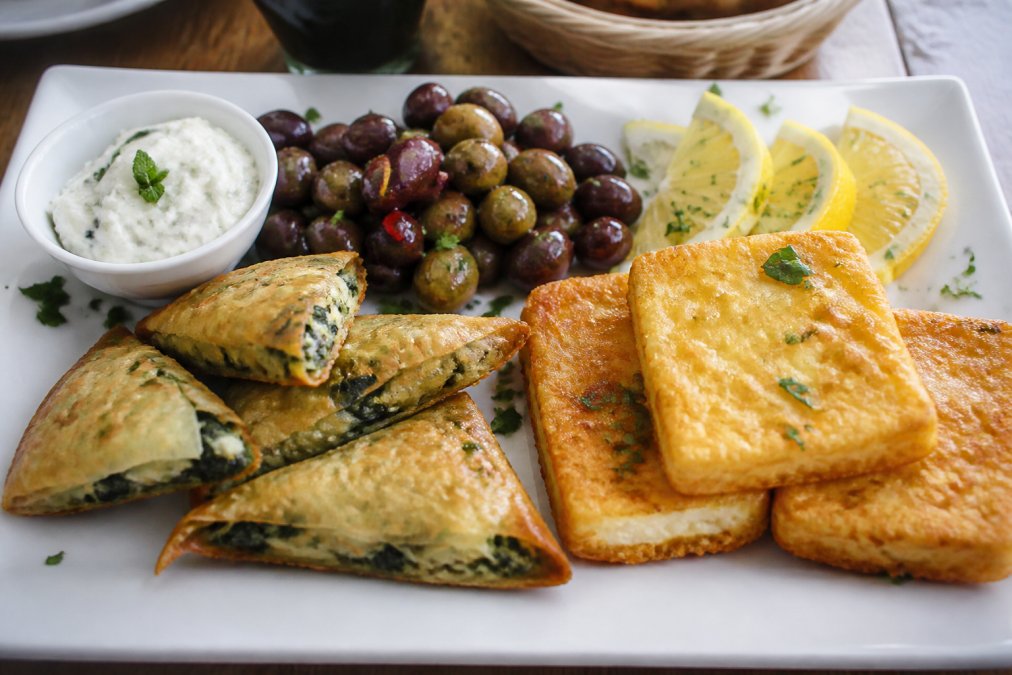
Start with items that work during the pre-meal mingling phase. Saganaki (fried cheese), spanakopita triangles, and dolmades give guests something to hold while they network. Hummus and tzatziki with fresh pita allow for lighter options. Grilled shrimp saganaki and marinated octopus bring sophistication without requiring plates and utensils, which matters when people are standing and talking.
The appetizer selection should include at least one vegetable-forward option, roasted vegetables, marinated artichokes, or a Greek salad component, so non-meat eaters don't feel the spread was designed without them in mind. A common mistake is loading the appetizer table only with fried items and meat, which exhausts guests before the main course arrives.
Entrees and Main Platters
The core of Greek restaurant catering for corporate events centers on grilled proteins and their accompaniments. Chicken souvlaki, lamb kebabs, and gyro meat represent the backbone, they're recognizable, satisfying, and can be prepared in volume without quality loss. Grilled fish options (branzino, salmon) elevate the perceived value of the catering without dramatically increasing cost.
Pair proteins with rice pilaf, roasted potatoes, and grilled vegetables. This combination allows guests to build their own plate proportions, which accommodates different appetites and dietary approaches. Include at least one vegetarian entree, saganaki with vegetables, spanakopita, or a Mediterranean vegetable medley, not as an afterthought but as a centerpiece option.
The thing nobody tells you about Greek catering is that portion sizes matter psychologically. Generous portions signal respect and abundance. Corporate guests remember feeling well-fed; they remember the value. Undersized portions create the opposite impression, regardless of ingredient quality.
Buffet-Style vs. Individual Service
Buffet-style service works best for casual corporate events, team lunches, office celebrations, informal networking. It's cost-effective, allows guests to control their portions, and reduces staffing needs. The downside: it requires sufficient space, and some guests feel awkward about portion control in front of colleagues.
Plated service or individual portions suit more formal corporate events, client dinners, executive meetings, awards ceremonies. Staff deliver plates, which removes the decision-making burden from guests and creates a more polished impression. The trade-off is higher labor costs and less flexibility if someone has a last-minute dietary concern.
For hybrid events, say, 40 people with mixed formality, many Greek caterers offer a middle option: a staffed appetizer station with individual entree plating. This delivers both the interactive feel of a buffet and the polish of plated service.
How to Calculate Catering Portions for Corporate Events
Getting portions right is the difference between a successful catering event and one where guests leave hungry. The calculation depends on event length, time of day, and whether alcohol is served.
For a standard lunch event (11:30 AM to 1:30 PM), plan approximately 1.5 pounds of food per person. This includes protein, sides, and bread. If the event is shorter (under 90 minutes) or includes appetizers beforehand, reduce to 1.25 pounds per person. For a dinner event (5:30 PM to 8:30 PM) where catering is the primary food, increase to 2 pounds per person.
Break the calculation into components: plan 4-6 ounces of protein per person, 3-4 ounces of starch (rice, potatoes), 2-3 ounces of vegetables, plus bread and accompaniments. This framework prevents over-ordering protein while under-ordering sides, which is a common mistake.
A practical approach: provide your caterer with the exact headcount, event duration, and whether appetizers will be served beforehand. A reputable Greek restaurant catering service will adjust recommendations based on their experience with similar corporate events. They'll ask clarifying questions about your guest mix, are there known heavy eaters, dietary restrictions that reduce portions for some guests, and factor those in.
The backup calculation: if you're uncertain, order slightly less than you think you need and have the caterer bring extra protein and sides that can be quickly plated if needed. Most quality caterers can accommodate this flexibility without penalty.
Corporate Catering Dietary Restriction Checklist
Before finalizing your Greek restaurant catering for corporate events, confirm that your caterer can accommodate the dietary restrictions present in your guest list. A checklist approach prevents last-minute scrambling.
Vegetarian options should be substantial entrees, not just sides. Saganaki, spanakopita, and vegetable-focused mezze platters work, but confirm they're offered as full entrees, not afterthoughts. Vegan guests need confirmation that vegetable dishes are prepared without butter or animal stock, simple question, easy to overlook.
Gluten-free guests require careful attention. Many Greek dishes contain gluten (pita, some dressings, cross-contamination in shared kitchens), so confirm that your caterer has dedicated prep space and can provide gluten-free bread or plate options. Don't assume they can accommodate this without explicit conversation.
Dairy-free and lactose-free requests need clarity: Greek cuisine uses feta, tzatziki, and saganaki extensively. Confirm which dishes can be modified and which cannot. A caterer might offer a dairy-free protein and side option rather than attempting to modify traditional dishes.
Nut allergies and shellfish allergies are critical safety issues. Confirm that your caterer has protocols to prevent cross-contamination and can provide ingredient lists or certifications if needed.
Religious dietary restrictions, halal, kosher, or others, should be discussed directly with the caterer's management. Some Greek restaurants can accommodate; others cannot. It's better to know early than discover limitations mid-event.
The most reliable approach: send a dietary restriction form to your guest list 2-3 weeks before the event, collect responses, and provide a summary to your caterer with specific headcount for each restriction. This level of clarity prevents assumptions and ensures no guest feels overlooked.
Kostas Grill Alternatives for Catering Services
When evaluating Greek restaurant catering options for corporate events, you're assessing more than menu quality. You're evaluating capacity, reliability, customization, and the professionalism of the team delivering the experience.
A strong alternative to generic catering services is working directly with an established Greek restaurant that has corporate catering experience. These establishments understand event logistics, delivery timing, temperature maintenance, setup coordination, because they've done it repeatedly. They're invested in your event's success because your satisfaction directly affects their reputation.
Gyro Kingdom brings the advantage of authentic Greek cuisine prepared fresh, combined with deep understanding of corporate event needs. The team is experienced in scaling service from small office lunches to larger gatherings, and they understand the specific pressures of corporate timing, arriving on schedule, setup efficiency, and food that maintains quality throughout your event window.
The key differentiator when comparing catering services is their responsiveness to questions about logistics. A caterer who asks clarifying questions about your venue, setup space, and timeline is more reliable than one who simply quotes a price. They're thinking through potential complications before they arise.
Full-Service Catering vs. Drop-Off Options
The choice between full-service and drop-off catering affects both cost and control. Understanding the trade-offs helps you select the right option for your specific event.
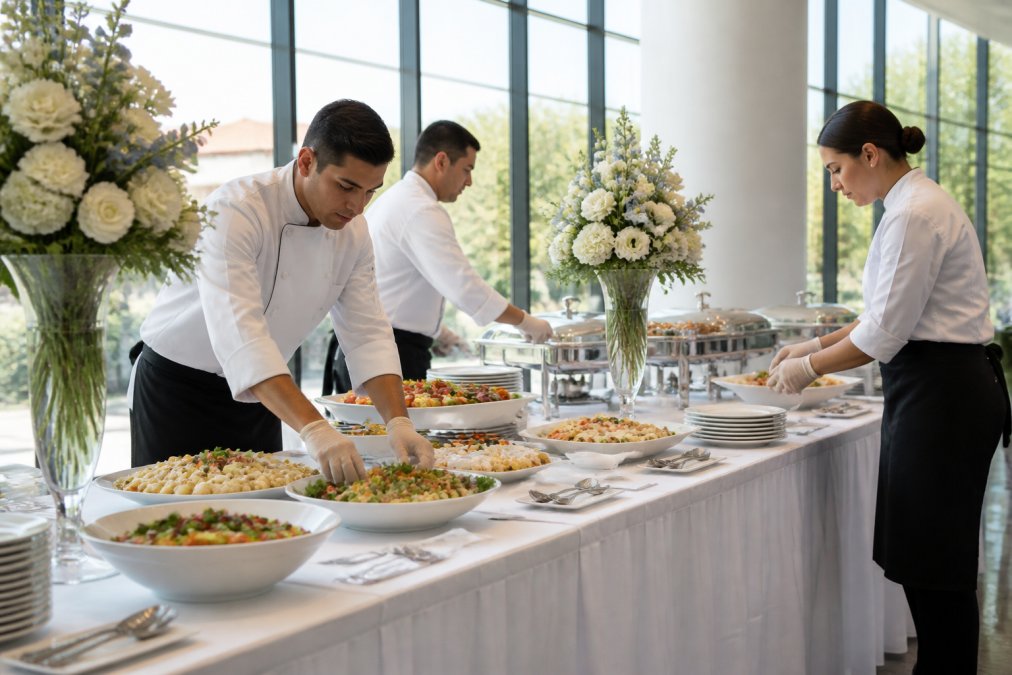
Full-service catering means the restaurant provides food, staff for setup and service, and cleanup. Your team doesn't handle any logistics beyond confirming the menu and providing access to your venue. The caterer arrives, sets up, manages the buffet or plating, handles service, and removes equipment. This approach is ideal for formal corporate events, client dinners, or situations where your team is focused on the event content rather than logistics.
The advantage is professional presentation and guest experience. Dedicated catering staff know how to manage flow, maintain food temperature, and handle service details. The disadvantage is cost: full-service runs higher because you're paying for labor.
Drop-off catering means the restaurant delivers food in containers, and your team or an in-house coordinator manages setup and service. You're responsible for plating, keeping food at proper temperature, and cleanup. This approach works for casual office lunches, team celebrations, or events where your space has kitchen facilities.
The advantage is cost savings, you're only paying for food, not labor. The disadvantage is that your team absorbs the logistical burden. If your office lacks warming equipment or serving infrastructure, drop-off catering becomes complicated quickly.
A hybrid option exists: some Greek restaurants offer partial service, where they handle setup and initial plating but your team manages the buffet line. This balances cost and convenience for mid-sized corporate events.
For corporate events where the meal is secondary to the event content (a working lunch, quick team celebration), drop-off often makes sense. For events where the dining experience is central to the impression you're creating, full-service catering delivers better results.
Ordering Process and Timeline for Corporate Events
The ordering process for Greek restaurant catering for corporate events requires lead time and clear communication. Understanding the typical timeline prevents last-minute stress.
Most established Greek restaurants request a minimum of 2 weeks' notice for corporate catering orders. This allows time for menu confirmation, ingredient sourcing, and staff scheduling. For very large events (60+ people) or complex customization requests, 3-4 weeks is safer.
The initial conversation should cover: event date and time, expected headcount, venue location and access details, dietary restrictions, preferred menu items, and service style (full-service vs. drop-off). The caterer will provide a quote, and you'll confirm the order with a deposit, typically 25-50% of the total.
One week before the event, confirm final headcount and any last-minute dietary changes. This gives the caterer time to adjust quantities and prep work. The day before, confirm delivery time and any specific setup instructions for your venue.
On the event day, communicate the exact arrival time and ensure someone is available to receive the delivery and direct setup. If full-service, brief the catering staff on your event schedule so they understand timing for appetizers, main course, and cleanup.
A common mistake is assuming the caterer knows your venue's layout or logistical constraints. Share specific details: parking availability, elevator access, kitchen facilities, table setup, and any timing constraints. The more information you provide upfront, the smoother execution becomes.
Conclusion
Planning Greek restaurant catering for corporate events doesn't require navigating complex logistics or compromising on authenticity. The combination of fresh Mediterranean ingredients, flexible menu options, and the hospitality embedded in Greek dining culture makes this choice reliable for corporate settings ranging from intimate team lunches to formal client dinners.
Gyro Kingdom brings authentic Greek cuisine, prepared fresh daily with quality ingredients, directly to your corporate event. Our team understands the specific demands of corporate catering, reliable delivery, professional service, and food that maintains its quality throughout your event window. Whether you need full-service setup with dedicated staff or convenient drop-off options, we handle the logistics so your team can focus on the event itself. Contact Gyro Kingdom today to discuss your catering needs and receive a custom quote for your next corporate gathering.
Frequently Asked Questions
What are the best Greek dishes for corporate catering?
Gyros, souvlaki, moussaka, and Greek salads are corporate favorites because they're familiar, visually appealing, and easy to serve in quantities. Mediterranean cuisine works well for professional settings since it accommodates most dietary needs. Grilled lamb and chicken options appeal to varied palates, while fresh ingredients and authentic recipes create a memorable culinary experience that impresses clients and colleagues alike.
How much Greek food should I order per person for a corporate event?
Plan 1.5 to 2 pounds of food per person for a full meal, or 0.75 to 1 pound for appetizers and lighter fare. For a 2-hour business meeting with light refreshments, 0.5 pounds per person suffices. Portion size depends on event type, duration, and whether alcohol is served. Request a custom quote based on your specific headcount and event details to ensure adequate quantities without waste.
Can Greek catering accommodate dietary restrictions like gluten-free or vegan?
Yes. Greek cuisine naturally offers gluten-free options including grilled meats, vegetables, and salads. Many Mediterranean dishes can be prepared vegan by substituting proteins or adjusting preparation methods. Use a corporate catering dietary restriction checklist to communicate all requirements upfront. Fresh ingredients and customizable menus make it straightforward to accommodate vegetarian, vegan, gluten-free, and other dietary needs for your corporate event.
What makes Greek restaurant catering different from other catering options?
Authentic Greek catering emphasizes fresh ingredients, time-honored recipes, and generous portions that create a genuine Mediterranean dining experience. Professional catering services handle setup, service, and cleanup, while drop-off options provide cost savings for self-service events. Greek restaurants focused on event coordination understand corporate timelines, delivery logistics, and the importance of reliability, key differentiators when selecting catering for business meetings and professional gatherings.
How far in advance should I book Greek catering for a corporate event?
Book at least 2-3 weeks ahead for corporate events under 50 people, and 4-6 weeks for larger gatherings of 75+ attendees. Early booking ensures menu availability, preferred delivery times, and better coordination with your event schedule. Contact your catering provider to request a custom quote and confirm capacity. Last-minute bookings may be accommodated depending on availability, but advance planning guarantees the best service and menu options.
What is the difference between buffet-style and individual Greek catering boxes?
Buffet-style catering offers self-service platters and communal dishes, ideal for networking events where guests mingle and choose portions. Individual boxes provide pre-portioned meals, perfect for working lunches or formal corporate settings where minimal setup is needed. Buffet service encourages interaction and hospitality, while individual boxes streamline logistics and reduce waste. Your event type, venue space, and guest preferences determine which service style works best.
How reliable is delivery for corporate catering events?
Professional Greek catering services prioritize on-time delivery and food quality through insulated containers and experienced logistics. Confirm delivery windows, contact information for day-of coordination, and contingency plans when booking. Established catering providers understand the stakes of corporate events and maintain consistent reliability. Verify their track record with past corporate clients and discuss any special setup or timing requirements before your event date.