 ultimate-guide
Are the Nutritional Benefits of Greek Souvlaki Real?
Last Updated: October 26, 2026
Quick Summary
Yes, the nutritional benefits of greek souvlaki are real: a 100-gram cooked chicken skewer delivers roughly 160 to 180 calories and 25 to 28 grams of protein with only 1 to 3 grams of carbohydrates. The marinade's olive oil and lemon add vitamin E and vitamin C, and a full meal with pita, tzatziki, and salad lands near 480 to 540 calories.
- Chicken breast is roughly 75 to 80 percent protein by calories once marinade oil is counted.
- Thigh meat instead of breast adds about 30 to 50 calories and 3 to 5 grams of fat per 100 grams.
- Lamb is the richest source of heme iron among the common souvlaki meat options.
- A large pita plus fries can add 350 to 450 calories to an otherwise lean plate.
- Avoid blackening the meat, since charring at very high heat produces compounds health agencies suggest moderating.
Table of Contents
- What Traditional Greek Souvlaki Actually Is
- Chicken Souvlaki Nutrition Facts: A Standardized Breakdown
- Souvlaki Calories and Protein by Meat Type
- Micronutrients and Where They Come From
- Is Chicken Souvlaki Healthy? What the Nutrition Supports
- Souvlaki vs Gyro Nutrition: How the Two Compare
- How Preparation and Sides Change the Numbers
- Ordering a Balanced Souvlaki Meal at Gyro Kingdom
- Frequently Asked Questions
What Traditional Greek Souvlaki Actually Is
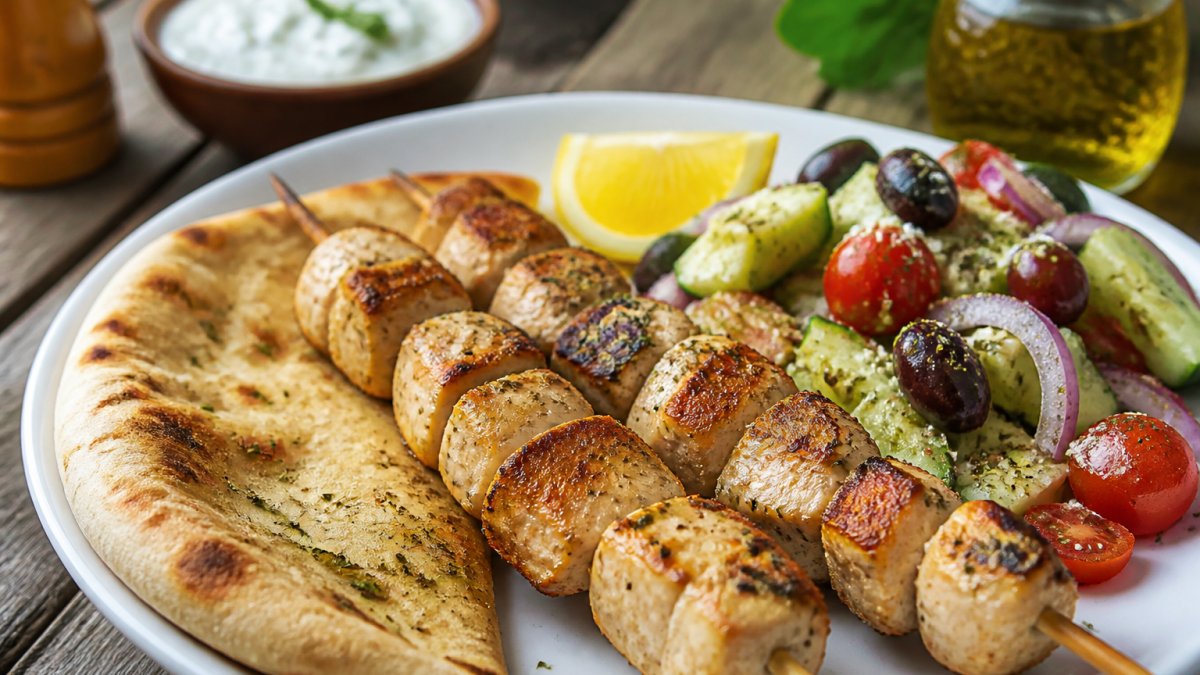
Greek souvlaki is small pieces of meat, most often chicken or pork, marinated in olive oil, lemon juice, garlic, and oregano, then skewered and grilled over high heat. That definition explains the dish's nutrition: lean protein, modest added fat, and almost no carbohydrate before the pita enters the picture.

Origins and the Greek Taverna Tradition
Souvlaki has been part of traditional Greek cuisine for centuries and remains the default order at a neighborhood Greek taverna. Skewered, charcoal-grilled meat is street food and family food at once, which is why the recipe stays simple: a short ingredient list, a hot fire, and a squeeze of lemon.
Traditional Preparation and Marinade Ingredients
The classic marinade is olive oil, lemon juice, garlic, and dried oregano, sometimes with thyme or rosemary. Olive oil carries fat-soluble flavor compounds and helps the meat char without drying out; lemon juice adds acidity and a little vitamin C; garlic and oregano add aroma so a cook can skip salt-heavy rubs. Most recipes call for a few hours of marinating, not days.
Chicken Souvlaki Nutrition Facts: A Standardized Breakdown
Most chicken souvlaki nutrition numbers are scattered across menus and food databases and rarely state their assumptions, which is why two sources can list wildly different calorie counts for the same-looking skewer. The fix is to standardize the meat, marinade amount, and cooked weight, then show the estimate per skewer, per 100 grams, and per full meal.
The assumptions behind these estimates
These figures assume skinless chicken breast; a marinade of about 1 tablespoon of olive oil per 100 grams of raw meat (roughly 120 calories of added fat before grilling loss), lemon juice, garlic, and oregano; and high-heat grilling with no added oil at the end. They also assume the skewer is weighed after cooking, since raw chicken loses roughly 20 to 25 percent of its weight during grilling. Heavier marinade, larger skewers, or oil brushed on during grilling push you to the upper end of each range.
Per skewer (about 100 g cooked)
A single 100-gram cooked chicken souvlaki skewer built on those assumptions lands near 160 to 180 calories, 25 to 28 grams of protein, 1 to 3 grams of carbohydrates, and 5 to 7 grams of fat. The protein number is the headline: chicken breast is roughly 75 to 80 percent protein by calories once the marinade oil is accounted for.
Per 100 grams (cooked)
Per 100 grams of cooked skewer meat, the same estimate is about 160 to 180 calories, 25 to 28 grams of protein, 5 to 7 grams of fat, and 1 to 3 grams of carbohydrates. Use this number to compare a restaurant portion against a homemade one, since it strips out portion size. A 150-gram restaurant skewer, for example, scales to roughly 240 to 270 calories and 38 to 42 grams of protein.
Per meal (skewer plus pita, tzatziki, and salad)
A full souvlaki meal changes the picture. One 100-gram chicken skewer plus a standard 60-gram pita (about 165 calories), 2 tablespoons of tzatziki (about 30 to 40 calories), and a small village salad with 1 tablespoon of olive oil (about 120 to 150 calories) lands near 480 to 540 calories, 35 to 40 grams of protein, 35 to 45 grams of carbohydrates, and 18 to 24 grams of fat. Add a small portion of fries (about 2.5 ounces, roughly 220 calories) and the meal climbs past 700 calories. The skewer itself is lean; the meal is where the variability lives.
What moves the numbers most
The three biggest levers, in order, are portion size, marinade oil, and what comes on the plate. Thigh meat instead of breast adds roughly 30 to 50 calories and 3 to 5 grams of fat per 100 grams. A heavy hand with olive oil in the marinade can add 40 to 60 calories per skewer. And a large pita plus fries can add 350 to 450 calories to an otherwise lean plate. USDA FoodData Central nutrition database is the most reliable place to check raw ingredient values if you want to rebuild these estimates for your own recipe.
Souvlaki Calories and Protein by Meat Type
Here is how the four common options compare per roughly 100-gram grilled serving:
| Meat type | Calories (approx.) | Protein (approx.) | Fat (approx.) | Best for |
|---|---|---|---|---|
| Chicken breast | 165-180 | 25-28 g | 5-7 g | Weight loss, high-protein goals |
| Pork shoulder | 230-280 | 22-26 g | 14-20 g | Flavor-first ordering |
| Lamb | 250-300 | 20-24 g | 18-23 g | Occasional indulgence |
| Plant-based | 180-250 | 12-20 g | 8-15 g | Meat-free diets |
How Pork, Lamb, and Plant-Based Versions Compare
Harvard T.H. Chan School of Public Health on the Mediterranean diet notes that poultry fits the pattern well when it replaces red meat rather than adding to it.
Micronutrients and Where They Come From
Most souvlaki nutrition coverage stops at calories, protein, and fat, but the micronutrient story is where the dish earns much of its Mediterranean-diet reputation. Trace each nutrient back to a specific ingredient to know what you are actually getting.
From the meat
Chicken breast is a solid source of vitamin B6, niacin, selenium, and zinc; a 100-gram cooked skewer supplies a meaningful share of the daily value for B6 and selenium. Pork shoulder adds more thiamine (vitamin B1), zinc, and iron than chicken. Lamb is the richest source of heme iron among the common options, and heme iron is absorbed more efficiently than plant-based non-heme iron, so if iron is a priority, lamb or pork skewers do more work than chicken.
From the olive oil and lemon
The marinade is not just flavor. Olive oil contributes vitamin E and a little vitamin K and helps the body absorb fat-soluble compounds from the herbs. Lemon juice adds vitamin C, which improves absorption of non-heme iron from plant foods on the plate, such as salad vegetables or rice. A squeeze of lemon at the end is a small habit with a measurable benefit.
From the herbs and vegetables
Oregano and garlic bring antioxidants, including rosmarinic acid and sulfur compounds, though marinade amounts matter more for flavor than for meeting nutrient needs. The vegetables do more: tomatoes supply vitamin C and lycopene, onions supply quercetin, and a village salad adds vitamin A and vitamin K from greens. Tzatziki contributes calcium, probiotics, and a little protein from the yogurt.
What the meal adds up to
A chicken souvlaki meal with salad and tzatziki delivers a broader micronutrient spread than the skewer alone: B vitamins and selenium from the chicken, vitamin E from the olive oil, vitamin C from the lemon and tomatoes, calcium from the yogurt, and iron and zinc from the meat. Souvlaki's micronutrient value comes mostly from the meat, olive oil, and vegetables, not the herbs, and the meal as a whole is more nutrient-dense than the skewer by itself.
Is Chicken Souvlaki Healthy? What the Nutrition Supports
The conditions matter, though. Charring at very high heat produces compounds health agencies suggest moderating, so avoid blackening the meat; sodium climbs quickly if the marinade is salt-heavy; and the dish stops being light the moment it goes into a pita with fries and heavy tzatziki. For the broader picture, our guide on whether Greek food is good for weight loss walks through the full verdict.
Souvlaki vs Gyro Nutrition: How the Two Compare
| Factor | Souvlaki | Gyro meat |
|---|---|---|
| Base ingredient | Whole chicken or pork pieces | Blended, compressed meat |
| Fat content | Moderate | Typically higher |
| Sodium | Lower | Higher |
| Protein per serving | High | Moderate to high |
| Carbohydrates | Near zero | Near zero |
How Preparation and Sides Change the Numbers
Small swaps add up fast. If you want to keep the meal lighter, our list of healthy alternatives to pita bread covers seven practical choices, and our roundup of low-carb Greek side dishes gives you dinner-ready options that won't inflate the total.
Ordering a Balanced Souvlaki Meal at Gyro Kingdom
We make our gyros fresh daily with chicken, lamb, beef, or pork. Generous portions deliver a memorable dining experience.
Best for: diners who want a high-protein Mediterranean meal without giving up flavor. Skip if: you're set on a fried, bread-heavy plate, because that's not what souvlaki is built for.
For a deeper pork-versus-chicken comparison than the table above allows, our pork vs chicken souvlaki nutrition comparison breaks down the numbers side by side.
We make gyros fresh daily with chicken, lamb, beef, or pork, and serve generous portions. Ranked among the Top 3 Greek Restaurants in Ocean County by BusinessRate in 2026 and recommended by Restaurant Guru in 2025, we've built our reputation on hundreds of positive reviews from neighbors throughout Brick Township. Get started with Gyro Kingdom.
Frequently Asked Questions
How much protein is in a typical serving of chicken souvlaki?
A standard skewer of chicken souvlaki, roughly 100 grams of cooked meat, delivers about 25 to 30 grams of protein. A two-skewer plate lands near 50 to 60 grams before you add pita or sides. That makes it one of the higher-protein options on a Greek menu, and the reason chicken souvlaki nutrition facts appeal to diners watching their intake. Portion size varies by restaurant, so ask how many skewers come with the plate.
Is souvlaki healthier than a gyro?
Usually yes, for fat and calories. Souvlaki is cubed meat grilled on a skewer, so it carries less added fat than gyro meat, which is typically stacked and roasted on a vertical spit. A souvlaki skewer often runs 150 to 250 calories, while a loaded gyro sandwich with tzatziki, fries, and pita can climb past 600. Souvlaki vs gyro nutrition comes down to how much pita, sauce, and fried food joins the plate.
Is chicken souvlaki healthy for weight loss?
It can be, depending on what you order alongside it. Grilled chicken breast is lean, high in protein, and low in saturated fat, which helps with satiety. The pitfalls are pita, tzatziki, and fries, which add calories quickly. Ask for extra salad or grilled vegetables instead of fries, keep tzatziki to a small side, and chicken souvlaki fits comfortably into a weight-loss plan without feeling like a compromise.
What sides make a balanced souvlaki meal?
Build around vegetables and fiber. A Greek salad with olive oil and feta, grilled vegetables, or a side of rice with herbs rounds out the plate without loading on fried calories. Pita adds carbohydrates, so one piece is plenty for most people. If you want the full taverna experience, split an order of fries rather than making them the base of the meal. Balance, not restriction, is what keeps souvlaki a repeat choice.