 comparison
Pork vs Chicken Souvlaki: Nutrition Comparison
Table of Contents
- Pork vs Chicken Souvlaki: Nutritional Breakdown
- How Cooking Method Affects Nutritional Value
- Is Souvlaki Healthy for Weight Loss
- Mediterranean Diet Protein Sources: Souvlaki's Role
- Micronutrient Breakdown and Health Benefits
- Which Souvlaki Should You Choose
- Frequently Asked Questions
Last Updated: September 29, 2026
Pork vs Chicken Souvlaki: Nutritional Breakdown
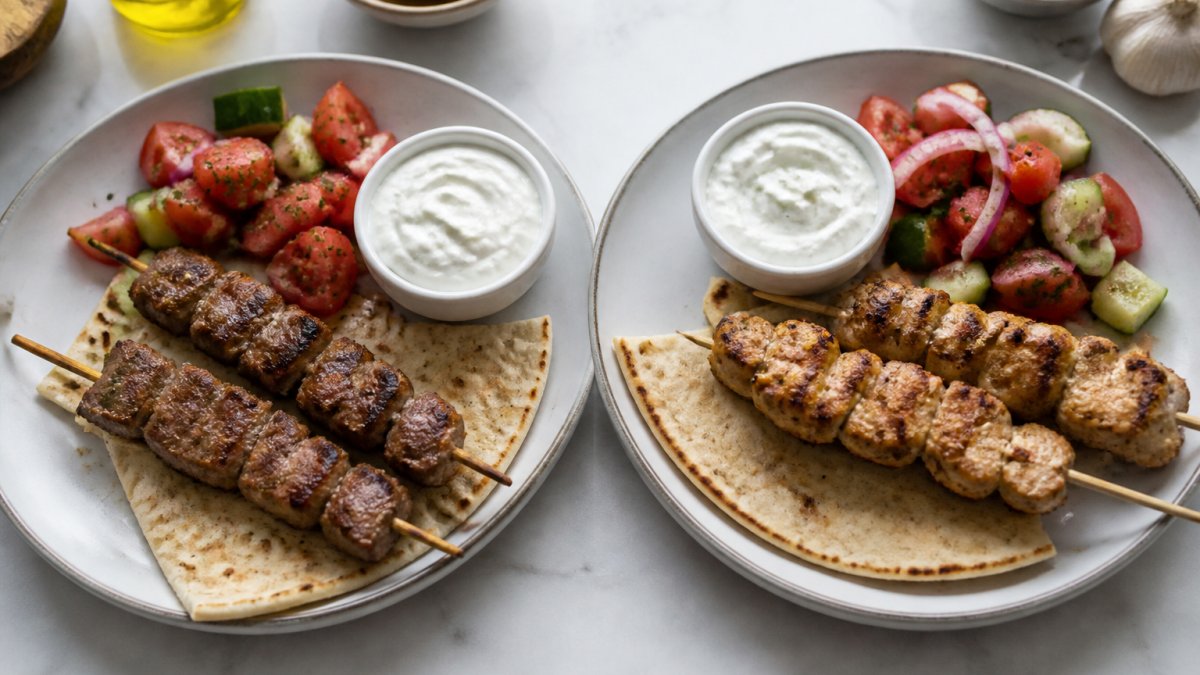
Understanding pork vs chicken souvlaki nutrition helps you make the choice that fits your health goals, as each brings distinct macronutrient profiles to the table.
The nutritional story shifts based on the meat's fat content, amino acid composition, and how the cooking method affects the final dish.
Calorie Count Comparison
A standard 4-ounce serving of grilled chicken souvlaki contains roughly 150-170 calories, while pork souvlaki runs closer to 180-210 calories, due to higher fat content in the raw meat.
Most marinade oil drains away during grilling, leaving primarily seasoning and rendered fat. The 30-40 calorie gap per serving compounds across multiple meals, though neither option is calorie-dense compared to red meat.
Protein and Macronutrient Differences
Chicken souvlaki provides approximately 28-32 grams of protein per 4-ounce serving, while pork offers 26-30 grams, making chicken the better choice if protein synthesis and muscle recovery are your priority.
Both contain all nine essential amino acids. The real difference emerges in fat composition: chicken breast is inherently leaner, while pork tenderloin contains more intramuscular fat, creating richer flavor but higher caloric density.
Fat Content and Saturated Fat Analysis
Chicken souvlaki contains roughly 3-5 grams of total fat per 4-ounce serving (1-2g saturated), while pork runs higher at 8-12 grams total fat (3-4g saturated).
Higher saturated fat in pork simply means portion control matters more if you're limiting saturated fat intake. The trade-off: richer flavor and greater satiety in exchange for higher saturated fat.
How Cooking Method Affects Nutritional Value
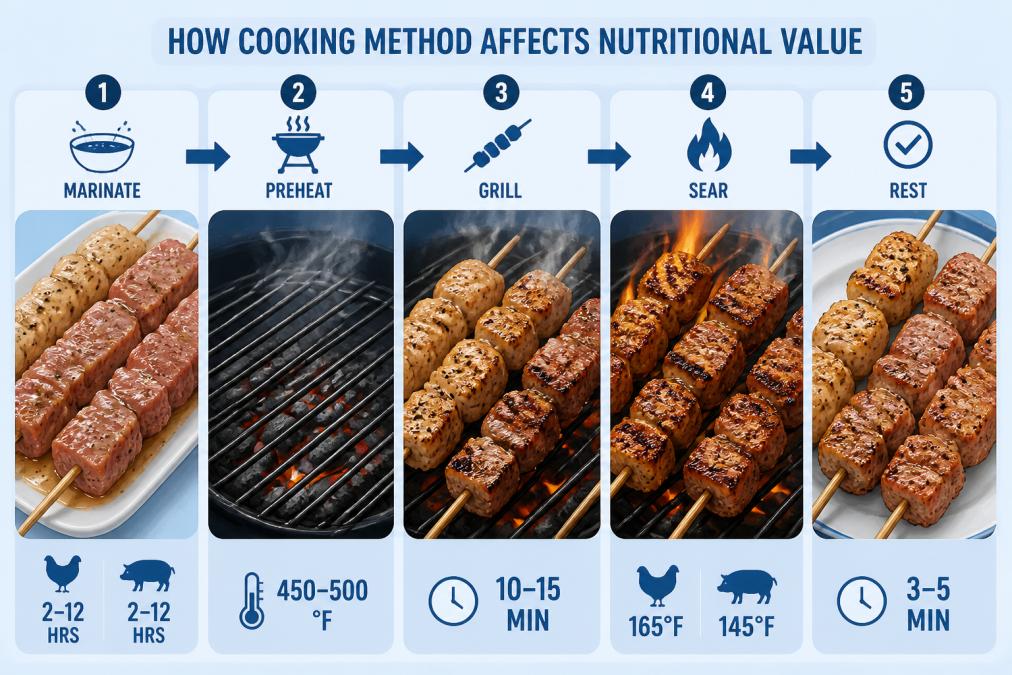
Cooking method dramatically influences nutritional profile. Charcoal grilling causes fat to render away while creating beneficial compounds through the Maillard reaction, but different methods deliver different outcomes.
Charcoal Grilling vs. Gas Grilling
Charcoal grilling (700-900°F) causes proteins to lose approximately 20-30% of original fat content, while gas grilling (400-600°F) renders only 10-15% loss. For a 4-ounce pork souvlaki, charcoal grilling reduces fat by roughly 2-3 grams compared to gas, moving it closer to chicken's profile.
Charcoal's intense heat creates more advanced glycation end products (AGEs), linked to inflammation in some research. Gas grilling produces fewer AGEs due to lower temperatures. However, Mediterranean populations using charcoal grilling show excellent health outcomes, suggesting flavor and fat-rendering benefits outweigh AGE concerns when balanced with vegetables and olive oil.
Spit-Roasting and Continuous Fat Loss
Spit-roasting allows fat to drip away continuously, reducing final fat content by 30-40% while retaining pork's flavor. The slower radiant heat (350-450°F) preserves more B vitamins and minerals than direct charcoal contact.
Marinade Composition and Heat Interaction
Traditional marinades use olive oil, lemon juice, garlic, oregano, and herbs. During grilling, roughly 40-50% of marinade oil drains away, but remaining oil and herb compounds create a protective layer reducing nutrient loss. Lemon juice's citric acid preserves vitamin C by lowering pH around the meat.
Oregano's carvacrol and thymol become more bioavailable when heated. Garlic's allicin compounds are partially degraded but some remain. Traditional marinades provide nutritional benefits beyond flavor.
Temperature Control and Nutrient Retention
Optimal grilling balances flavor development with nutrient preservation at 350-450°F. Charcoal grilling's surface temperatures exceed this, but constant rotation keeps meat's interior at 160-165°F, limiting nutrient destruction.
Constant rotation prevents prolonged extreme heat exposure. Souvlaki grilled for 8-12 minutes loses fewer B vitamins than souvlaki grilled 15+ minutes over direct charcoal.
Practical Takeaway
For maximum fat reduction and nutrient preservation, spit-roasting or gas grilling edges out charcoal. For authentic flavor and Maillard antioxidants, charcoal grilling is worth the slight AGE increase. For most people, the cooking method matters far less than choosing grilled souvlaki over fried alternatives.
Is Souvlaki Healthy for Weight Loss
Souvlaki supports weight loss through high protein and low calorie density, providing substantial satiety. Protein's thermic effect means your body burns calories digesting it.
Souvlaki served with pita bread, tzatziki, and Greek salad creates a complete meal managing hunger effectively. Fiber from vegetables and whole grain pita slows digestion and keeps you satisfied longer.
Chicken souvlaki edges out pork for strict weight loss due to lower calories and fat. Pork souvlaki works for weight loss with slightly smaller portions. Both are genuinely satisfying, unlike low-fat alternatives.
Mediterranean Diet Protein Sources: Souvlaki's Role
Souvlaki represents a cornerstone protein in authentic Mediterranean eating patterns, emphasizing lean grilled meats, fresh vegetables, olive oil, and whole grains.
Souvlaki serves as a protein anchor for predominantly plant-based meals, eaten alongside substantial portions of Greek salad, roasted vegetables, and whole grain sides.
Micronutrient Breakdown and Health Benefits
Both deliver important micronutrients, but their profiles differ enough to matter for specific dietary goals.
B Vitamins and Energy Metabolism
Chicken souvlaki provides substantial B6 (pyridoxine), delivering roughly 0.8-1.0 mg per 4-ounce serving, which covers 40-50% of the daily recommended intake for adults. B6 is crucial for amino acid metabolism, neurotransmitter synthesis, and immune function. Chicken also delivers reliable B12 (cobalamin), approximately 0.3-0.4 mcg per serving, essential for red blood cell formation and nervous system function.
Pork souvlaki offers a different B-vitamin advantage: higher thiamine (B1) content, roughly 0.7-0.9 mg per 4-ounce serving compared to chicken's 0.05-0.1 mg. Thiamine is critical for carbohydrate metabolism and nerve function, making pork particularly valuable if you're consuming significant carbohydrates (from pita, rice, or other sides). Pork also delivers niacin (B3) at approximately 5-7 mg per serving, supporting energy production and DNA repair. For people following a Mediterranean diet that includes whole grains and legumes, pork's thiamine and niacin content provides complementary nutritional support.
Selenium and Antioxidant Defense
Pork souvlaki contains significantly more selenium than chicken, approximately 30-35 mcg per 4-ounce serving compared to chicken's 20-25 mcg. Selenium is a cofactor for glutathione peroxidase, one of the body's primary antioxidant enzymes. This makes pork particularly valuable for people managing oxidative stress, recovering from illness, or engaging in intense exercise. Selenium also supports thyroid hormone metabolism, making pork a better choice for those with thyroid concerns.
Chicken still provides adequate selenium for most people, but the difference is meaningful for those specifically seeking antioxidant support through diet.
Iron and Heme Bioavailability
Both meats contain iron, but the form matters significantly. Souvlaki delivers heme iron, the form found in animal products, which has a bioavailability of 15-35% compared to non-heme iron from plant sources (2-20% bioavailability). A 4-ounce serving of either chicken or pork souvlaki provides approximately 1.0-1.5 mg of iron, covering 6-8% of the daily recommended intake for adult men and 12-17% for adult women.
The traditional marinade amplifies iron absorption: lemon juice's vitamin C enhances heme iron uptake by 25-50%. This is why authentic souvlaki served with lemon wedges and Greek salad (which contains additional vitamin C from tomatoes and peppers) is nutritionally superior to the same meat served without these accompaniments. For people managing anemia or iron deficiency, this synergy is worth noting.
Zinc and Immune Function
Both chicken and pork deliver zinc, essential for immune cell function, wound healing, and protein synthesis. A 4-ounce serving provides approximately 2-3 mg of zinc, covering 18-27% of the daily recommended intake. Pork edges slightly higher in zinc content, but the difference is modest. The real advantage is that souvlaki's protein content enhances zinc absorption, making either meat a reliable source for immune support.
Phosphorus and Bone Health
Both meats are excellent sources of phosphorus, approximately 200-250 mg per 4-ounce serving. Phosphorus works synergistically with calcium to build and maintain bone density. While souvlaki alone doesn't provide calcium, the traditional accompaniments do: feta cheese in Greek salad and tzatziki sauce both contribute significant calcium, creating a complete bone-health meal.
Dietary Suitability: Which Micronutrient Profile Fits Your Diet
For Mediterranean Diet followers: Pork souvlaki's higher thiamine and selenium align better with a diet emphasizing whole grains and legumes.
| Micronutrient | Chicken Souvlaki (4 oz) | Pork Souvlaki (4 oz) | Daily Value* | Key Role |
|---|---|---|---|---|
| B6 | 0.8-1.0 mg | 0.5-0.7 mg | 1.3-1.7 mg | Amino acid metabolism, immune function |
| B12 | 0.3-0.4 mcg | 0.4-0.6 mcg | 2.4 mcg | Red blood cell formation, nerve function |
| Thiamine (B1) | 0.05-0.1 mg | 0.7-0.9 mg | 1.1-1.2 mg | Carbohydrate metabolism, nerve function |
| Niacin (B3) | 6-8 mg | 5-7 mg | 14-16 mg | Energy production, DNA repair |
| Selenium | 20-25 mcg | 30-35 mcg | 55 mcg | Antioxidant defense, thyroid function |
| Iron | 1.0-1.5 mg | 1.0-1.5 mg | 8-18 mg | Oxygen transport, energy production |
| Zinc | 2-3 mg | 2-3 mg | 8-11 mg | Immune function, wound healing |
| Phosphorus | 200-250 mg | 200-250 mg | 800-1000 mg | Bone health, energy metabolism |
Which Souvlaki Should You Choose
In practice, the best souvlaki is the one you'll eat consistently as part of a balanced Mediterranean pattern. Neither option is nutritionally superior in absolute terms, they're simply different tools for different dietary goals. Rotating between both throughout the week gives you the nutritional benefits of each while keeping meals interesting.
Frequently Asked Questions
How many calories are in pork souvlaki versus chicken souvlaki?
A typical 4-ounce serving of grilled pork souvlaki contains approximately 240-270 calories, while the same serving of chicken souvlaki contains around 180-210 calories. The difference stems from pork's higher fat content. Both represent reasonable portions for a lean protein meal when paired with traditional sides like pita bread and tzatziki sauce. Actual calorie counts depend on marinade ingredients and cooking oil used.
Is souvlaki healthy for weight loss?
Souvlaki can support weight loss goals because both pork and chicken versions deliver high protein density with moderate calories. Protein promotes satiety, helping you feel fuller longer. Chicken souvlaki offers the leanest option at roughly 25-28 grams of protein per serving with fewer calories. To maximize weight loss potential, pair your souvlaki with vegetable-heavy sides rather than bread, control portion sizes, and choose grilled preparations that minimize added cooking oil.
What role does souvlaki play as a Mediterranean diet protein source?
Souvlaki represents a cornerstone Mediterranean diet protein source because both pork and chicken versions deliver amino acids essential for muscle recovery and protein synthesis. The traditional marinating technique using olive oil, lemon, and herbs adds beneficial monounsaturated fats and antioxidants. Souvlaki fits seamlessly into Mediterranean eating patterns when served with whole grain pita, fresh vegetables, and tzatziki, creating a balanced macronutrient profile that supports long-term health.
Does the cooking method affect souvlaki's nutritional value?
Preparation method significantly influences the final nutritional profile, making traditional grilling techniques superior for health-conscious diners.