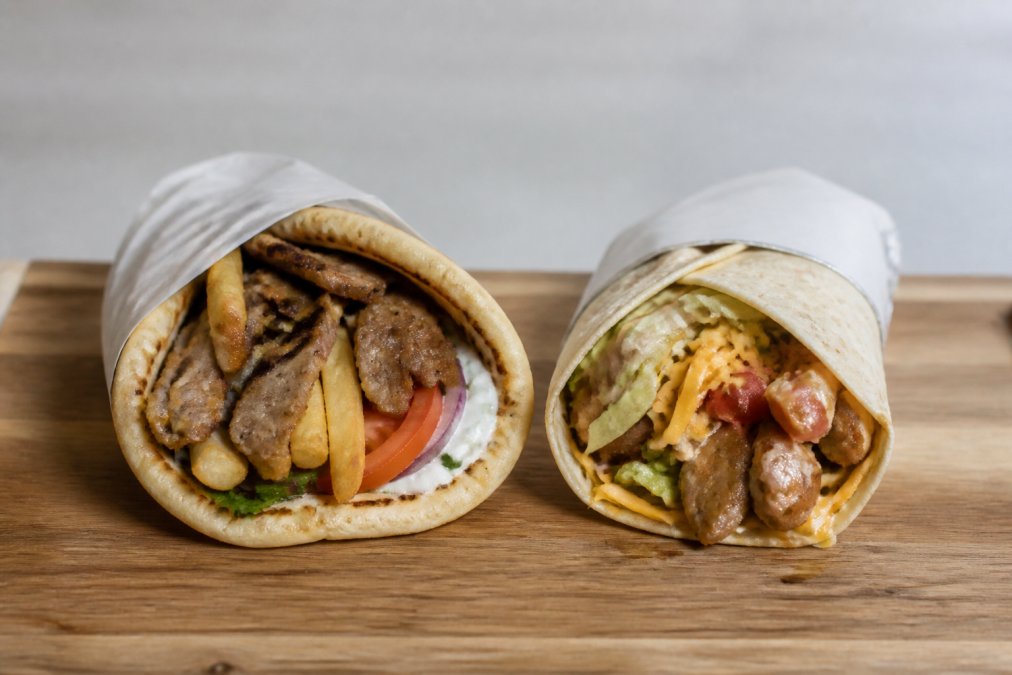
 comparison
Authentic Gyro vs Fast Food: What's Really Different
Table of Contents
- What Makes a Gyro Authentic
- Authentic Gyro vs Fast Food: Side-by-Side Comparison
- Authentic Lamb Gyro Recipe Components Explained
- Gyro vs Souvlaki Differences: Understanding Greek Street Food
- The Nutritional Reality: Authentic vs Fast Food
- How to Identify a Truly Authentic Gyro
- Making Authentic Gyros at Home
- Frequently Asked Questions
Last Updated: August 31, 2026
What Makes a Gyro Authentic
An authentic gyro is a Greek street food made from seasoned meat stacked on a vertical rotisserie spit, slow-roasted until the outer edges char, then hand-sliced and wrapped in warm pita bread with fresh vegetables and tzatziki sauce. The defining characteristic is the preparation method and commitment to fresh, quality components made to order.
Most fast-food chains skip the vertical spit entirely, opting for pre-sliced meat that gets reheated. That's not a gyro in the traditional sense, it's a sandwich that borrows the name. At Gyro Kingdom, we prepare our gyros the way they're meant to be made: fresh daily using high-quality lamb, beef, chicken, or pork, with traditional spices and no shortcuts. The meat is hand-stacked and slow-roasted until it develops that characteristic charred exterior and tender interior. This fundamentally changes the flavor, texture, and eating experience.
Authentic Gyro vs Fast Food: Side-by-Side Comparison
The gap between authentic and fast-food gyros is significant. Here's exactly where each approach differs:
| Aspect | Authentic Gyro | Fast-Food Gyro |
|---|---|---|
| Meat Preparation | Hand-stacked on vertical spit, slow-roasted | Pre-formed patty, reheated |
| Cooking Method | Rotisserie-roasted with charring | Heated on flat surface or steamer |
| Meat Quality | Fresh, high-quality cuts with visible texture | Processed meat with binding agents |
| Flavor Profile | Complex spice blend, charred edges, tender interior | Flat, one-dimensional taste |
| Pita Bread | Warm, freshly prepared | Pre-made, often stale |
| Vegetables | Fresh-cut daily | Pre-packaged or minimal |
| Tzatziki | Made fresh with yogurt, cucumber, garlic | Mass-produced sauce |
| Preparation Time | Made to order (5-10 minutes) | Assembled from prepared components |
| Cost | Higher (reflects quality and labor) | Lower (reflects bulk production) |
| Nutritional Profile | Cleaner ingredient list, visible meat quality | Higher sodium, additives, preservatives |
The most critical difference is the vertical spit. That rotisserie method creates something you cannot replicate with flat-surface cooking: the combination of charred exterior, juicy interior, and the ability to hand-slice meat at peak freshness.
Authentic Lamb Gyro Recipe Components Explained
The Role of the Vertical Spit
The vertical rotisserie spit is the non-negotiable foundation of authentic gyro preparation. As the meat rotates in front of radiant heat, the outer layers gradually char while the interior stays moist and tender. The cook shaves off thin slices from the rotating spit, capturing meat at different stages of doneness in a single gyro. The charred exterior provides crispy texture and concentrated flavor, while the interior stays juicy.
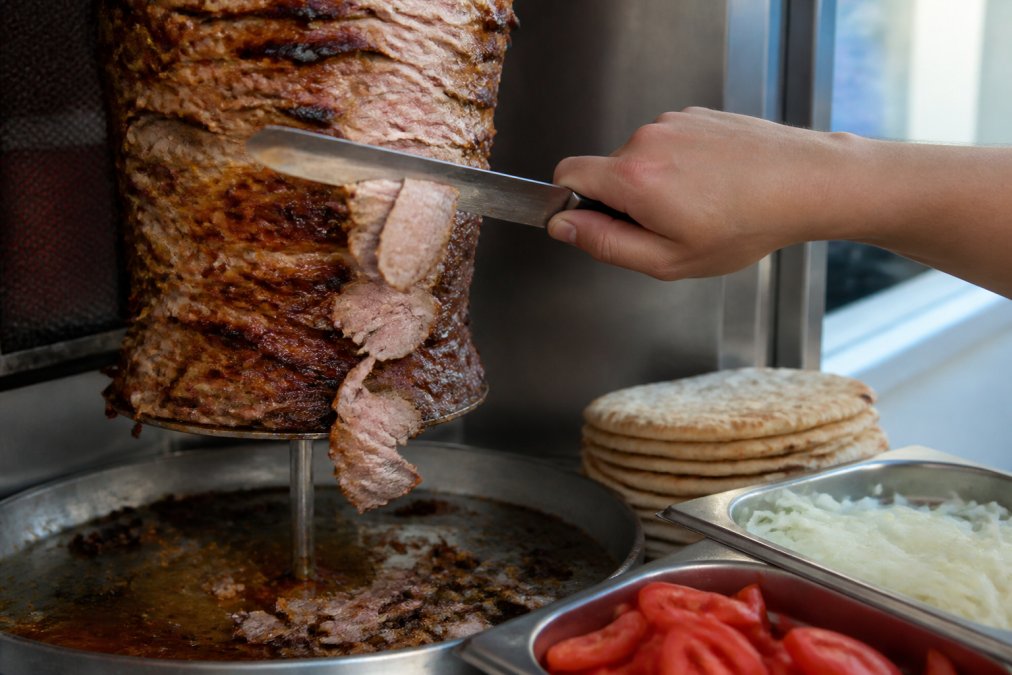
Fast-food chains use flat griddles or steam tables because they're faster and require less skill. The result is uniform, one-temperature meat with no textural contrast and no char.
The vertical spit also allows for continuous production. As meat is sliced off, new layers are exposed to heat. A traditional Greek taverna can keep a spit running for hours, serving dozens of gyros while maintaining consistent quality.
If you're making gyros at home without a vertical spit, some home cooks form a loaf of seasoned ground meat and roast it at high temperature, then hand-slice it. This gets you most of the way there, you get hand-sliced components and some charring, but you lose the continuous rotation that creates the unique texture.
Spices and Marinade in Traditional Preparation
The spice blend is where authentic gyro meat gets its distinctive flavor. The core elements remain consistent: oregano, cumin, garlic, black pepper, and often paprika or thyme. What separates a well-executed blend from a mediocre one is balance and freshness. The oregano should be bright and herbaceous. The cumin should add warmth without overwhelming. The garlic should be pungent but integrated.
The meat is typically marinated or seasoned before being hand-stacked on the spit. Some traditional recipes call for a marinade with olive oil, lemon juice, and spices. Others simply season the meat directly as it's stacked. The key is that the seasoning penetrates the meat, not just coating the surface.
Fast-food gyro meat often relies on a single pre-made spice mixture added to processed meat before forming. The result is consistent but one-dimensional. At Gyro Kingdom, we use traditional spice ratios and fresh ingredients, which means the flavor profile is more complex and satisfying than mass-produced versions.
Gyro vs Souvlaki Differences: Understanding Greek Street Food
Many people use the terms "gyro" and "souvlaki" interchangeably, but they're fundamentally different preparations.
Souvlaki is meat marinated in olive oil, lemon juice, and spices, then threaded onto skewers and grilled over an open flame. The meat is cut into chunks before cooking, and each piece is exposed directly to high heat. The result is meat with a charred exterior and more uniform texture throughout.
Gyro uses the vertical spit method. The meat is stacked on the spit, and thin slices are shaved off as it rotates. The cooking is slower and more indirect. The texture varies from charred exterior to tender, juicy interior.
Souvlaki has a more pronounced char and grilled flavor from direct flame exposure. Gyro has a more subtle char and deeper, more complex flavor from slow rotisserie cooking. Both are legitimate Greek street foods. The choice comes down to preference: souvlaki for charred, grilled flavor; gyro for integrated, complex flavor with signature textural contrast.
The Nutritional Reality: Authentic vs Fast Food
The nutritional difference between authentic and fast-food gyros extends beyond calories. Authentic gyros made with quality meat, fresh vegetables, and tzatziki sauce made from yogurt and cucumber offer a cleaner nutritional profile (the NIH). The meat is recognizable, and the vegetables are fresh.
Fast-food gyros often contain processed meat with binders, preservatives, and additives that extend shelf life. The ingredient list is longer and more complex, with typically higher sodium content.
For health-conscious diners, an authentic gyro can be part of a balanced Mediterranean diet, it's protein, vegetables, and healthy fats from olive oil and yogurt. You know the meat quality and can request adjustments like extra vegetables or lighter sauce. Fast-food versions offer less transparency and flexibility.
How to Identify a Truly Authentic Gyro
Identifying an authentic gyro before you order comes down to a few observable details.
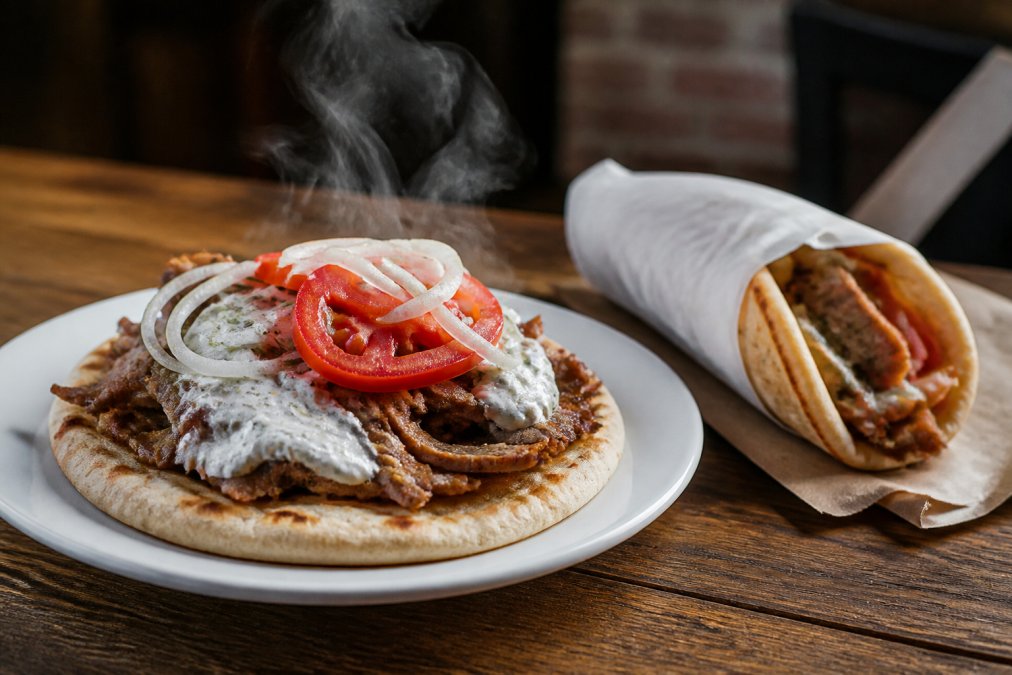
Look for the vertical spit. If the restaurant has a visible rotisserie spit in the kitchen or front counter, that's the first signal of authenticity. Many Greek restaurants keep their spit visible because it's a mark of quality.
Check the meat appearance. Authentic gyro meat has visible layering and charred edges. Slices should show color variation, darker charred exterior, lighter tender interior. The texture should look hand-stacked, not uniform like a processed patty.
Taste the spice profile. Authentic gyros have a complex spice blend that tastes integrated into the meat. You should identify oregano, cumin, and garlic as distinct flavor notes. Fast-food versions taste one-dimensional.
Evaluate the pita bread. Authentic gyros come in warm, freshly prepared pita bread that's soft and slightly chewy. Fast-food pita is often pre-made and stale.
Assess the vegetables. Fresh vegetables should be visible and recognizable, sliced tomato, diced onion, crisp lettuce. They should look prepared that day.
Examine the tzatziki sauce. Real tzatziki is made from yogurt, cucumber, garlic, and herbs. It should be creamy and taste fresh.
Ask about preparation. A restaurant making authentic gyros will tell you the meat is made fresh daily and sliced to order. They'll explain their spice blend and be transparent about ingredients.
At Gyro Kingdom, every gyro is made fresh when you order it. The meat is hand-sliced from our rotisserie spit. The vegetables are fresh daily. The tzatziki is made in-house.
Making Authentic Gyros at Home
Making authentic gyros at home without a vertical spit requires accepting a trade-off: you'll get something genuinely good that captures most of the authentic experience, but it won't be identical to the restaurant version.
The most practical approach uses a loaf-pan method. Mix ground lamb, beef, or a combination with traditional spices, oregano, cumin, garlic powder, black pepper, salt, and paprika. Add a small amount of breadcrumbs or ground oats as a binder (about 10% by weight) and an egg to help hold everything together (peer-reviewed research).
Press the mixture firmly into a loaf pan, packing it tightly. Bake at 400°F for about 45 minutes to an hour, until the exterior is deeply browned and the internal temperature reaches 160°F (usda.gov). The high heat creates charring on the exterior, which approximates the rotisserie effect.
Let the loaf cool for 10 minutes, then use a sharp knife to slice it thinly. Some slices will have more char than others, that variation approximates the texture variation from the vertical spit.
Warm your pita bread, assemble with fresh vegetables, and add tzatziki sauce made from Greek yogurt, grated cucumber, minced garlic, olive oil, lemon juice, and dill.
The result won't be identical to a restaurant gyro, but it will taste significantly better than a fast-food version. You control the meat quality, spice blend, and vegetable freshness. For home cooks willing to spend an hour on preparation, this method delivers a genuinely satisfying gyro.
The difference between authentic and fast-food gyros matters because it affects what you're actually eating. Authentic gyros deliver complex flavor, quality ingredients, and a texture experience you simply can't get from mass-produced alternatives. At Gyro Kingdom, we've built our reputation on making gyros the way they're meant to be made, fresh daily, with quality lamb, beef, chicken, or pork, traditional spices, and genuine Greek preparation methods. If you're in the area and want to taste the difference for yourself, we'd welcome you to stop by and experience what authentic actually tastes like.
Frequently Asked Questions
What makes a gyro authentic vs fast food?
An authentic gyro uses meat roasted on a vertical spit, hand-stacked into layers with traditional spices like oregano and cumin, then sliced fresh to order. Fast food versions typically use pre-sliced, pre-cooked meat that's reheated. Authentic gyros feature fresh vegetables, homemade tzatziki, and quality pita bread. The culinary tradition behind authentic gyros emphasizes fresh ingredients and proper preparation methods, while fast food prioritizes speed and consistency over traditional technique.
Is authentic gyro meat healthier than fast food gyro?
Authentic gyro meat can be healthier depending on the meat quality and preparation. Traditional gyros use marinated lamb, pork, or beef without excessive additives, while fast food versions often contain processed meat with added preservatives and sodium. Authentic gyros paired with fresh vegetables and tzatziki provide better nutritional value. However, portion size matters, both versions can be high in calories. The key difference is ingredient quality and preparation method rather than the gyro format itself.
What are the main ingredients in authentic lamb gyro recipe components?
Authentic lamb gyro meat combines ground lamb with spices including oregano, cumin, garlic, black pepper, and sometimes a touch of cinnamon. The mixture is bound with breadcrumbs and egg, then hand-stacked on a vertical spit. Fresh components include tzatziki (yogurt-based sauce), ripe tomatoes, crisp onions, and fresh parsley. Traditional pita bread completes the wrap. Some recipes add a small amount of bacon or pork fat for texture and flavor depth, creating the characteristic smooth, layered texture when sliced from the spit.
What's the difference between a gyro and souvlaki?
The primary difference lies in preparation method and meat structure. Gyro meat is ground, spiced, and hand-stacked on a vertical spit, creating a dense, uniform texture. Souvlaki uses chunks of marinated meat threaded on skewers and grilled over direct heat, resulting in distinct pieces with charred edges. Gyros are typically wrapped in pita with vegetables and sauce, while souvlaki is often served on skewers or with rice. Both are authentic Greek street food traditions, but souvlaki showcases individual meat pieces, whereas gyro offers a continuous, sliced texture.