 ultimate-guide
Benefits of Eating Mediterranean Food: 2026 Guide
Table of Contents
- What the Mediterranean Diet Actually Is
- Mediterranean Diet Food List: What to Eat and What to Skip
- Mediterranean Diet Heart Health Benefits Backed by Research
- More Benefits of Eating Mediterranean Food: Weight, Brain, and Beyond
- Mediterranean Diet Meal Plan for Beginners: A Simple Week to Start
- How to Eat Mediterranean on a Budget Without Sacrificing Quality
- Bringing Mediterranean Food Benefits to Your Table Tonight
- Frequently Asked Questions
Last Updated: August 15, 2026
What the Mediterranean Diet Actually Is
The Mediterranean diet is a dietary pattern rooted in the traditional eating habits of countries bordering the Mediterranean Sea, centered on minimally processed plant foods, healthy fats, and lean proteins. It is not a rigid meal plan or a short-term fix, but a sustainable lifestyle approach that prioritizes whole grains, legumes, vegetables, fruit, olive oil, fish, and moderate dairy, while limiting red meat and processed foods.
What separates this eating pattern from most popular diets is its emphasis on food quality over calorie restriction. Monounsaturated fats from olive oil replace saturated fat from butter and processed snacks. Plant-based proteins from lentils and chickpeas anchor meals naturally high in fiber and phytonutrients. Omega-3 fatty acids from fish add cardioprotective properties few other dietary patterns can match.
The American Heart Association's dietary guidance consistently points to this pattern as one of the most evidence-backed approaches for reducing chronic disease risk.
Mediterranean Diet Food List: What to Eat and What to Skip
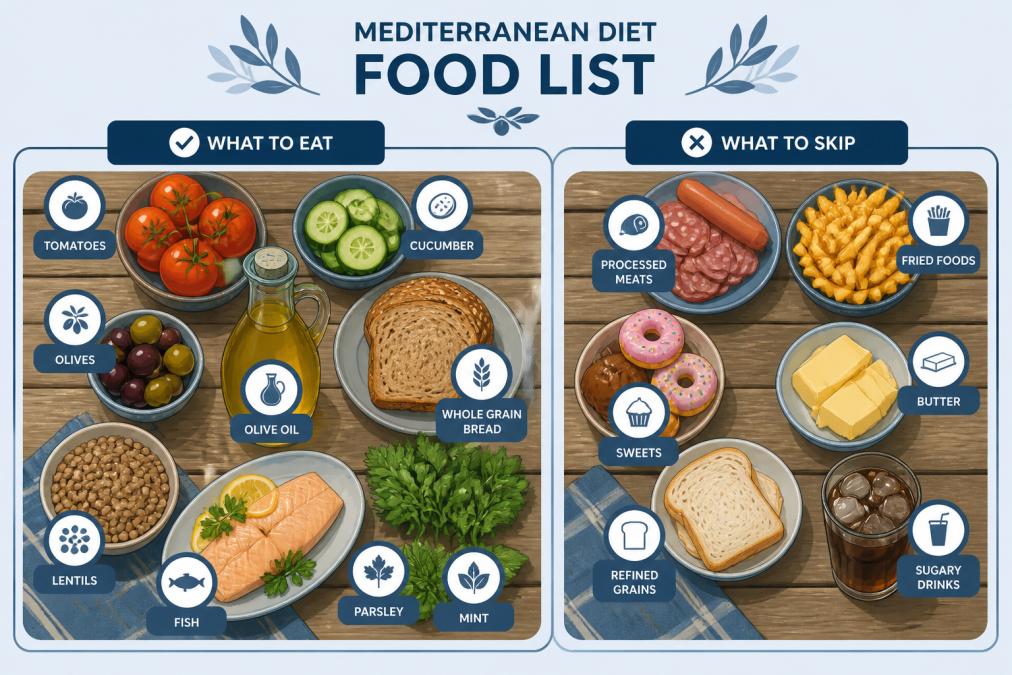
Knowing what belongs on your plate is the fastest way to start eating this way.
Foods to Eat Freely
Build the majority of your meals around these:
- Vegetables: Tomatoes, spinach, eggplant, zucchini, peppers, onions, artichokes
- Fruits: Figs, pomegranates, citrus, berries, grapes, apples
- Whole grains: Farro, bulgur, whole-wheat pita, brown rice, oats
- Legumes: Lentils, chickpeas, white beans, black-eyed peas
- Healthy fats: Extra-virgin olive oil as the primary cooking fat, avocado, olives
- Fish and seafood: Salmon, sardines, mackerel, sea bass, shrimp (two or more servings per week)
- Nuts and seeds: Almonds, walnuts, pistachios, sesame seeds, sunflower seeds
- Herbs and spices: Oregano, basil, cumin, cinnamon, turmeric, garlic
- Dairy (moderate): Greek yogurt, feta, fresh cheeses in reasonable portions
- Eggs: Several per week, prepared simply
Foods to Limit or Avoid
- Red and processed meats: Sausage, bacon, deli meats, and red meat more than a few times per month
- Refined grains: White bread, white pasta, pastries, crackers made with refined flour
- Added sugars: Sodas, candy, sweetened cereals, commercial baked goods
- Saturated fat sources: Butter, margarine, heavily processed cooking oils
- Ultra-processed packaged foods: Anything with a long list of ingredients you cannot pronounce
| Category | Eat Freely | Limit or Avoid |
|---|---|---|
| Fats | Olive oil, nuts, avocado | Butter, processed oils |
| Proteins | Fish, legumes, eggs | Processed meats, excess red meat |
| Grains | Whole grains, bulgur, farro | White bread, refined pasta |
| Dairy | Greek yogurt, feta | Full-fat processed cheese |
| Sweeteners | Honey (small amounts), fresh fruit | Added sugar, sodas |
Mediterranean Diet Heart Health Benefits Backed by Research
Cardiovascular disease is the leading cause of death in the United States, and the Mediterranean diet has more evidence supporting its role in heart protection than almost any other dietary approach. The National Institutes of Health's overview of Mediterranean diet research documents how this eating pattern reduces multiple cardiovascular risk factors simultaneously.
The benefits emerge from the combined effect of the entire dietary pattern. Olive oil reduces LDL oxidation. Omega-3 fatty acids from fish lower triglycerides. Fiber from legumes and whole grains improves blood glucose levels and reduces inflammation. Antioxidants from vegetables and fruit protect arterial walls from oxidative damage.
Blood pressure tends to improve, partly because the diet is naturally low in sodium and high in potassium-rich foods like tomatoes, legumes, and leafy greens. Chronic inflammation, the underlying mechanism behind much cardiovascular disease, is addressed directly through phytonutrients from plant foods and the anti-inflammatory properties of olive oil and fatty fish.
More Benefits of Eating Mediterranean Food: Weight, Brain, and Beyond
The benefits of eating Mediterranean food extend well beyond the heart. Two areas where the evidence is particularly compelling are weight management and brain health.
Weight Management and Metabolic Health
The Mediterranean diet supports healthy weight without calorie counting. High fiber intake from vegetables, legumes, and whole grains slows digestion and sustains satiety. Healthy fats from olive oil and nuts are satisfying in small amounts, reducing the drive to overeat. The glycemic index of most Mediterranean meals is low, meaning blood glucose levels rise gradually rather than spiking and crashing.
Insulin sensitivity improves on this dietary pattern, which matters for metabolic health and long-term weight stability. Many people find they eat less overall without feeling deprived, because the food is genuinely satisfying. Long-term sustainability is another advantage, the Mediterranean diet food list is varied, flavorful, and culturally rich enough to sustain for years, not weeks.
Cognitive Function and Dementia Risk
Research consistently links Mediterranean-style eating to slower cognitive decline and reduced dementia risk over time. The Alzheimer's Association dietary research resources highlights how nutrients common in this pattern, including omega-3 fatty acids, antioxidants, and B vitamins from whole grains and legumes, support neurological function and may reduce the accumulation of proteins associated with Alzheimer's disease.
By reducing systemic inflammation through diet, the Mediterranean pattern appears to protect neurons and preserve cognitive function into older age.
Mediterranean Diet Meal Plan for Beginners: A Simple Week to Start
A Mediterranean diet meal plan for beginners does not need to be complicated. The goal is to build familiarity with the core foods and cooking methods.
Monday
- Breakfast: Greek yogurt with walnuts, honey, and sliced fruit
- Lunch: Whole-wheat pita with hummus, cucumber, tomato, and feta
- Dinner: Baked salmon with roasted vegetables and a side of farro
Tuesday
- Breakfast: Oats with almonds, cinnamon, and fresh berries
- Lunch: Lentil soup with crusty whole-grain bread
- Dinner: Grilled chicken over tabbouleh with a drizzle of olive oil
Wednesday
- Breakfast: Scrambled eggs with spinach, tomato, and herbs
- Lunch: Large salad with chickpeas, olives, cucumber, and olive oil dressing
- Dinner: Whole-wheat pasta with tomato sauce, sardines, and fresh basil
Thursday
- Breakfast: Whole-grain toast with avocado and a poached egg
- Lunch: Leftover pasta with a green salad
- Dinner: Lamb kebabs with roasted eggplant and tzatziki
Friday
- Breakfast: Greek yogurt parfait with pistachios and pomegranate seeds
- Lunch: Falafel wrap with tahini, lettuce, and tomato in whole-wheat pita
- Dinner: Grilled sea bass with steamed greens and lemon-olive oil dressing
Saturday
- Breakfast: Shakshuka (eggs poached in spiced tomato sauce) with pita
- Lunch: White bean and vegetable soup
- Dinner: Mixed grill platter with grilled vegetables, pita, and a mezze spread
Sunday
- Breakfast: Fresh fruit salad with a small bowl of mixed nuts
- Lunch: Stuffed bell peppers with bulgur, herbs, and feta
- Dinner: Roast chicken with root vegetables, garlic, and olive oil
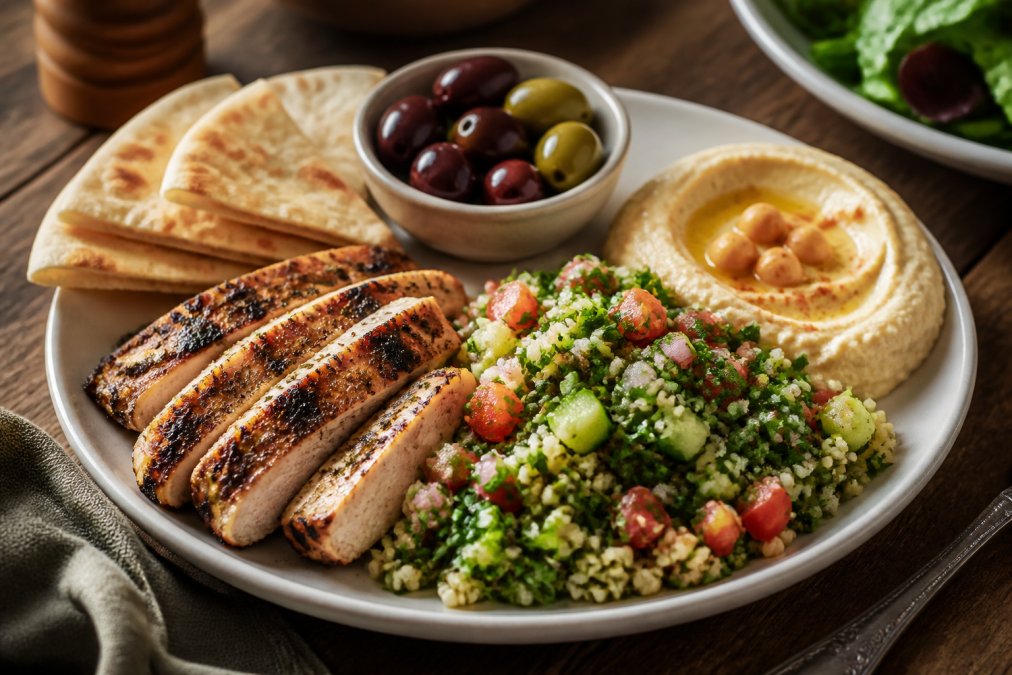
Every meal is built around plant foods and lean proteins, with olive oil as the primary fat and whole grains as the base.
How to Eat Mediterranean on a Budget Without Sacrificing Quality
One of the most persistent myths about healthy eating is that it has to be expensive. The benefits of eating Mediterranean food are accessible at almost every price point, because the foundation of the diet is built on some of the most affordable foods available.
Legumes are the secret weapon. Dried lentils, chickpeas, and white beans cost very little per serving and form the backbone of dozens of satisfying meals. Whole grains like bulgur, farro, and brown rice are similarly affordable when purchased in bulk.
Seasonal produce keeps costs down and improves flavor. Frozen vegetables are a perfectly valid substitute when fresh options are expensive and retain their micronutrients well.
Practical budget tips for Mediterranean eating:
- Buy dried legumes in bulk and cook large batches to use across the week
- Choose canned fish (sardines, mackerel, tuna) as an affordable omega-3 source
- Use eggs as a versatile, low-cost protein across breakfast, lunch, and dinner
- Build meals around whatever vegetables are on sale or in season
- Make olive oil your one quality investment and buy it in larger bottles for better value
- Cook once, eat twice: grain-based dishes and soups improve the next day
A plant-forward dietary pattern built on legumes, whole grains, and seasonal produce has a significantly lower carbon footprint than meat-heavy Western diets, according to research summarized by the Harvard T.H. Chan School of Public Health's dietary sustainability resources.
Bringing Mediterranean Food Benefits to Your Table Tonight
The most common mistake people make when starting this dietary pattern is treating it as an all-or-nothing project. Every Mediterranean meal you eat is a step in the right direction, whether you cook it yourself or order it from somewhere that takes the food seriously.
Gyro Kingdom brings these principles to life in every dish we prepare. Our freshly made gyros feature chicken, lamb, beef, and pork prepared daily with traditional seasonings, served alongside Mediterranean classics built from the same nutrient-dense ingredients this guide covers. The olive oil, the herbs, the quality proteins, the fresh vegetables: these are not marketing language for us, they are how we cook.
If you want to experience the benefits of eating Mediterranean food without spending an hour in the kitchen, a well-made gyro or a mezze plate from a kitchen that cares about ingredients does exactly what home cooking does. The key is finding food prepared fresh, with real components, not shortcuts.
Start with one meal. Swap one lunch this week for a Mediterranean-style plate. Pay attention to how you feel two hours later. The sustained energy, the absence of a crash, the genuine satisfaction: those are the benefits of eating Mediterranean food showing up in real time.
For anyone in the Ocean County area looking to eat this way more often, Gyro Kingdom is ranked among the top three Greek restaurants in the region by BusinessRate in 2026 and recommended by Restaurant Guru in 2025. Hundreds of loyal customers throughout Brick Township have made it their go-to for authentic, freshly prepared Mediterranean food. Try it today and taste the difference that real ingredients make.
Changing how you eat is one of the highest-impact decisions you can make for your long-term health, and the Mediterranean dietary pattern is the most evidence-backed way to do it. Gyro Kingdom makes that transition easier by offering authentic Greek cuisine made fresh daily, with generous portions of the same whole ingredients, lean proteins, and traditional flavors that define this way of eating. Visit us or order delivery to experience Mediterranean food done right, without compromise on quality or freshness.
Frequently Asked Questions
What happens to your body when you eat a Mediterranean diet?
Shifting to Mediterranean eating typically lowers chronic inflammation, improves blood glucose levels, and reduces LDL cholesterol over weeks to months. The high fiber intake from legumes and whole grains supports gut health and steadier energy. Over the long term, research links this dietary pattern to lower cardiovascular disease risk, reduced dementia risk, and better insulin sensitivity. Most people also report feeling more satisfied between meals because healthy fats and plant-based proteins digest more slowly than refined carbohydrates.
Can the Mediterranean diet help with heart health?
Yes. The mediterranean food benefits for heart health are among the most studied in nutrition science. The diet's emphasis on monounsaturated fats from olive oil, omega-3 fatty acids from fish, and antioxidant-rich vegetables all work together to support stroke prevention and lower heart attack risk. Saturated fat reduction is a key mechanism: replacing butter and processed meats with olive oil and legumes directly lowers the dietary factors most associated with cardiovascular disease.
Is the Mediterranean diet effective for weight loss?
It can be, though it works differently from calorie-counting diets. The mediterranean food benefits for weight come from nutrient-dense, high-fiber foods that reduce hunger naturally. You're less likely to overeat when meals include legumes, whole grains, and healthy fats. Studies show people following this pattern tend to maintain weight loss better over time compared to low-fat diets, largely because adherence is easier, the food is satisfying and varied rather than restrictive.
What are the top foods on a Mediterranean diet?
The core foods are extra-virgin olive oil, leafy greens, tomatoes, legumes (lentils, chickpeas, beans), whole grains like farro and bulgur, fatty fish such as salmon and sardines, nuts, and fresh herbs. These minimally processed plant foods supply fiber, phytonutrients, and micronutrients in every meal. Moderate amounts of poultry, eggs, and dairy round out the pattern. Red meat and added sugars appear rarely, keeping the glycemic index of the overall diet low.