 listicle
Low Carb Greek Side Dishes for Dinner: 7 Easy Recipes
Table of Contents
- Why Greek Side Dishes Work for Low Carb Dinners
- 1. Horiatiki: The Classic Greek Salad, Hold the Carbs
- 2. Is Tzatziki Keto Friendly? The Creamy Dip That Fits
- 3. Low Carb Vegetable Sides for Dinner: Roasted and Grilled Greek Style
- 4. Grilled Fish and Seafood Sides That Round Out a Greek Plate
- 5. Building a Low Carb Mediterranean Diet Meal Plan Around These Sides
- 6. Pairing Greek Side Dishes With Mains: Souvlaki, Gyro, and Grilled Meat
- Make-Ahead, Storage, and Swaps for Low Carb Greek Sides
- Frequently Asked Questions
Last Updated: October 20, 2026
Why Greek Side Dishes Work for Low Carb Dinners
Greek cooking leans on fresh vegetables, olive oil, and feta far more than on starch. That is why so many low carb greek side dishes for dinner come straight from the traditional table without any real modification. At Gyro Kingdom, we serve these sides every day next to our freshly made gyros.
Greek side dishes are the traditional vegetable, dip, and seafood plates served alongside a Greek main course. Most of them are naturally low in carbohydrates because they rely on cucumber, tomatoes, greens, and olive oil instead of rice, potatoes, or bread.
The best part is that you are not sacrificing flavor for a lower carb count. A bowl of horiatiki, a spoonful of tzatziki, and a few grilled vegetables deliver more taste than most starch-heavy sides ever will. Below, we break down seven sides, what each one pairs with, and how to prep them ahead.
1. Horiatiki: The Classic Greek Salad, Hold the Carbs
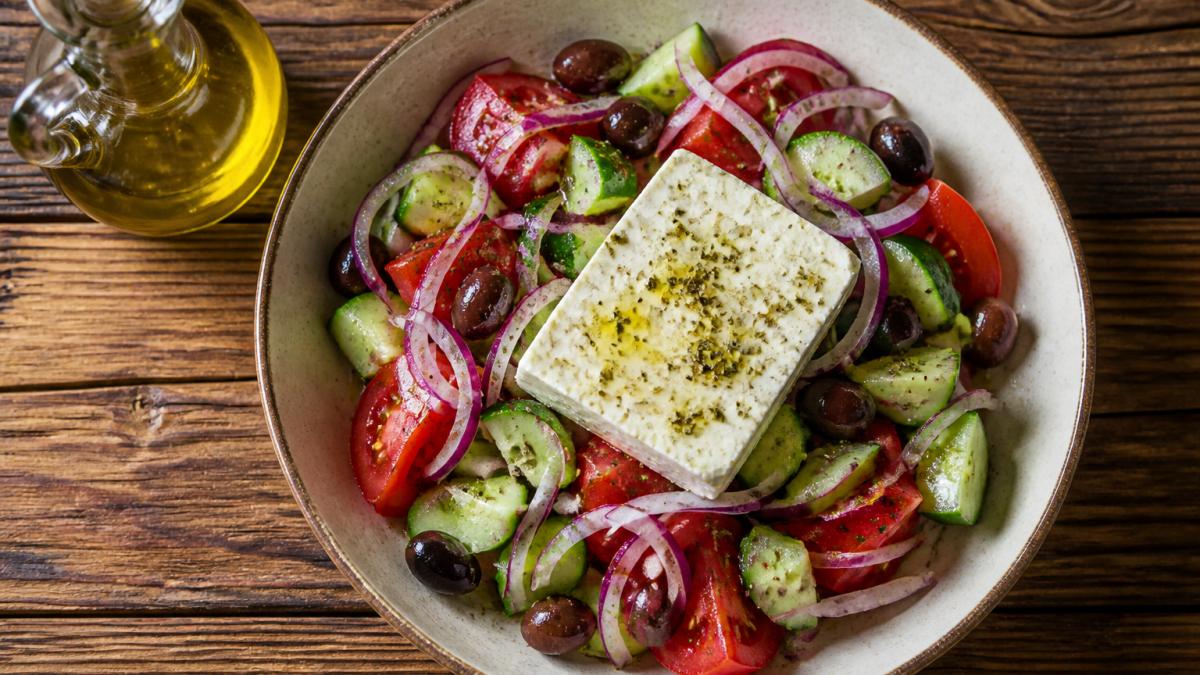
Horiatiki, the Greek village salad, is already low carb by design. There is no lettuce to hide behind and no pasta or potato filler, just cucumber, ripe tomatoes, red onion, and bell peppers under a slab of feta cheese and a scatter of Kalamata olives.
The traditional version never included a carb-heavy base, so you are not adapting anything. Dress it with good olive oil, a splash of red wine vinegar, and dried oregano. Skip the sugar some diners add to cut acidity; a squeeze of lemon does the same job.
Cucumber and tomato carry almost no carbohydrates, and the feta and olives bring fat and salt that keep you full. Serve horiatiki in a wide shallow bowl so the vegetables sit in the dressing rather than drowning in it.
2. Is Tzatziki Keto Friendly? The Creamy Dip That Fits
Yes, tzatziki is keto friendly in its traditional form. It is made from Greek yogurt, grated cucumber, garlic, olive oil, and a little vinegar or lemon, all of which sit low on the carb scale.
The catch is the yogurt. Full-fat Greek yogurt keeps the carb count down because the straining removes much of the milk sugar. Flavored or low-fat versions often carry added sugar, so read the label before you buy. If you want tzatziki even lower in carbs, strain the grated cucumber well and press out the water.
Tzatziki earns its place as one of the most useful low carb vegetable sides for dinner because it doubles as a sauce. Spoon it over grilled chicken, lamb, or fish, or use it as a dip for cucumber spears and bell peppers. A bowl on the table replaces ketchup, ranch, and sugary barbecue sauce in one move.
3. Low Carb Vegetable Sides for Dinner: Roasted and Grilled Greek Style
Roasting and grilling are the two fastest routes to a Greek vegetable side that stays low carb. Toss zucchini, eggplant, bell peppers, and red onion with olive oil, oregano, salt, and pepper, then roast at high heat or grill until the edges char.
The char is the point. High heat concentrates the natural sweetness of the vegetables without adding a drop of sugar, and the olive oil carries the oregano flavor into every piece. Finish with lemon juice and crumbled feta.
Greens work just as well. Braised greens with olive oil and lemon, or green beans stewed with tomato and onion, both deliver a vegetable-forward side that pairs with almost any main. Keep the tomato quantity modest if you are counting carbs closely.
| Vegetable Side | Prep Time | Best Cooking Method | Pairs With |
|---|---|---|---|
| Zucchini and eggplant | 10 min | Grill or roast at high heat | Lamb, chicken |
| Bell peppers and onion | 10 min | Skewer and grill | Souvlaki |
| Braised greens with lemon | 5 min | Skillet | Fish, grilled meat |
| Green beans in tomato | 10 min | Simmer | Any main |
4. Grilled Fish and Seafood Sides That Round Out a Greek Plate
Grilled fish and seafood turn a side dish into a full plate. Sea bream, sardines, calamari, and octopus all grill quickly and carry almost no carbohydrates on their own.
Whole sea bream is the simplest of the group. Score the skin, rub it with olive oil and lemon, and grill it whole; the flesh stays moist and the skin crisps. Sardines take minutes on a hot grate and need nothing more than lemon and oregano. Calamari grills in a couple of minutes per side, and octopus rewards a slow simmer before it hits the grill. These preparations highlight how fresh seafood serves as the foundation for quick weeknight meals that come together with minimal effort.
Serve any of these with a wedge of lemon and a spoonful of tzatziki. A seafood side plus horiatiki makes a complete low carb dinner with no starch on the table at all.
5. Building a Low Carb Mediterranean Diet Meal Plan Around These Sides
A low carb mediterranean diet meal plan works best when you treat these sides as the base of the plate rather than an afterthought. Build each dinner from three parts: one vegetable side, one protein, and one dip or sauce.
A typical week might run grilled fish with braised greens on Monday, souvlaki with horiatiki on Wednesday, and roasted vegetables with tzatziki on Friday. Rotate the vegetables so you are not eating cucumber five nights running.
Keep the fat sources honest. Olive oil, feta, olives, and Greek yogurt carry the flavor in this style of eating, and cutting them back leaves the food flat and unsatisfying. Portion the feta and olives rather than eliminating them if you are watching calories.
6. Pairing Greek Side Dishes With Mains: Souvlaki, Gyro, and Grilled Meat
Pairing comes down to matching the weight of the side to the weight of the main. Souvlaki and grilled chicken want something fresh and sharp, so horiatiki or a lemon-dressed vegetable plate fits. Lamb and grilled meat handle a richer side, which is where roasted eggplant and tzatziki earn their place.
A gyro plate is the easiest pairing of all. The meat and pita carry the starch, so load the rest of the plate with horiatiki, grilled peppers, and a generous spoon of tzatziki. You get the full Greek flavor without doubling up on carbohydrates.
At Gyro Kingdom, we build our plates this way every day, with freshly made gyros and traditional Mediterranean sides served together. If you would rather skip the cooking, our convenient delivery options bring the same combination to your door.
Make-Ahead, Storage, and Swaps for Low Carb Greek Sides
Make-ahead cooking is where these sides shine. Horiatiki holds up well if you keep the dressing separate and add it just before serving; the vegetables stay crisp instead of going soft. Tzatziki keeps in the refrigerator for a few days and often tastes better on day two once the garlic settles.
Roasted and grilled vegetables store well in a covered container and reheat quickly in a skillet. Fish and seafood are the exception: grill them fresh, because they lose texture on reheating.
For swaps, trade feta for another firm brined cheese if you prefer a milder bite, and use lemon in place of vinegar for a softer acidity. If you are avoiding dairy, a cucumber and olive salad with olive oil and oregano keeps the same profile without the cheese.
Frequently Asked Questions
What are the best low-carb vegetables in Greek cuisine?
Cucumbers, tomatoes, red onion, bell peppers, zucchini, eggplant, and leafy greens form the backbone of most low carb Greek side dishes. These vegetables are naturally low in carbohydrates and appear in horiatiki salad, grilled vegetable platters, and tzatziki. Cauliflower also works well as a stand-in for rice or potatoes in Greek-style recipes. When you build a plate around these vegetables, you get authentic Mediterranean flavor without the starch. Keep portions of tomatoes and onions moderate if you track net carbs closely, since they carry more sugar than cucumber or greens.
Can I eat tzatziki on a low-carb diet?
Yes. Traditional tzatziki is made from Greek yogurt, cucumber, garlic, olive oil, and a little vinegar or lemon, so it fits a low-carb plan easily. A two-tablespoon serving typically lands in the 2 to 3 gram range for net carbs, mostly from the yogurt and cucumber. Choose plain full-fat Greek yogurt rather than flavored varieties, which add sugar. Tzatziki works as a dip for raw vegetables, a sauce for grilled fish, or a topping for souvlaki without the pita. Check labels on store-bought versions, since some brands add thickeners or sugar.
Are olives and feta cheese low-carb?
Both are very low in carbohydrates and fit well into low carb Greek side dishes. Feta cheese has roughly 1 gram of carbohydrate per ounce, and Kalamata olives have under 1 gram per olive. They also bring fat and salt, which make vegetable sides more satisfying. Use them as flavor builders rather than the whole dish: a scattering of feta and a handful of olives over a Greek salad or grilled vegetables adds richness without pushing up the carb count. Watch portion size if you are managing sodium, since both are salty.
How do I keep Greek side dishes low-carb?
Skip or swap the starch. Traditional Greek sides often include potatoes, rice, or pita, which drive up carbohydrates quickly. Replace potatoes with roasted eggplant or cauliflower, serve dips with cucumber and bell pepper slices instead of bread, and keep salads dressed with olive oil and vinegar rather than sweetened dressings. Measure net carbs per serving so you know what you are eating, and pair sides with protein like grilled fish, chicken, or gyro meat to stay full. Small changes like these keep the flavor intact while cutting the carbs.
Eating lighter around Greek food is easier than most people expect, and the sides do most of the work. If you want these dishes without the prep, Gyro Kingdom serves freshly made gyros with chicken, lamb, beef, or pork alongside traditional Mediterranean sides, with delivery available and catering for larger gatherings. Try it today and build a plate that fits how you actually want to eat.