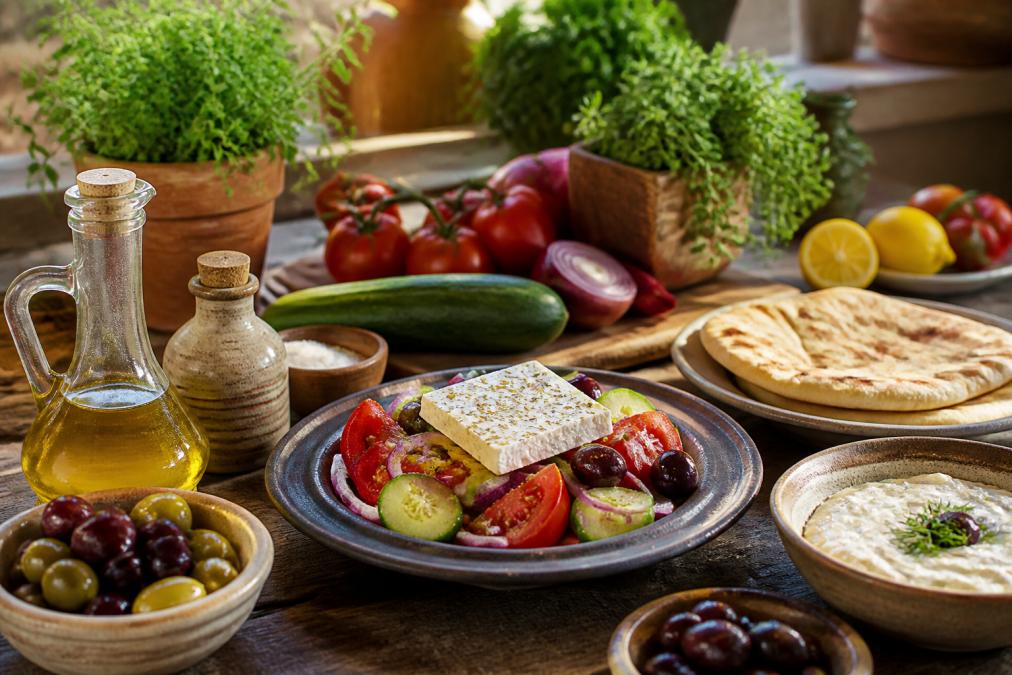
 ultimate-guide
What Defines Authentic Greek Flavor
Table of Contents
- The Mediterranean Triad: Wheat, Olive Oil, and Wine
- Essential Greek Pantry Staples That Build Every Dish
- PDO Label Greek Food: How to Identify Authentic Ingredients
- Traditional Greek Cooking Techniques That Shape Authentic Greek Flavor
- The Science of Flavor Pairing in Authentic Greek Flavor
- The Role of Terroir: Why Greek Ingredients Taste Different
- A Sensory Evaluation Guide to Greek Gastronomy
- Frequently Asked Questions
Last Updated: August 14, 2026
What defines authentic Greek flavor is not a single ingredient or a secret technique, it is a philosophy. At Gyro Kingdom, we work with these flavors every day, and the answer we keep coming back to is this: Greek cuisine is defined by restraint, quality, and an almost stubborn insistence on letting ingredients speak for themselves.
Authentic Greek flavor is the sensory result of combining high-quality regional ingredients, primarily extra virgin olive oil, fresh herbs, and seasonal produce, with traditional cooking methods rooted in the Mediterranean diet. The flavor profile is simultaneously bright, herbaceous, and earthy, shaped as much by what cooks leave out as by what they put in.
The Mediterranean Triad: Wheat, Olive Oil, and Wine
Greek culinary identity rests on three ancient pillars: wheat, olive oil, and wine. These three ingredients have shaped Greek agriculture, trade, and culture for thousands of years, and their influence is visible in virtually every traditional dish.
Extra virgin olive oil is the most critical of the three. It functions as a cooking medium, a finishing sauce, a preservative, and a flavor agent all at once. The peppery, grassy bite of a cold-pressed Greek extra virgin olive oil is categorically different from a generic vegetable oil, and substituting one for the other changes the flavor profile entirely. Authentic Greek cooking uses olive oil generously and without apology.
Wheat appears as flatbreads, pitas, and rustic loaves, vehicles for soaking up braising liquids and olive oil-rich dips. Wine is both a table staple and a cooking ingredient, lending acidity and depth to slow-cooked stews and braised meats. The culinary triad creates a framework of fat, starch, and acid that anchors the entire flavor system.
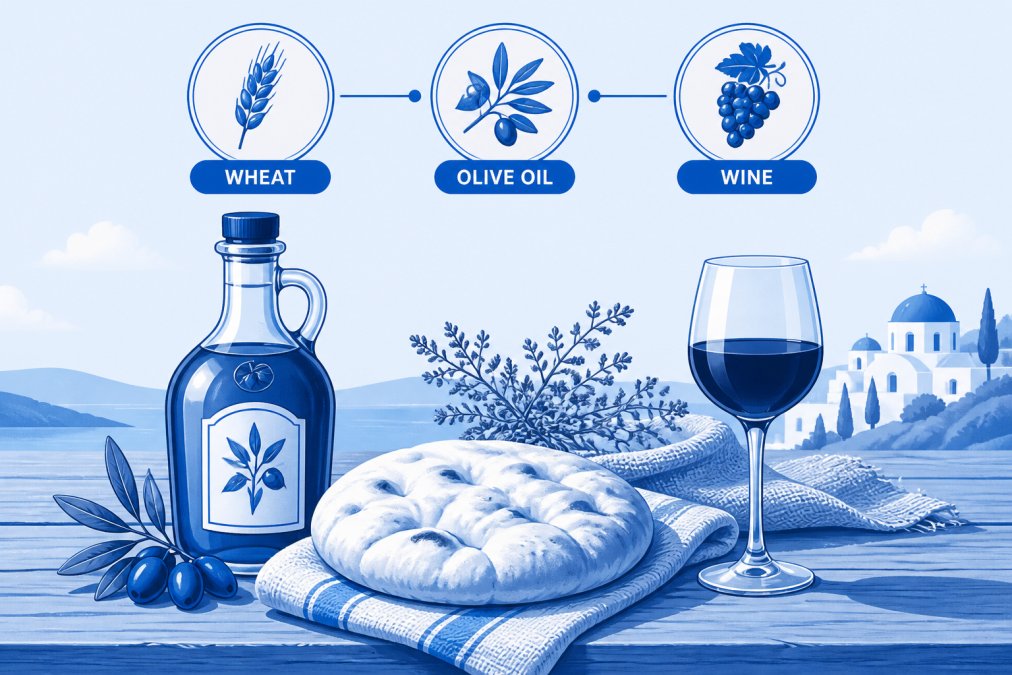
As documented in the UNESCO Intangible Cultural Heritage of the Mediterranean Diet, this triad predates modern nutrition science by millennia, yet aligns almost perfectly with what researchers now recognize as one of the world's healthiest dietary patterns.
Essential Greek Pantry Staples That Build Every Dish
The pantry behind Greek food is carefully curated, and every item earns its place.
Herbs and Spices: Oregano, Dill, Mint, and Cinnamon
Oregano is the defining herb of Greek cooking, dried, rubbed between the palms to release its volatile oils, and scattered over everything from grilled fish to tomato salads. Greek oregano carries a more intense, almost medicinal herbaceous quality compared to Italian varieties.
Dill appears in bean soups, spanakopita, and fish preparations, its anise-adjacent freshness cutting through richness. Mint shows up in lamb dishes and rice-stuffed vegetables, providing a cooling counterpoint to warmth. Cinnamon is the sleeper ingredient, appearing in slow-cooked meat stews and moussaka, adding subtle warmth that diners would immediately miss if absent. This inheritance from Byzantine and Ottoman trade routes creates one of the most distinctive elements of authentic Greek flavor.
Cumin, garlic, and onion form the aromatic base of most braised dishes, building background rather than dominating the foreground.
The Role of Legumes, Tomatoes, and Seasonal Produce
Greek cuisine is deeply vegetable-forward. Legumes, lentils, chickpeas, and white beans are central proteins. A well-made fakes (lentil soup) or gigantes plaki (baked giant beans) demonstrates that Greek cooking achieves umami depth without relying on meat.
Tomatoes integrated so completely into Greek cuisine that it is now impossible to imagine it without them. Their acidity and sweetness balance the richness of olive oil and the earthiness of legumes. Cucumber provides textural contrast and clean hydration in salads. Citrus, particularly lemon, acts as a finishing acid that brightens nearly every savory preparation.
Seasonal produce is not a marketing term in traditional Greek cooking. It is a practical constraint that shaped the cuisine: you cook what is available, and you cook it simply to honor its quality.
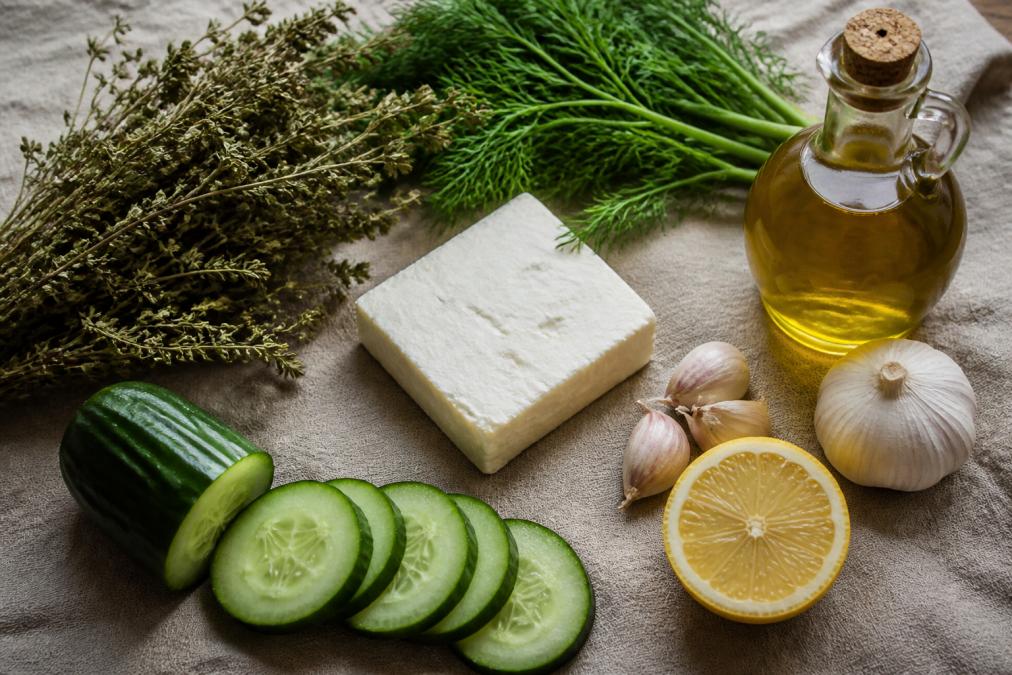
| Pantry Staple | Primary Role in Dish | Flavor Contribution |
|---|---|---|
| Extra virgin olive oil | Cooking fat, finishing drizzle | Peppery, grassy, rich |
| Dried oregano | Seasoning, garnish | Herbaceous, slightly bitter |
| Fresh dill | Aromatic, filling herb | Bright, anise-adjacent |
| Feta cheese | Topping, filling, salad base | Tangy, salty, creamy |
| Lemon juice | Finishing acid | Sharp, citrusy, brightening |
| Cinnamon | Braised meat spice | Warm, subtly sweet |
| Garlic and onion | Aromatic base | Savory, pungent, foundational |
PDO Label Greek Food: How to Identify Authentic Ingredients
PDO label Greek food is your most reliable shortcut to authentic ingredients. PDO stands for Protected Designation of Origin, a European Union certification that guarantees a product was made in a specific region using traditional methods.
The most important PDO products from Greece include Kalamata olives, grown exclusively in the Kalamata region with a distinct fruity, wine-like flavor; feta cheese, which by law must be made in specific Greek regions from sheep's milk or a sheep-and-goat blend; mastiha (mastic), a resin from Chios with a unique pine-and-cedar flavor; and Corinthian currants, small, intensely sweet dried grapes used in savory and sweet preparations.
The PDO label is not just about geography, it is about flavor. The terroir, microclimate, and traditional production methods combine to produce a flavor profile that genuinely cannot be replicated elsewhere. A feta made in Wisconsin from cow's milk tastes different from authentic PDO feta, and that difference is real and significant.
According to the USDA Agricultural Marketing Service on geographic indications, geographic indication protections exist precisely because place of origin creates measurable differences in product character.
Traditional Greek Cooking Techniques That Shape Authentic Greek Flavor
Traditional Greek cooking techniques are defined by patience and fire. The two dominant methods are slow-cooking over low heat and cooking directly over charcoal or wood flame.
Slow-cooked dishes like stifado (braised meat with onions and spices) and lamb kleftiko (oven-sealed slow-roasted lamb) develop flavor through the long, gentle breakdown of collagen and fat. The result is genuine umami that a pressure cooker version cannot achieve. Charred and grilled preparations, souvlaki and whole fish over coals, take the opposite approach. High heat and the char itself become flavor elements, creating compounds through the Maillard reaction that pan-frying does not replicate.
Authentic Preparation vs. Modern Shortcuts
The biggest mistake home cooks make with Greek food is treating it as a cuisine of convenience. Authentic preparation requires time investments that modern shortcuts eliminate, and with them, they eliminate flavor.
The most common shortcuts and what they cost: using dried herbs instead of fresh dill and mint for fillings and dressings; skipping the resting period on grilled meats, which causes loss of redistributed juices; using pre-crumbled feta instead of blocks submerged in brine, which dries out the cheese; and substituting dried oregano with Italian seasoning blends, which diverges the flavor profile immediately.
The Science of Flavor Pairing in Authentic Greek Flavor
Understanding the science of flavor pairing explains why authentic Greek flavor is so coherent and satisfying.
Greek cuisine operates on a small set of flavor pairing principles that repeat across hundreds of dishes. The first is the fat-acid balance: nearly every Greek dish pairs a generous amount of olive oil fat with a sharp acid, lemon juice, red wine vinegar, or the natural acidity of tomatoes. Fat carries flavor compounds and coats the palate; acid cuts through that richness and resets the palate for the next bite.
The second principle is the herbaceous-savory pairing. Oregano, dill, and mint contain volatile aromatic compounds that interact with the savory, umami-rich base of meat, legumes, and aged cheese. These compounds are fat-soluble, binding to olive oil and carrying deeper into the flavor experience.
The third principle is the sweet-savory bridge. Cinnamon in meat stews, currants in rice pilafs, and honey drizzled over cheese function as bridges between the savory and sweet registers, keeping the palate engaged across an entire meal.
According to the Flavor Network research published in Scientific Reports, Mediterranean cuisines more often pair ingredients with contrasting compound profiles, resulting in a cuisine that feels complex without being complicated.
The Role of Terroir: Why Greek Ingredients Taste Different
Terroir applies equally to olive oil, herbs, and cheese as it does to wine. Greek ingredients taste different from their counterparts grown elsewhere because of the combination of soil composition, climate, altitude, and traditional cultivation practices that shape flavor at the molecular level.
Greek oregano grows on dry, rocky hillsides where the plant is stressed by heat and low water availability. That stress concentrates the essential oils in the leaves, producing a more intense, pungent herb than oregano grown in rich, irrigated soil. The same principle applies to Greek thyme honey, mountain-grown lentils, and the olives of specific coastal valleys.
The Greek climate, hot, dry summers and mild winters, creates ideal conditions for the slow ripening of olives and the concentration of sugars in grapes and tomatoes. Local sourcing is not a trend in Greek cuisine; it is the foundation of why the food tastes the way it does.
If the olive oil is generic, the oregano is stale, and the feta is cow's milk, the dish will be a different dish. The ingredients are not interchangeable.
A Sensory Evaluation Guide to Greek Gastronomy
Authentic Greek gastronomy has a recognizable sensory signature.
Aroma: A properly prepared Greek dish should smell herbaceous and bright. Fresh oregano, warm olive oil, and garlic should be immediately identifiable.
Visual appearance: Authentic Greek food tends toward rustic presentation, generous and honest. A Greek salad should have thick-cut vegetables and a visible block of feta. Grilled meats should show char marks and glistening olive oil.
First taste (acidity): The first sensation in an authentic Greek dish is usually a bright hit of acid, lemon, tomato, or vinegar. This acidity is intentional and essential.
Mid-palate (fat and herb): As the acidity fades, the olive oil and herb aromatics take over. The peppery finish of good extra virgin olive oil and the herbaceous quality of oregano or dill should register. The mid-palate should feel rich but not greasy.
Finish (depth and warmth): The finish of a well-made Greek dish lingers. Garlic, cinnamon in braised dishes, and the tangy aftertaste of feta cheese all contribute to a finish that lasts beyond the last bite.
The simplicity test: Authentic Greek gastronomy passes the simplicity test, every element on the plate has a reason to be there, and removing any one of them would diminish the dish.
Greek cuisine rewards those who respect its logic: quality ingredients, time-honored techniques, and a flavor system built on centuries of refinement. At Gyro Kingdom, every dish we prepare reflects these principles, from the freshly made gyros with chicken, lamb, and pork to the traditional Mediterranean sides that round out a complete meal. Ranked among the Top 3 Greek Restaurants in Ocean County by BusinessRate in 2026 and recommended by Restaurant Guru in 2025, we bring authentic Greek flavor to the Jersey Shore without compromise. Come taste the difference that real ingredients and genuine culinary heritage make. Try it today.
Frequently Asked Questions
What is considered authentic Greek food?
Authentic Greek food is built on fresh, seasonal produce, quality olive oil, and a short list of aromatics like oregano, garlic, and lemon. It follows the principles of the Mediterranean diet: vegetable-forward dishes, legumes, slow-cooked meats, and tangy cheeses like feta. Authenticity also comes from sourcing: genuine Greek products often carry a PDO label confirming their origin and production method. Simplicity and frugality are defining qualities, Greek cuisine rarely masks ingredients, it highlights them.
How can you tell if Greek ingredients are authentic?
The clearest signal is the PDO (Protected Designation of Origin) label, which the FDA recognizes as a geographic indicator on imported foods. PDO-certified products like Kalamata olives and Feta cheese must meet strict production standards tied to a specific region. Beyond labeling, authentic extra virgin olive oil has a peppery, grassy flavor profile with noticeable acidity. Feta should be firm yet crumbly with a tangy, herbaceous taste, not mild or rubbery like generic white cheese.
Why does Greek food taste so good?
Greek food hits multiple flavor dimensions at once: the acidity of lemon and tomatoes, the umami depth of slow-cooked meats and legumes, the herbaceous brightness of fresh oregano and dill, and the richness of extra virgin olive oil. Traditional cooking techniques like charring over open flame and slow-roasting develop complex flavor without heavy sauces. The Mediterranean diet's emphasis on fresh, local sourcing means ingredients arrive at peak flavor, which no amount of seasoning can replicate.
What are the top 3 foods in Greece?
Gyros, souvlaki, and spanakopita appear consistently at the top of any list of iconic Greek dishes. Gyros layers seasoned meat, chicken, lamb, beef, or pork, with fresh tomatoes, onion, cucumber, and tzatziki in warm pita. Souvlaki features charred skewered meat with citrus and herb seasoning. Spanakopita combines spinach, feta cheese, and flaky phyllo dough. All three showcase the culinary heritage of Greek gastronomy: simple ingredients, bold flavor profiles, and time-honored technique.