 listicle
Finding Authentic Greek Food Near Me: 2026 Guide
Table of Contents
- How to Identify Authentic Greek Restaurants Near You
- Traditional Greek Dishes to Try Before Anything Else
- Gyro Kingdom: Authentic Greek Food on the Jersey Shore
- Regional Greek Cuisine Variations Worth Knowing
- Best Apps and Tools for Finding Authentic Greek Food Near Me
- Vegetarian, Vegan, and Health-Conscious Greek Options
- Cultural Etiquette and What to Expect at a Greek Taverna
- Frequently Asked Questions
Last Updated: August 12, 2026
Finding authentic greek food near me is one of those searches that sounds simple but quickly reveals how much bad Mediterranean food is out there. Most "Greek" spots are serving reheated pita and mass-produced gyro meat that hasn't seen a real spit in days. At Gyro Kingdom, we've watched diners settle for impostors when the real thing is closer than they think, and this guide exists to fix that.
The difference between authentic Greek cuisine and a generic Mediterranean menu is not subtle once you know what to look for. Below, we'll walk you through how to spot the real deal, which traditional dishes you should order first, what makes the Jersey Shore's own Greek dining scene worth your attention, and how to use today's best apps to find scratch-made food near you.
How to Identify Authentic Greek Restaurants Near You
Authentic greek food is defined by sourcing, technique, and restraint, not portion size or decor. A genuine taverna uses imported Greek staples alongside fresh local ingredients, builds sauces and marinades from scratch, and keeps its menu focused rather than sprawling. If a restaurant offers 40 dishes spanning three cuisines, that is a red flag.
Menu Signals That Separate Real Tavernas from Impostors
The menu is the fastest diagnostic tool you have. Authentic Greek restaurants tend to feature meze-style starters, char-grilled proteins, and dishes built around olive oil, lemon, and fresh herbs. Look for:
- Specific regional dishes rather than a generic "Mediterranean platter"
- Housemade tzatziki listed as a menu item, not a condiment footnote
- Lamb or pork on the gyro menu, not just chicken as the only option
- Spanakopita made on-site, not sourced frozen from a distributor
- A short, focused menu that changes with the season
A menu padded with pasta dishes, burgers, or "fusion" items is almost always a sign the kitchen is optimizing for volume, not culinary heritage.
Imported Ingredients and Scratch-Made Standards
Authentic Greek gastronomy depends on a handful of non-negotiable imported ingredients. According to Greek Trade Commission guidance on PDO products, products like Kalamata olives, Greek feta, and certain olive oils carry Protected Designation of Origin status, meaning they can only be produced in specific regions of Greece. A restaurant that uses these genuine PDO-certified imports is signaling something real about its standards.
Ask your server directly: Is the feta imported? Is the olive oil Greek? Is the tzatziki made fresh daily? Authentic spots will answer without hesitation. Evasive answers tell you everything you need to know.
Traditional Greek Dishes to Try Before Anything Else
Traditional Greek dishes to try fall into two broad categories: street food staples that showcase technique, and meze plates that reveal the kitchen's commitment to scratch cooking. Order from both categories on your first visit and you will know within minutes whether the restaurant is the real thing.
Street Food Staples: Souvlaki, Gyros, and Pita
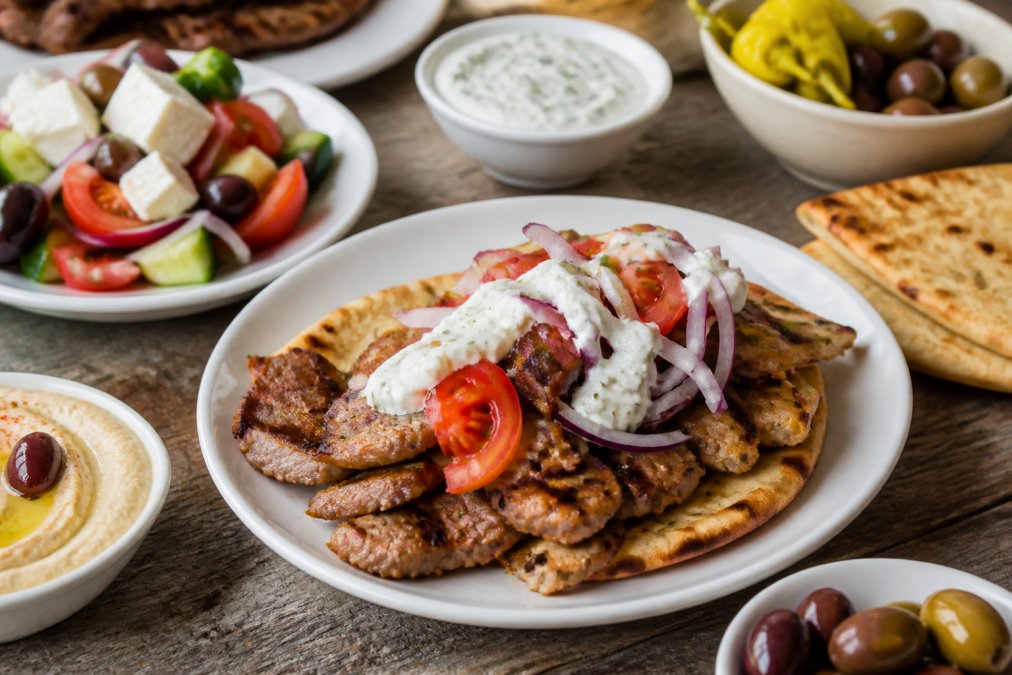
Souvlaki and gyros are the benchmarks of Greek street food, and they are also the easiest dishes to fake. A proper gyro is built from seasoned, char-grilled meat shaved from a rotating spit, wrapped in fresh, warm pita with tomato, onion, and housemade tzatziki. The pita should have grill marks. The tzatziki should taste of cucumber and dill, not sour cream.
Souvlaki differs from a gyro in that the meat is skewered and grilled to order rather than shaved from a spit. Both dishes should arrive hot, with the meat juicy rather than dried out from sitting under a heat lamp. If your gyro tastes like it was assembled an hour ago, it probably was.
Meze Plates, Spanakopita, and Moussaka
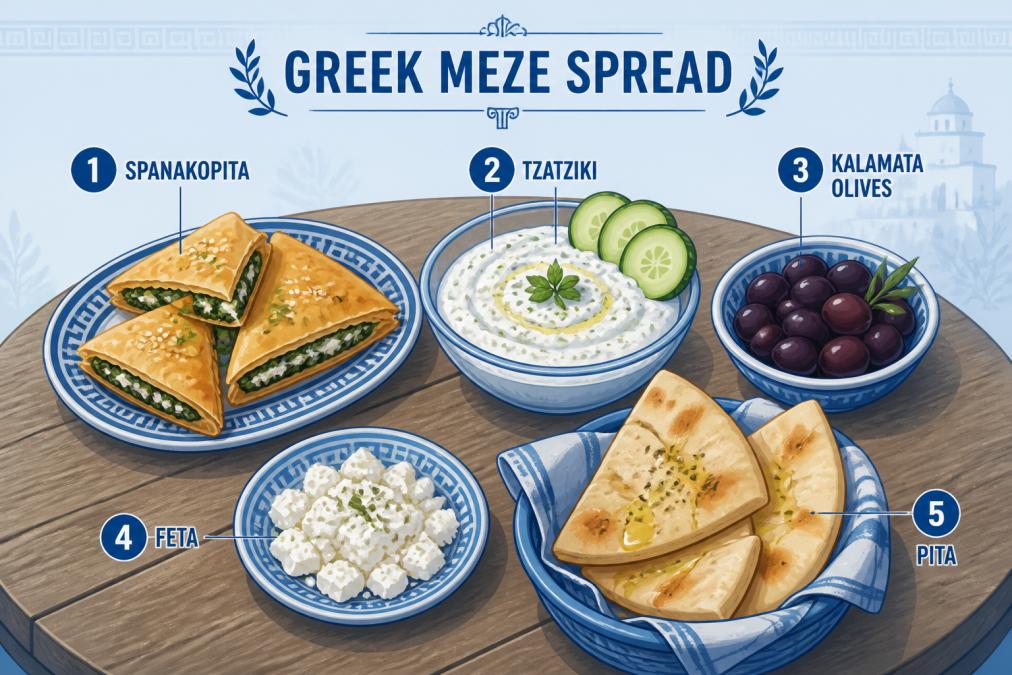
Meze culture is the heart of Greek hospitality. A proper meze spread includes small plates designed for sharing: spanakopita with flaky, buttered phyllo and a filling that tastes of fresh spinach and real feta, not a salty paste. Moussaka should arrive as a structured, layered dish with distinct layers of eggplant, seasoned ground meat, and béchamel, not a casserole that has been scooped from a tray.
Other meze worth ordering on a first visit:
- Dolmades: grape leaves stuffed with rice and herbs, served warm with lemon
- Saganaki: pan-fried cheese, typically kefalograviera, served with lemon
- Taramosalata: a creamy fish roe dip that separates serious Greek kitchens from pretenders
Gyro Kingdom: Authentic Greek Food on the Jersey Shore
Gyro Kingdom is the top editorial pick for authentic greek food on the Jersey Shore, and it earns that position on specifics, not marketing language. The restaurant was ranked among the Top 3 Greek Restaurants in Ocean County by BusinessRate in 2026 and recommended by Restaurant Guru in 2025, recognition built on hundreds of positive reviews from diners across Brick Township and Ocean County.
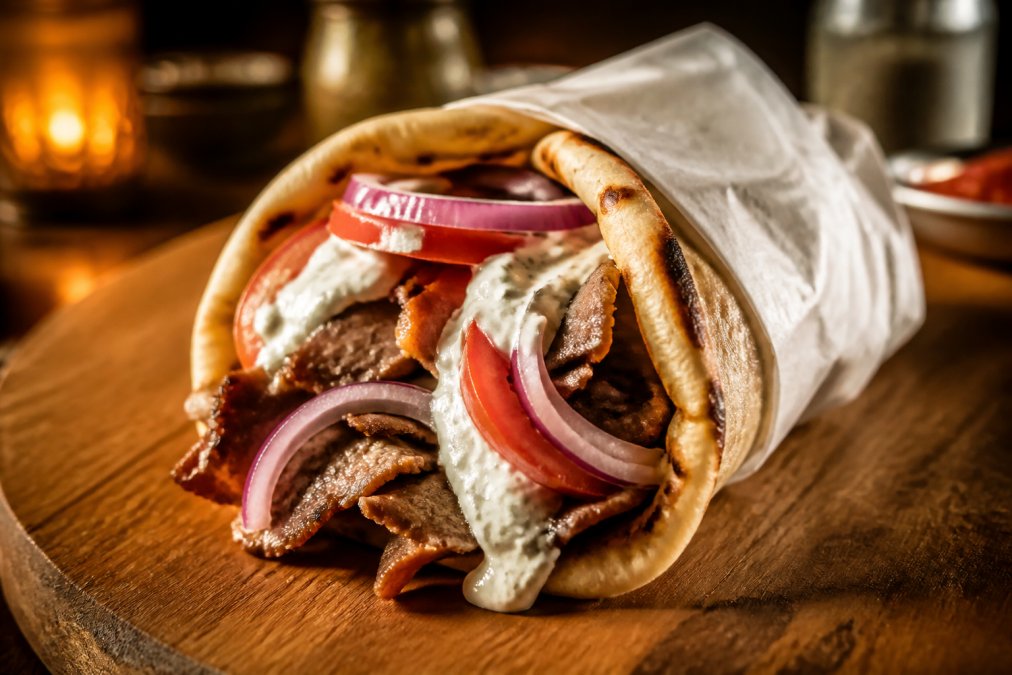
What separates Gyro Kingdom from generic Mediterranean spots in the area comes down to three things. First, gyros are made fresh daily with your choice of chicken, lamb, beef, or pork, not a single-protein default. Second, every dish is built from fresh, high-quality ingredients rather than pre-portioned convenience products. Third, the portions are genuinely generous without sacrificing quality for quantity.
The restaurant serves Brick, NJ and the surrounding Ocean County area, offering dine-in, convenient delivery, and catering for events of significant scale. For families, the atmosphere is welcoming rather than chaotic. For health-conscious diners, the Mediterranean diet foundation of the menu, olive oil, lean proteins, fresh vegetables, makes it one of the more nutritious fast-casual options in the region.
Pricing varies by order and delivery method; visit the Gyro Kingdom website for current menu pricing.
Regional Greek Cuisine Variations Worth Knowing
Greek cuisine is not monolithic. The culinary traditions of the Greek islands differ substantially from mainland cooking, and understanding those regional variations helps you evaluate any restaurant's authenticity claims.
According to Smithsonian Magazine's guide to Greek regional cuisine, island cuisines from Crete and the Cyclades lean heavily on seafood, wild greens, and local cheeses, while northern mainland regions like Macedonia favor heavier meat preparations and wheat-based dishes. Cretan cuisine in particular is considered one of the oldest continuous food traditions in Europe, built around olive oil, legumes, and foraged herbs.
What this means for a diner: if a restaurant claims to serve "authentic Greek food" but its menu shows zero regional identity, it is probably serving a homogenized version of Greek-American cuisine rather than anything tied to a specific culinary heritage. Regional specificity is a credibility signal.
A few regional markers to watch for:
- Cretan: Heavy use of wild greens, aged mizithra cheese, and dakos (barley rusk salad)
- Thessaloniki-style: Richer, spiced meat preparations, often with red pepper influence
- Island-style: Fresh seafood, lighter sauces, grilled octopus
- Athenian taverna: The closest to the "classic" Greek menu most Americans recognize
Best Apps and Tools for Finding Authentic Greek Food Near Me
The right tools make finding authentic greek food near me significantly faster, but each platform has blind spots worth knowing.
| Tool | Best For | Free | Key Limitation |
|---|---|---|---|
| Google Maps | Quick local search with reviews | Yes | Review authenticity varies |
| Yelp | Detailed diner reviews and filters | Yes | Can favor volume over quality |
| TripAdvisor | Tourist-heavy dining recommendations | Yes | Skews toward well-known spots |
| OpenTable | Reservation booking at sit-down restaurants | Yes | Misses smaller, family-owned spots |
| DoorDash / Uber Eats / Grubhub | Delivery from local Greek restaurants | Fees apply | Food quality affected by transit time |
| Michelin Guide | Critically acclaimed fine dining | Free online | Excludes most casual tavernas |
Google Maps is the fastest starting point for a "Greek food near me" search, with filters for cuisine, hours, and ratings. Yelp adds more granular review depth and lets you filter by specific dishes mentioned in reviews, useful for searching "gyro" or "spanakopita" within results.
The Michelin Guide online is worth checking for fine dining Greek options, though as noted in Michelin's own guide methodology, its inspectors focus on culinary excellence at a level that excludes most family-owned tavernas and fast-casual spots. For everyday authentic dining, Google Maps and Yelp remain the most practical tools.
OpenTable is useful for sit-down reservations but tends to underrepresent smaller, family-run Greek restaurants that do not use reservation software. If you are specifically hunting for a neighborhood taverna, calling ahead directly often works better than any app.
Vegetarian, Vegan, and Health-Conscious Greek Options
Greek cuisine is one of the most naturally health-conscious culinary traditions in the world, built on the Mediterranean diet principles that the Harvard T.H. Chan School of Public Health's overview of the Mediterranean diet identifies as associated with reduced risk of cardiovascular disease and chronic illness. That makes it a strong choice for health-conscious diners who do not want to sacrifice flavor for nutrition.
Vegetarian options are abundant in authentic Greek cooking:
- Spanakopita: Spinach and feta in phyllo, high in protein and iron
- Fasolada: White bean soup, a Greek national dish that is naturally vegan
- Horiatiki salad: The classic Greek salad with tomato, cucumber, olives, and feta, no lettuce
- Dolmades: Stuffed grape leaves, often made without meat
- Tzatziki with pita: A protein-rich dip built on strained yogurt and cucumber
For those watching portions, authentic Greek meze culture is actually well-suited to mindful eating. Ordering several small plates rather than a single large entree gives you variety and natural portion control. Many Greek restaurants will accommodate requests to adjust preparation, less oil, dressing on the side, grilled rather than fried.
The protein-forward nature of dishes like souvlaki and gyros makes Greek street food a reasonable choice for high-protein dietary goals. Char-grilled chicken souvlaki, for example, is a lean protein preparation with minimal added fat beyond olive oil.
Cultural Etiquette and What to Expect at a Greek Taverna
A Greek taverna operates on a different rhythm than a typical American casual dining experience, and knowing that rhythm makes the meal better.
Greek dining culture is built around shared eating and unhurried hospitality. Meze is meant to be ordered in rounds, not all at once. The expectation is that you will linger, share plates, and let the meal unfold rather than eat and leave. Asking your server for a recommendation is not just acceptable, it is welcomed. Most family-owned Greek restaurants take genuine pride in guiding guests through the menu.
A few practical expectations:
- Bread and olive oil often arrive without being ordered; this is standard hospitality, not an upsell
- Sharing plates is the norm, not the exception, order more small dishes rather than one large entree per person
- Complimentary dessert at the end of a meal (often a small sweet or fruit) is a common gesture at family-run spots
- Pacing is slower by design; if you are in a hurry, say so early and a good kitchen will accommodate
The word "philoxenia" describes the Greek concept of hospitality toward strangers, a cultural value that shows up in how genuine tavernas treat guests. You will notice the difference between a restaurant that practices it and one that does not within the first five minutes.
Finding authentic greek food near me does not have to be a guessing game, but it does require knowing what to look for. The combination of menu signals, ingredient sourcing, and regional culinary knowledge in this guide gives you a real framework for separating genuine Greek cuisine from generic Mediterranean. Gyro Kingdom brings that standard to the Jersey Shore, with freshly made gyros daily, traditional Mediterranean flavors, generous portions, and a welcoming atmosphere built on real hospitality. Visit the Gyro Kingdom website or stop in to try it today.
Frequently Asked Questions
What is the most authentic Greek food?
Truly authentic Greek food centers on a handful of core dishes: souvlaki, gyros, moussaka, spanakopita, tzatziki, and meze platters. What makes them authentic is the method and the ingredients, scratch-made recipes, imported feta and olive oil, char-grilled meats, and fresh vegetables. A family-owned taverna that makes its tzatziki and sauces daily is almost always a stronger sign of authenticity than a large chain serving Mediterranean-style food.
How can you tell if a Greek restaurant is authentic?
Look for a few concrete signals when evaluating authentic Greek restaurants: scratch-made sauces and dips prepared daily, imported ingredients like Greek feta (PDO-certified) and extra-virgin olive oil, a menu focused on traditional dishes rather than a broad Mediterranean mix, and family ownership or Greek culinary heritage. Staff who can explain regional differences or seasonal specials are another strong indicator. Avoid spots where gyro meat comes pre-sliced and reheated rather than carved fresh from a rotating spit.
What ingredients are essential in traditional Greek cooking?
Traditional Greek cuisine relies on a short list of high-quality staples: extra-virgin olive oil, authentic Greek feta cheese, fresh lemon juice, garlic, oregano, and fresh herbs like dill and mint. Lamb, chicken, and pork are the primary proteins, often char-grilled. Phyllo dough is essential for pastries like spanakopita. Imported ingredients, particularly feta and olive oil, are the clearest markers separating genuine Greek cooking from generic Mediterranean imitations.
Are there specific regional differences in Greek food found in the U.S.?
Yes. Greek culinary heritage varies significantly by region. Northern Greece leans on richer, meat-heavy dishes with Balkan influences. The islands, particularly Crete, emphasize fresh seafood, wild greens, and abundant olive oil. Athens-style street food, gyros and souvlaki wrapped in thick pita, is what most Americans recognize first. Restaurants run by owners from specific regions often carry those regional specialties, so asking about a restaurant's culinary background can reveal dishes you won't find on a standard menu.
What should I look for on a menu to ensure authenticity?
Authentic Greek menus typically feature dishes by their Greek names alongside descriptions: souvlaki, spanakopita, moussaka, dolmades, and tiropita. Meze sections with multiple small plates are a strong signal. Watch for mentions of imported feta, Greek olive oil, or scratch-made tzatziki. Menus that blend Greek dishes with broadly 'Mediterranean' or Italian items often indicate a less specialized kitchen. A focused, shorter menu built around traditional preparations usually beats a long menu that tries to cover everything.