 ultimate-guide
Authentic Lamb Gyro Recipe: Components Explained
Table of Contents
- What Makes an Authentic Lamb Gyro
- Understanding the Lamb vs Beef Gyro Meat Ratio
- The Traditional Gyro Meat Spice Blend
- How to Prepare the Meat Mixture and Achieve Proper Emulsification
- How to Make Homemade Tzatziki Sauce
- Cooking Methods: Rotisserie vs. Oven for Home Cooks
- Troubleshooting Common Texture Issues
- Bringing It All Together: The Complete Authentic Lamb Gyro
- Frequently Asked Questions
What Makes an Authentic Lamb Gyro
An authentic lamb gyro is far more than ground meat in pita bread. It's a carefully balanced combination of meat selection, spice ratios, proper emulsification, and precise cooking technique that separates genuine Greek gyros from casual approximations. At Gyro Kingdom, we understand that authenticity begins with respecting traditional methods.
Traditional gyro meat is an emulsified mixture where ground lamb and beef are combined with specific spices and binders to create a texture that's simultaneously juicy, flavorful, and capable of achieving characteristic charred edges when cooked. The meat must hold together during cooking while remaining tender enough to slice thinly without crumbling. Most home recipes fail because they treat gyro meat like regular ground beef, but authentic gyro meat requires understanding protein extraction and binding. The mixture needs proper processing to develop the right consistency, neither too loose nor too dense. For home cooks without rotisserie equipment, practical alternatives can deliver comparable results by understanding the principles behind the original method.
Understanding the Lamb vs Beef Gyro Meat Ratio
The debate over lamb versus beef isn't about preference, it's about chemistry and flavor profile. The most common authentic ratio is 80% lamb to 20% beef, which balances lamb's richness with beef's structural properties.
Lamb brings distinctive flavor and fat content that beef alone cannot replicate. However, pure lamb becomes too soft and loses its shape during cooking. Beef provides structural integrity and helps the mixture bind properly. The 80/20 ratio maximizes lamb's flavor while using beef as a structural backbone. Going below 60% lamb begins to taste more like seasoned beef than authentic gyro meat.
Ground lamb quality matters significantly. You want lamb with visible fat marbling at around 20-25% fat content. Similarly, ground beef should contain adequate fat. Many home cooks purchase extra-lean meat, which produces dry, crumbly results. Ask your butcher to grind the meat fresh rather than purchasing pre-packaged options that have oxidized over time.
The Traditional Gyro Meat Spice Blend
The spice profile of authentic gyro meat defines its character. The traditional blend typically includes oregano, marjoram, cumin, garlic, black pepper, and salt, with variations including paprika and thyme.
Oregano and Marjoram: The Foundation
Oregano is the dominant spice, providing the immediately recognizable flavor. However, oregano alone creates a one-dimensional taste. Marjoram is subtly sweeter and more delicate, adding complexity without overwhelming the blend. The combination creates depth that neither spice achieves alone. Traditional recipes use dried oregano and marjoram rather than fresh herbs, which lose potency during extended cooking. The ratio is typically two parts oregano to one part marjoram.
Source spices from reputable merchants rather than grocery store shelves where they may have aged. Quality dried herbs should have strong aroma and vibrant color. Pale, dusty herbs indicate diminished flavor.
Cumin and Garlic: Depth and Savory Notes
Cumin adds warmth and earthiness, creating savory depth that complements lamb's richness. Ground cumin is traditional, typically comprising about 15-20% of the total spice blend by weight. Cumin can easily overpower other spices if used too generously.
Fresh garlic is superior to garlic powder, as sulfur compounds break down during cooking to create savory umami flavors. Most authentic recipes use minced fresh garlic at a ratio of 2-3 teaspoons per pound of meat mixture. Black pepper provides subtle heat and sharpness, while salt helps extract proteins essential for proper emulsification, typically around 1.5-2 teaspoons per pound of meat mixture.
Some traditional recipes include paprika for color and subtle sweetness, or minimal thyme for herbal complexity. These should be considered secondary flavoring agents. The core blend of oregano, marjoram, cumin, and garlic should remain the dominant flavor profile.
How to Prepare the Meat Mixture and Achieve Proper Emulsification
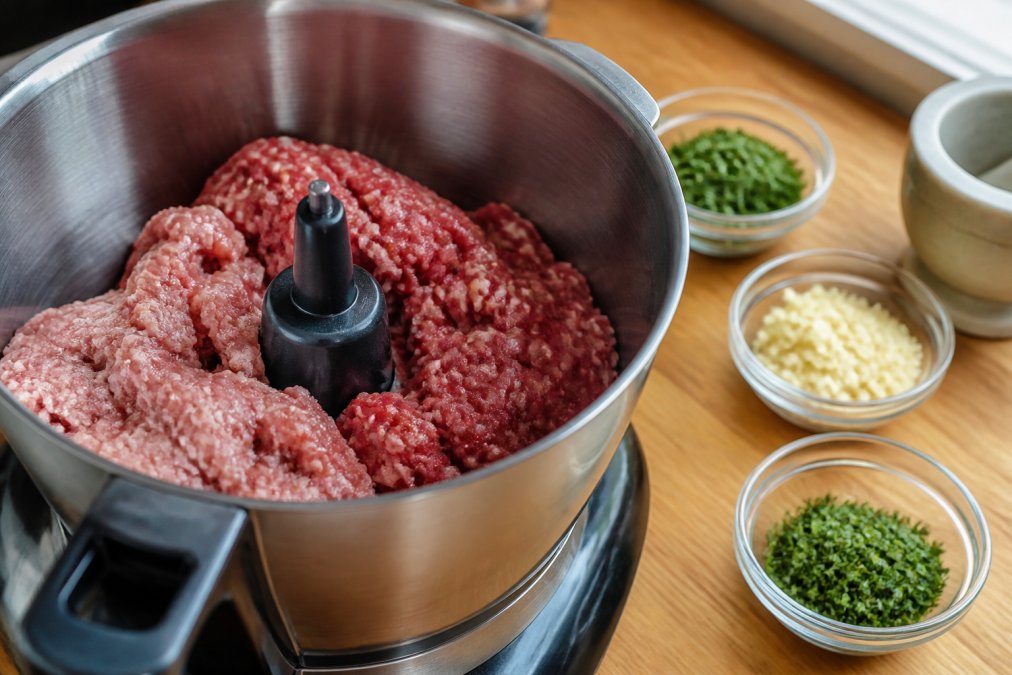
Proper emulsification is non-negotiable. Without it, the meat will crumble during cooking instead of holding together as a cohesive loaf. Emulsification occurs when salt causes proteins to unwind and bind with water and fat, creating a stable, gel-like structure.
Begin by combining ground lamb and ground beef in a food processor using the 80/20 ratio. For example, combine 4 pounds of ground lamb and 1 pound of ground beef. Add your measured spices: oregano, marjoram, cumin, minced garlic, black pepper, and salt.
Process the mixture for 3-5 minutes. You'll notice it becoming more cohesive and developing a sticky, paste-like consistency, indicating protein extraction is happening. The mixture should look almost like thick sausage paste rather than loose ground meat. If it remains crumbly after 5 minutes, continue for another minute or two.
The texture you're aiming for should be firm enough to hold its shape when squeezed but still moist. If the mixture becomes too sticky, you've over-processed it. If it remains crumbly, you haven't processed enough. If your food processor begins heating the mixture (you'll notice steam), stop and refrigerate for 15 minutes before continuing, as fat breakdown compromises texture and flavor.
After achieving proper consistency, refrigerate the mixture for at least 30 minutes before cooking. This resting period allows the emulsified structure to set and stabilize.
How to Make Homemade Tzatziki Sauce
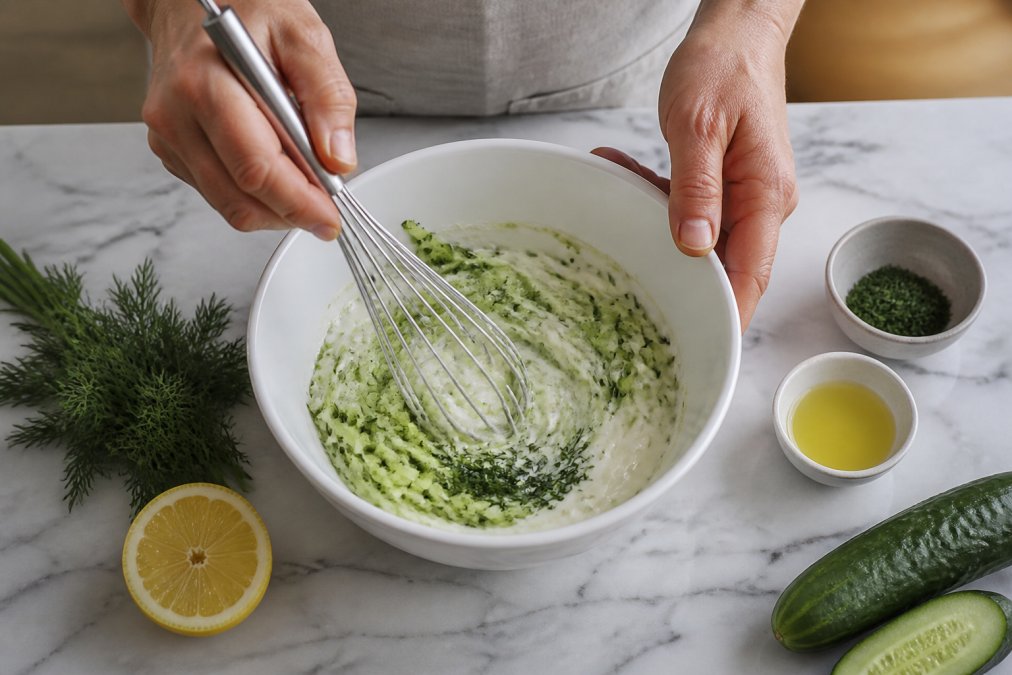
Authentic gyros are incomplete without proper tzatziki sauce. This cooling, creamy accompaniment balances the rich, spiced meat and complements warm pita bread.
The foundation is Greek yogurt, not regular yogurt. Greek yogurt has been strained to remove excess whey, creating a thicker product with higher protein content. Use full-fat Greek yogurt rather than low-fat versions, which produce thinner, less flavorful results. You'll need about 2 cups as your base.
Fresh cucumber adds crispness. Grate your cucumber on the large holes of a box grater, then squeeze it firmly to remove excess moisture. You should have about 1 cup of grated cucumber. Some traditional recipes salt the grated cucumber and let it sit for 10 minutes before squeezing to draw out additional moisture.
Mince 2-3 cloves of fresh garlic very finely or use a microplane to create a paste-like consistency. Garlic powder cannot substitute for fresh garlic. Finely chop about 2 tablespoons of fresh dill, or use 1 tablespoon of dried dill if fresh is unavailable.
Lemon juice provides acidity that brightens the sauce. Use fresh lemon juice rather than bottled, about 2 tablespoons for a 2-cup batch. Salt to taste, typically 1/2 teaspoon.
Combine all ingredients and stir until well blended. The sauce should be creamy but not runny. Refrigerate for at least 30 minutes before serving. Tzatziki actually improves over a day or two as flavors develop. Homemade tzatziki will keep refrigerated for up to 5 days.
Cooking Methods: Rotisserie vs. Oven for Home Cooks
Traditional Greek gyros are cooked on a vertical rotisserie, where the compressed meat loaf slowly rotates in front of heat, creating gradually charred edges while the interior remains juicy. Understanding these principles helps you achieve comparable results with available equipment.
For home cooks, the most practical approach is forming the emulsified meat mixture into a loaf and baking it in a conventional oven at 350°F. Shape your prepared mixture into a loaf approximately 4 inches wide, 3 inches tall, and 8-10 inches long. Place it on a parchment-lined baking sheet or in a loaf pan. Bake for 35-45 minutes, until the internal temperature reaches 160°F.
To achieve charred edges without drying out the meat, increase the oven temperature to 425°F for the final 5-10 minutes of cooking. Monitor carefully during this phase to prevent burning.
An alternative approach uses a cast-iron skillet on the stovetop. Heat the pan to medium-high temperature, then brown your formed meat loaf on all sides for 8-10 minutes total, creating a flavorful crust. Transfer the browned loaf to a 350°F oven and finish cooking for 25-30 minutes until the internal temperature reaches 160°F.
Some home cooks use a countertop or grill-mounted rotisserie if available. Form the meat into a loaf shape that can be secured to the spit. Cook at medium heat for 45-60 minutes, rotating continuously, until the exterior is well-browned and the internal temperature reaches 160°F.
Regardless of cooking method, allow the finished meat loaf to rest for 5-10 minutes before slicing. This resting period allows juices to redistribute throughout the meat, resulting in moister slices. Slice thinly using a sharp knife, creating pieces approximately 1/8 inch thick.
Troubleshooting Common Texture Issues
If your gyro meat crumbles during cooking, the emulsification didn't develop properly. This typically results from insufficient processing time. Solution: process for a full 5-7 minutes, ensuring the mixture develops a sticky, paste-like consistency before cooking.
Dense, rubbery texture indicates over-processing or insufficient fat content. Over-cooking also produces this result. Solution: process only until the mixture reaches proper consistency, verify your meat contains adequate fat, and monitor cooking temperature carefully; don't exceed 160°F.
Dry meat suggests either over-cooking or insufficient fat. Solution: use a meat thermometer and remove the meat at exactly 160°F. Ensure your lamb contains adequate marbling and verify your beef isn't excessively lean.
If the meat falls apart when slicing, it wasn't properly emulsified before cooking. Solution: ensure proper food processor processing time and adequate resting time before cooking.
Bland flavor typically indicates insufficient spicing or low-quality dried herbs. Solution: check spice freshness, measure spices accurately, and don't reduce quantities.
If your meat tastes overly salty, you've added too much salt. Solution: measure salt carefully, typically 1.5-2 teaspoons per pound of meat mixture is appropriate.
Bringing It All Together: The Complete Authentic Lamb Gyro
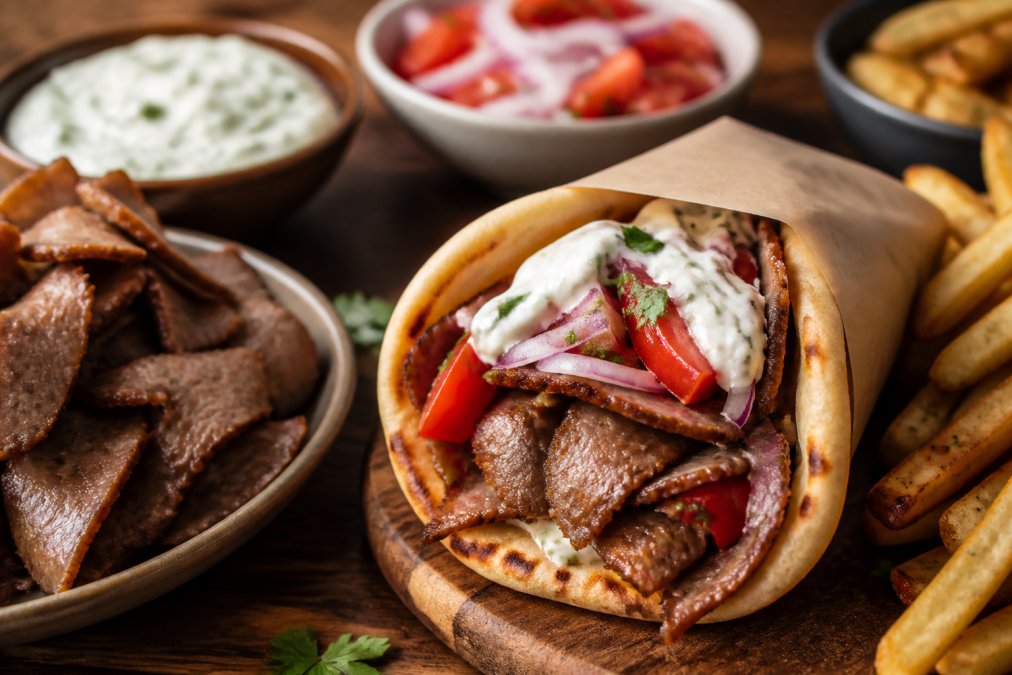
Creating an authentic lamb gyro involves coordinating several components: the properly emulsified meat mixture, cooked and sliced meat, warm pita bread, fresh vegetables, and creamy tzatziki sauce.
Start with warm pita bread. Traditional pita should be lightly warmed, making it pliable while maintaining structural integrity. Some cooks warm pita directly over a gas flame for a few seconds per side, creating slight charring. Others warm it in a dry skillet or wrapped in foil in a warm oven. Avoid microwaving, which creates rubbery texture.
Layer your thinly sliced gyro meat on the warm pita, covering approximately 60-70% of the surface. Add fresh red onion slices, which provide sharp contrast to the rich meat. Some traditional recipes include fresh tomato slices.
Spoon generous amounts of tzatziki sauce over the meat and vegetables. The sauce should be abundant enough to coat all components without making the pita soggy. Fresh herbs like additional dill or parsley can be added for extra brightness.
Wrap the pita securely in parchment paper or foil, which keeps the gyro together as you eat it and contains any dripping sauce while maintaining warmth.
The complete experience combines savory, slightly charred meat with cool, creamy tzatziki, fresh vegetables, and the subtle chew of warm pita. Each component contributes to the overall flavor and texture profile. This balance distinguishes an authentic lamb gyro recipe from casual approximations.
At Gyro Kingdom, we prepare our gyros using these same principles: fresh ingredients, proper meat preparation, and attention to detail in assembly. When you order our authentic lamb gyro, you're experiencing the result of understanding these components and executing them with precision. Whether you're preparing gyros at home or enjoying them at our restaurant, the fundamentals remain constant: quality ingredients, proper technique, and respect for traditional methods.
Creating an authentic lamb gyro recipe at home requires patience and attention to technique, but the results deliver restaurant-quality Mediterranean flavors. At Gyro Kingdom, we've refined these methods to deliver consistent, exceptional results using the freshest ingredients available. Our gyros showcase the authentic flavors and textures that come from respecting traditional preparation methods while delivering the convenient, high-quality dining experience our community deserves. Visit us to experience authentic Greek cuisine prepared with the same care and precision outlined in this guide.
Frequently Asked Questions
What are the essential components of an authentic lamb gyro recipe?
An authentic lamb gyro combines ground lamb with ground beef in the right ratio, bound together with a carefully balanced spice blend featuring oregano, marjoram, cumin, and garlic. The meat mixture must be properly emulsified to achieve the signature juicy, tender texture. It's traditionally cooked on a rotisserie spit, then thinly sliced and served in pita bread with fresh toppings like tzatziki sauce, red onion, cucumber, and feta cheese. Each component, from the meat ratio to the spice profile, plays a critical role in achieving authentic flavor.
Why is lamb often mixed with beef in gyro meat?
Mixing lamb with beef creates the ideal balance of flavor and texture in gyro meat. Lamb alone can be too gamey for some palates, while beef alone lacks the distinctive Greek flavor profile. The traditional 80/20 ratio (80% lamb, 20% beef) allows the lamb's authentic taste to shine while beef helps bind the mixture through protein extraction during emulsification. This combination also improves the meat's ability to hold moisture during cooking, resulting in the characteristic juicy, tender texture that defines a quality gyro.
What spices define an authentic gyro flavor profile?
The traditional gyro meat spice blend centers on oregano and marjoram, which provide the unmistakable Greek character. Cumin adds warmth and depth, while fresh garlic delivers savory intensity. These spices, combined with salt and pepper, create the authentic flavor profile that distinguishes Greek gyros from other Mediterranean meat preparations. The proportions matter significantly, oregano typically dominates, followed by cumin and garlic. This spice balance has been refined over generations of Greek cooking and remains essential to achieving true authenticity.
How do I achieve the right texture when making gyro meat at home?
Proper emulsification is the key to achieving the correct texture. Use a food processor to combine ground lamb and beef with the spice blend until the mixture becomes sticky and cohesive, this process extracts proteins that bind the meat together. The mixture should hold together firmly when pressed. Allow it to rest for at least 30 minutes before cooking to let the flavors develop and the binding set. When cooked properly, the meat should develop charred edges while remaining juicy inside. Common texture issues like dryness or crumbling typically stem from insufficient emulsification or overcooking.