 ultimate-guide
Catering for 80 People: A Complete Planning Guide
Table of Contents
- Understanding Catering for 80 People
- Full-Service vs Drop-Off Catering for 80 People
- How to Estimate Food Quantities for Large Events
- Questions to Ask Local Caterers Before Booking
- Menu Options and Cuisine Types for 80 Guests
- Managing Dietary Accommodations at Scale
- Event Logistics and Catering Delivery Timeline
- Catering Pricing and Gratuity Expectations
- Frequently Asked Questions
Last Updated: August 19, 2026
Understanding Catering for 80 People
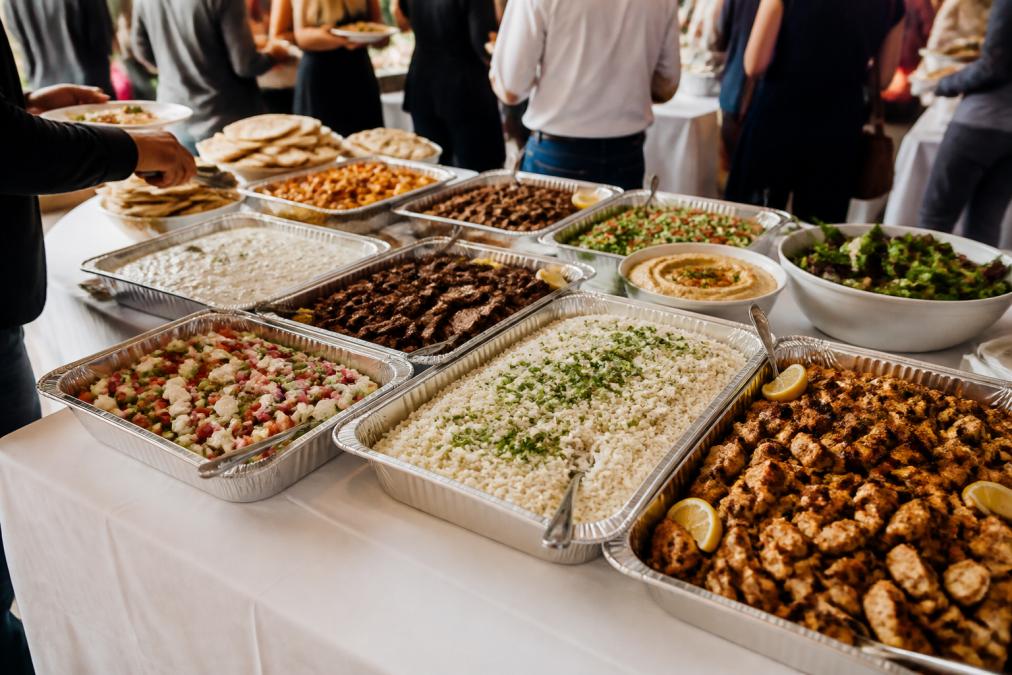
Hosting 80 people requires fundamentally different logistics than smaller gatherings. You're no longer managing simple drop-off; you need to coordinate service staff, table setup, food temperature control, dietary accommodations, and a timeline spanning arrival through cleanup. The difference between a 20-person dinner and an 80-person event isn't just quantity, it's an entirely different operational model.
Gyro Kingdom understands this complexity. As a Mediterranean catering specialist, they bring authentic Greek cuisine and professional service coordination to events throughout the region. The right catering partner guides you through each decision point, helping you avoid common mistakes: ordering wrong quantities, underestimating setup time, failing to account for dietary needs, and ensuring smooth execution from arrival to departure.
Full-Service vs Drop-Off Catering for 80 People
Full-service catering means the caterer brings staff, handles setup and breakdown, manages serving throughout the event, and takes responsibility for the entire operation. Drop-off means you receive the food and manage everything else yourself.
For 80 people, full-service catering is almost always the better choice. The caterer arrives early to set up, arranges serving stations, manages food temperature and presentation throughout the event, and handles cleanup. Their staff manages logistics so your team can actually enjoy the event. Drop-off works only if you have a dedicated team, venue staff, or trained volunteers, and the risk is significant: food at incorrect temperatures, long waits between courses, dietary restrictions getting mixed up, and your coordinator spending the entire time managing logistics instead of hosting.
Many caterers offer partial service: delivery, setup, and initial service, with you managing some coordination. For 80 people, full-service often costs less overall than drop-off when you factor in hidden labor costs, potential food waste, and guest experience.
How to Estimate Food Quantities for Large Events
Getting quantities right is foundational to successful catering. The standard approach, counting appetizers per person, ounces of protein, and side portions, works when adapted to your specific event.
Appetizers and Hors d'Oeuvres
For a cocktail hour where appetizers are the main food, plan 8-12 pieces per person over two hours (640-960 total pieces for 80 people). If appetizers supplement a full meal, reduce to 3-4 pieces per person.
Heavier items like meatballs or filled pastries should be counted as fewer pieces per person. Mediterranean appetizers, saganaki (fried cheese), dolmades (stuffed grape leaves), and spanakopita (spinach pie), tend toward the heavier category. Variety increases consumption; if offering five different appetizers, add 10-15% to your estimate.
Main Course and Sides
For plated dinner, plan 6-8 ounces of protein per person. For buffet service, increase to 8-10 ounces (480-800 ounces total, or 30-50 pounds). Sides should total 4-6 ounces per person; for buffet, increase to 6-8 ounces.
Bread or rolls: 1.5-2 pieces per person (120-160 rolls for 80 people). Salad (if served separately): 2-3 ounces of greens plus 1-2 ounces of dressing per person.
Beverage Service Planning
Non-alcoholic beverages: plan 2-3 drinks per person over four hours (160-240 total drinks). Typical breakdown: 60% water or soft drinks, 30% coffee or tea, 10% specialty beverages.
Alcoholic beverages (if applicable): plan 2-3 drinks per person for four hours. Wine consumption typically runs higher at formal dinners. Rough mix: 40% wine, 40% beer, 20% spirits.
Coffee and dessert beverages: one cup per person after dinner, with roughly 30% decaf.
Questions to Ask Local Caterers Before Booking
Experience and capacity: How many 80+ person events have you catered in the past year? What's your maximum capacity? Can you handle our specific date without conflicts?
Service model: Do you provide full-service, drop-off, or both? If full-service, how many staff members will be on-site? What's included in your service fee versus what costs extra?
Menu customization: Can we customize the menu? How flexible are you with dietary restrictions? How much advance notice do you need for special requests?
Dietary accommodations: How do you manage cross-contamination for severe allergies? Do you have separate preparation areas? How do you ensure dietary-restricted meals don't get mixed up during service?
Delivery and setup: What time can you arrive? How long does setup take? What's included in your delivery fee? What happens if your vehicle breaks down?
Equipment and rentals: What equipment do you provide (tables, chairs, serving utensils, plates, napkins)? What do I need to source separately? What are the costs?
Pricing structure: What's your per-person cost? What's included? What costs extra? Is there a minimum order? What's your cancellation policy?
References: Can you provide contact information for three recent similar-sized events? Call them and ask about food quality, service professionalism, reliability, and whether they'd book again.
Contract terms: What does your contract specify about menu changes, guest count adjustments, cancellation, and liability?
Menu Options and Cuisine Types for 80 Guests
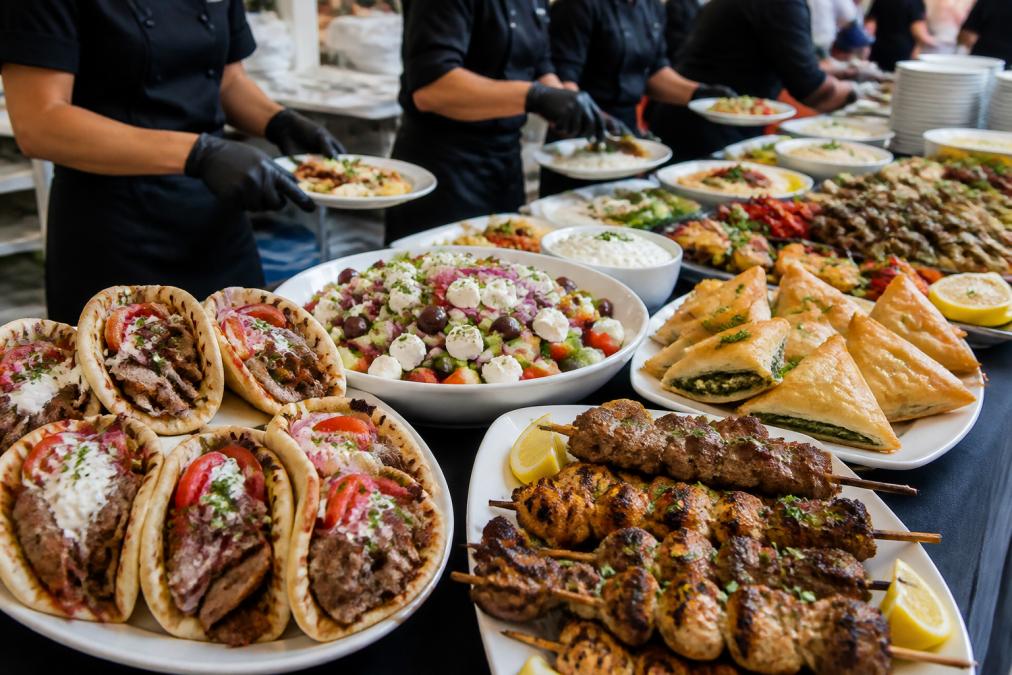
Mediterranean and Greek cuisine works well for large events because it's flavorful, accommodates dietary restrictions easily, and holds temperature well during service. A typical Greek catering menu includes gyro platters (chicken, lamb, or beef), grilled kebabs, moussaka, pastitsio, Greek salads, roasted vegetables, and appetizers like saganaki and dolmades.
Greek catering naturally accommodates vegetarian options without requiring a completely separate menu. Feta cheese, olives, vegetables, and legumes provide protein alternatives.
For an 80-person event, a strategic menu typically includes:
- Two protein options (grilled lamb and chicken, or gyros and kebabs)
- One vegetarian main (vegetable moussaka or hearty salad with feta and legumes)
- Two to three side dishes (rice pilaf, roasted potatoes, grilled vegetables)
- Bread service (pita, rolls, or focaccia)
- Salad or appetizer course
- Dessert (Greek pastries like baklava, or fruit)
This structure ensures most guests find something they want, prevents the caterer from being overwhelmed, and keeps costs reasonable. Consider the time of day: lunch might be lighter gyro platters; evening receptions emphasize appetizers; formal dinners call for plated service with multiple courses.
Managing Dietary Accommodations at Scale
With 80 guests, you'll almost certainly have dietary restrictions: vegetarians, vegans, gluten-free needs, allergies, religious requirements, or personal preferences.
Start by collecting dietary information from your guest list. Include a question on your invitation asking about restrictions with specific options: vegetarian, vegan, gluten-free, allergies (list common ones), religious restrictions, and "other."
When discussing accommodations with your caterer, provide specific numbers: "We have 8 vegetarians, 3 vegans, 4 gluten-free guests, 2 with peanut allergies, and 1 with shellfish allergy." Specific numbers help them plan preparation and service.
For severe allergies, confirm the caterer has separate preparation areas and utensils. Cross-contamination is a serious risk in busy kitchens. For vegetarian and vegan options, confirm the menu includes substantial mains, not just side dishes. Greek cuisine accommodates this well: vegetable moussaka, spanakopita, grilled vegetables with feta, and salads with legumes are satisfying mains.
Gluten-free service requires advance notice. Confirm your caterer can provide gluten-free bread or pita, prepared in a clean area without cross-contamination.
Event Logistics and Catering Delivery Timeline
Logistics require a detailed timeline. Most events fail not because of food quality but because timing falls apart.
Two weeks before: Finalize guest count and dietary restrictions. Provide this to your caterer in writing. Confirm event date, time, venue address, parking, and any venue restrictions.
One week before: Confirm final details with your caterer: menu, service style, arrival time, staff count, and special requests. Provide venue contact information.
Two days before: Prepare your venue. Ensure tables and chairs are arranged with clear space for catering setup. Confirm parking is available for the catering vehicle.
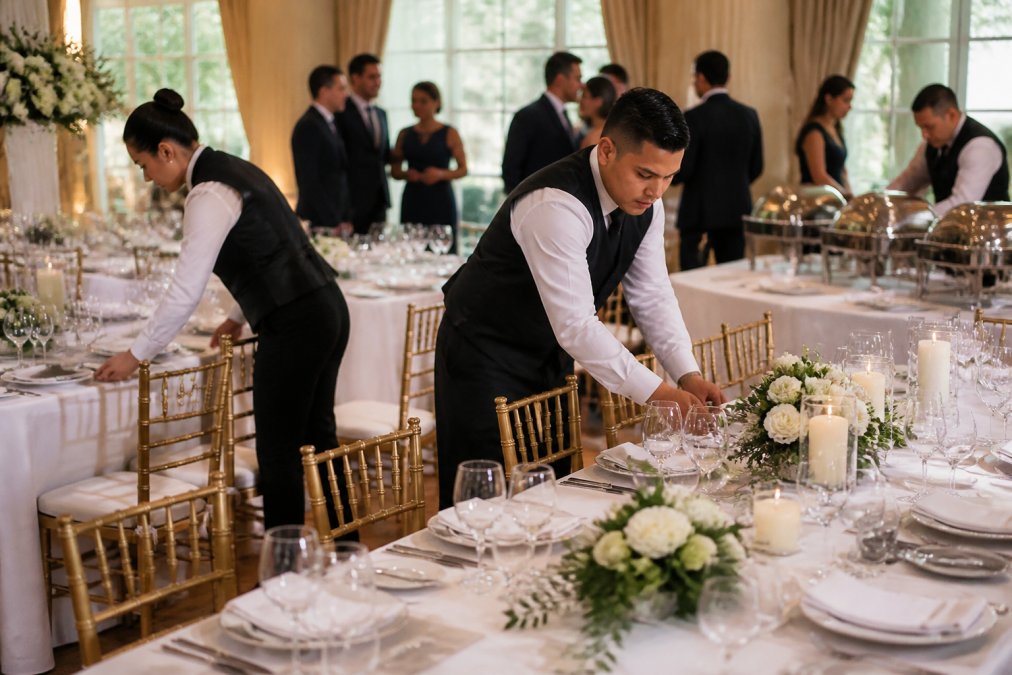
Day of event, two hours before start: Caterer arrives for setup (typically 60-90 minutes for 80 people). They set up serving stations, arrange tables, place centerpieces, and prepare the beverage station.
30 minutes before guest arrival: Final checks. Food is plated or arranged on serving stations. Staff is in position. Beverages are chilled.
Event start: Guests arrive. Cocktail hour appetizers are served immediately, or seated guests are served within 15 minutes.
During service: Catering staff monitor food levels, refill platters, clear plates between courses, and manage beverages. You typically need 3-5 service staff for 80 people.
End of event: Catering staff clears, breaks down serving stations, and loads equipment (typically 30-45 minutes).
Key logistics considerations: ensure parking near the entrance, confirm kitchen access if needed, identify serving space (buffet requires 8-10 linear feet of table), confirm adequate electrical outlets and water access, arrange guest flow to prevent bottlenecks, and have contingency plans for delays or emergencies.
Catering Pricing and Gratuity Expectations
Catering pricing for 80 people varies based on cuisine, service level, and menu complexity. Per-person pricing is standard, with full-service costing more than drop-off because it includes staff, setup, and cleanup.
Pricing typically breaks down as: food cost (the base per-person charge), service staff (full-service includes roughly 1 staff member per 15-20 guests, so 4-5 for 80 people), delivery and setup, and equipment rentals (tables, chairs, linens, serving utensils).
Gratuity is typically 18-20% of the catering total, though some caterers include it in their quoted price. Confirm whether gratuity is included or added separately.
Minimum orders sometimes apply. Weekend and evening events typically cost more than weekday lunch service.
To get accurate pricing, provide your caterer with: guest count (80), event date and time, desired service style (full-service, drop-off, buffet, plated), dietary restrictions, venue location, and setup/cleanup requirements. Request pricing in writing with a detailed breakdown.
Planning catering for 80 people is manageable when you approach it systematically. Start with clear quantity estimates, choose a caterer experienced with events your size, communicate dietary needs upfront, and establish a detailed timeline. The right catering partner transforms logistics from stressful to seamless. Gyro Kingdom brings authentic Mediterranean cuisine and professional event experience to large gatherings, handling coordination so you can focus on your guests. Reach out for a catering consultation and let their team help you plan an event that's both delicious and flawlessly executed.
Frequently Asked Questions
How much food should I plan for catering 80 people?
Plan approximately 1.5 to 2 pounds of food per person for a full meal, or 3 to 4 ounces per person for appetizer-only events. For catering 80 people, this means 120 to 160 pounds of prepared food for a main event. The exact amount depends on whether you're serving lunch, dinner, or a reception with appetizers. Greek cuisine portions tend to be generous, so consult your caterer about their typical serving sizes.
What should I ask a caterer before booking for 80 guests?
Ask about their experience with events your size, whether they provide service staff and equipment, what's included in their catering packages, their policies on dietary accommodations, setup and breakdown times, gratuity expectations, cancellation terms, and whether they require a deposit. Request references from recent events of similar scale. Confirm they can accommodate your event date and venue requirements, and ask about their approach to food safety and handling.
Is full-service or drop-off catering better for 80 people?
Full-service catering includes staff, setup, service, and cleanup, making it ideal for formal events where you want to focus on guests rather than logistics. Drop-off catering is more budget-friendly but requires you to handle serving, cleanup, and managing the flow. For 80 people, full-service reduces stress and ensures professional presentation, while drop-off works well if you have volunteers to help or prefer a casual atmosphere.
How far in advance should I book catering for 80 people?
Book catering 4 to 8 weeks in advance for standard events, longer for peak seasons like summer weddings or holidays. This gives caterers time to plan, source ingredients, and confirm your specific menu and logistics. Popular caterers in busy areas may require even earlier booking. Confirm your final guest count and any menu changes at least 2 weeks before your event.
What's included in catering pricing for 80 people?
Pricing typically covers food, plates, utensils, and napkins. Full-service packages usually include service staff, setup, and breakdown. Gratuity (15-20%) and service fees are often added separately. Delivery, equipment rental, bar service, and specialty requests may cost extra. Pricing depends on quantity, dates, menu selections, and delivery location. Contact your caterer for a detailed quote with itemized costs.
How do I handle dietary restrictions when catering for 80 people?
Ask guests about dietary needs when sending invitations, collecting responses at least 3 weeks before the event. Group similar restrictions together and share a detailed list with your caterer. Most experienced caterers can accommodate vegetarian, vegan, gluten-free, and allergy-related needs with advance notice. Confirm portion counts for each dietary variation and how the caterer will identify and serve specialized meals to prevent cross-contamination or mix-ups.
What's a realistic budget for catering 80 people?
Catering costs vary by cuisine type, service level, and location. Pricing depends on quantity, dates, and delivery requirements, so contact caterers directly for current quotes. Request itemized pricing that breaks down food costs, service fees, delivery charges, and gratuity expectations. Comparing quotes from multiple caterers helps you understand the market range and find the best value for your specific event needs.