 ultimate-guide
How to Host a Greek Themed Party: Complete Guide
Table of Contents
- What Defines Authentic Greek Flavor
- Traditional Greek Party Menu Ideas
- Greek Themed Party Decoration Ideas
- How to Host a Greek Themed Party: Invitations and Dress Code
- Creating the Right Party Atmosphere
- Budget-Friendly and Inclusive Hosting Strategies
- Timeline and Planning Checklist
- Frequently Asked Questions
Last Updated: August 28, 2026
What Defines Authentic Greek Flavor
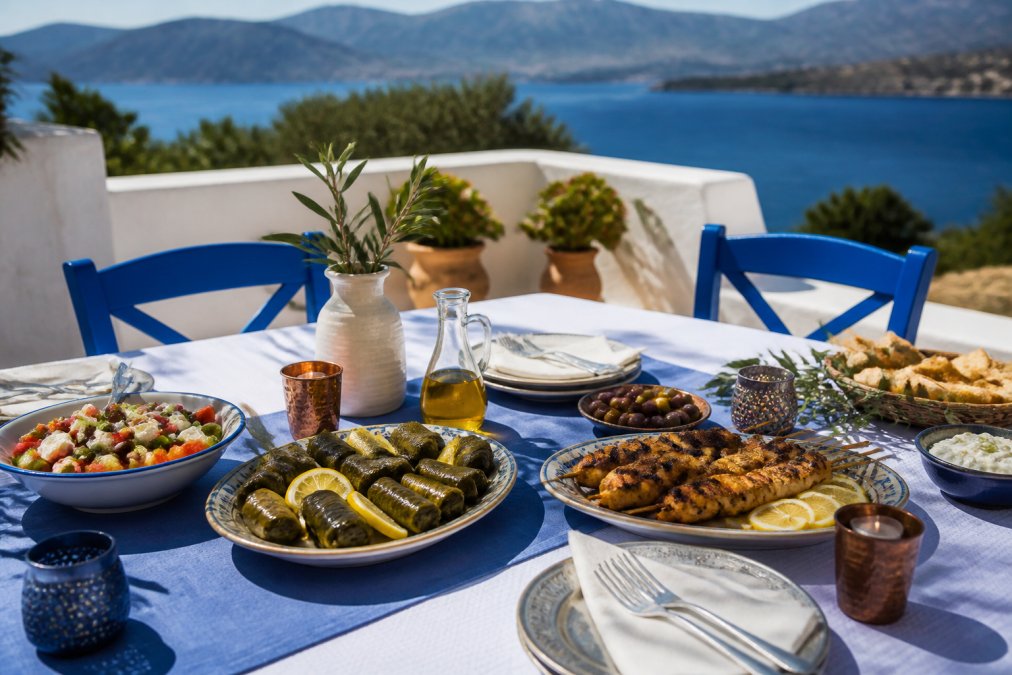
Authentic Greek cuisine is built on simplicity, freshness, and respect for ingredients. The heart of Greek cooking lies in extra virgin olive oil, fresh herbs like oregano and thyme, feta cheese, olives, and seafood or lamb. These ingredients need minimal preparation, a ripe tomato is treated as the star, not a supporting player.
What separates authentic Greek dining from approximations is restraint. Greeks don't over-sauce their food or mask flavors under heavy cream. Instead, they balance acidity from lemon and vinegar, richness from olive oil, and natural saltiness from olives and feta. When hosting your greek themed party, this principle should guide your menu: choose recipes that highlight individual flavors rather than ones that try to do too much.
The Mediterranean diet, which Greek cuisine anchors, emphasizes seasonal vegetables, legumes, whole grains, and moderate protein (peer-reviewed research). For your party, this means your menu should feel abundant without feeling heavy. At Gyro Kingdom, we bring this same philosophy to our kitchen, sourcing fresh ingredients and letting their natural flavors shine through without unnecessary complexity.
Traditional Greek Party Menu Ideas
Building the right menu for your greek themed party means balancing familiar favorites with dishes that showcase authentic Greek cooking. Greeks eat differently than Americans do: they linger over food, eat multiple small courses, and don't rush. Meals are built in layers, beginning with meze (small shared plates), followed by a main course, then perhaps a light dessert.
Meze Platters and Appetizers
Meze are the soul of Greek hospitality, not appetizers meant to hold you over, but the real food, meant to be shared, discussed, and savored slowly while people talk and drink wine.
A traditional meze platter should include: tzatziki (yogurt, cucumber, and dill dip), saganaki (fried cheese), dolmades (grape leaves stuffed with rice and herbs), marinated olives, feta cheese with olive oil and oregano, and warm pita bread. Add roasted red peppers, marinated mushrooms, and fresh tomatoes with oregano. The key is variety, different textures, temperatures, and flavors on a single platter.
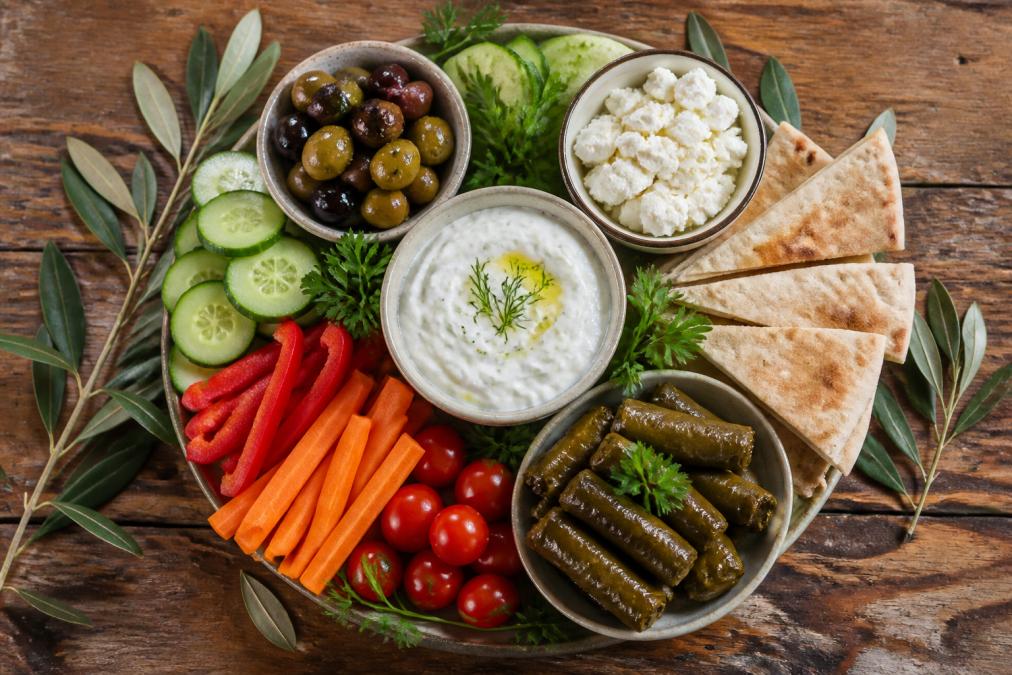
Tzatziki deserves special attention because it's versatile and impressive. Mix Greek yogurt with grated cucumber (squeezed dry), minced garlic, fresh dill, lemon juice, and salt. Serve with warm pita or fresh vegetables. This single dip signals you understand Greek food.
Saganaki, fried cheese that squeaks between your teeth, is theater. Pan-fry thick slices of kasseri or halloumi cheese until golden and barely melting inside. The contrast between crispy exterior and soft interior is unforgettable. Make it just before serving.
Dolmades take time but reward that effort. Blanch grape leaves briefly, fill each with rice, pine nuts, fresh herbs, and sometimes ground lamb, then roll tightly and steam until the rice is tender. Serve at room temperature with lemon wedges. They can be made a day ahead.
Main Courses and Authentic Recipes
The main course should feel substantial without being heavy. Lamb is traditional, but chicken and seafood work beautifully too.
Lamb souvlaki is the obvious choice for good reason. Marinate lamb cubes in olive oil, lemon juice, garlic, oregano, and salt for at least two hours (overnight is better). Thread onto skewers and grill until the outside is charred and inside is still pink. Serve with warm pita, tzatziki, fresh tomatoes, and red onion.
For something less expected, consider pastitsio, a layered casserole of pasta, lamb ragù, and béchamel sauce. Make the ragù the day before, assemble in the morning, and bake just before serving. One large pastitsio feeds a crowd and requires minimal last-minute work.
For seafood, grilled whole fish with lemon and oregano is authentic and impressive. Ask your fishmonger for sea bass or branzino. Stuff the cavity with fresh herbs and lemon slices, brush with olive oil, season with salt and oregano, and grill until the flesh flakes easily.
Vegetarian guests will appreciate spanakopita, spinach and feta wrapped in crispy phyllo pastry. Layer phyllo sheets brushed with melted butter with a filling of sautéed spinach, feta, onion, and dill. Bake until golden. It's rich enough to serve as a main course and can be prepared ahead.
Beverages and Wine Pairings
Greek wine deserves more attention than it typically gets. Assyrtiko from Santorini, a crisp white with mineral notes, pairs beautifully with seafood and meze. Agiorgitiko, a red from Nemea, has enough body to stand up to lamb. For something distinctly Greek, look for retsina, a white wine flavored with pine resin.
Ouzo, the anise-flavored spirit that turns cloudy when you add water, is the drink of Greek hospitality. Serve it ice-cold as an aperitif or digestif.
For non-alcoholic options, Greek coffee, strong and dark, is tradition. Alternatively, offer fresh lemonade made with real lemons, water, and minimal sugar.
Greek Themed Party Decoration Ideas
The visual environment sets the tone before anyone tastes a single bite. Greek aesthetics are distinctive: clean lines, natural materials, warm light, and a balance between simplicity and abundance. The color palette is white, blue, and natural wood tones, reflecting the Greek islands where whitewashed buildings contrast against blue seas and sky.
Table Styling and Centerpieces
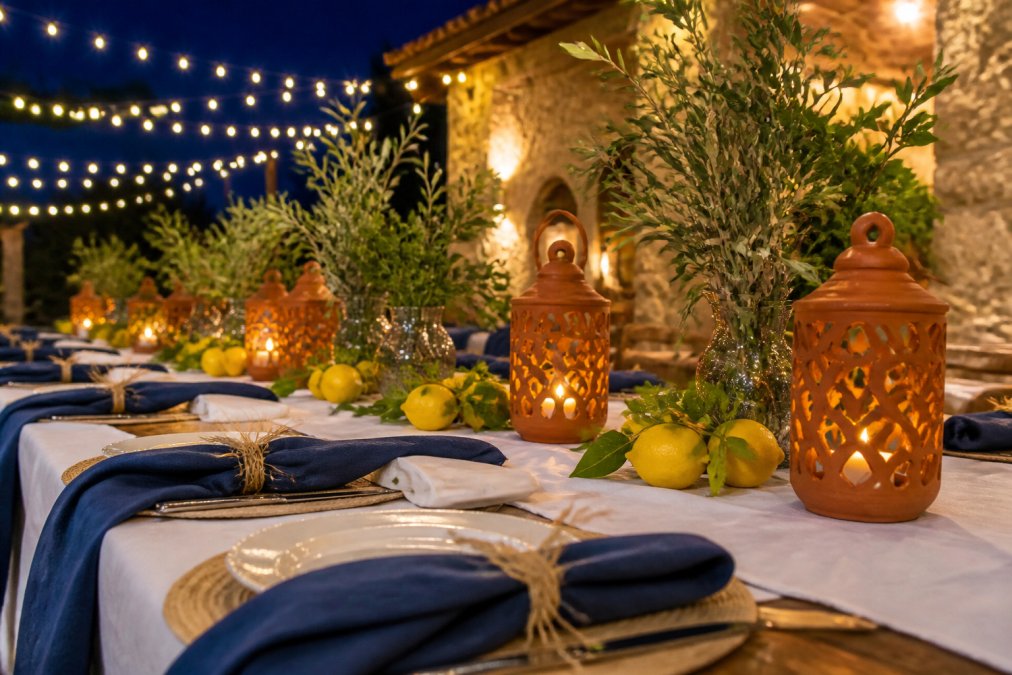
Set your table with intention. Use white or cream-colored linens as your base. Add a blue runner down the center, this single element immediately signals "Greek" to your guests. Place settings should be simple: white plates, simple glassware, and cloth napkins tied with raffia string.
Centerpieces should feel natural rather than elaborate. Fill low bowls with lemons, limes, and fresh herbs like rosemary and oregano. Add olive branches if you can find them. Scatter small votive candles around the centerpieces.
For a more elaborate approach, use terracotta pots filled with Mediterranean herbs, basil, oregano, thyme. Guests can brush the leaves as they pass, releasing fragrance. After the party, they can take the pots home as favors.
Plates and serving dishes should feel rustic. Terracotta, simple white ceramics, and natural wood boards all work. Avoid anything too polished or modern.
Lighting and Ambiance Setup
Lighting is where your party atmosphere truly comes alive. Harsh overhead lights destroy the mood. Instead, rely on warm, layered lighting.
String fairy lights overhead if you're hosting outdoors or have a covered space. Combine this with lanterns placed around the perimeter. Use candles generously, placed in glass holders or small jars. The flickering light is inherently inviting and transforms an ordinary space into something special.
Avoid bright, cool-toned lighting. The goal is warm ambiance that encourages conversation and slows down the pace of the evening.
How to Host a Greek Themed Party: Invitations and Dress Code
Your invitations should hint at the theme without being heavy-handed. Use blue and white colors, perhaps include a small illustration of an olive branch or Greek key pattern.
Suggest a dress code: "Mediterranean casual" or "Greek island inspired." This gives guests permission to dress up slightly while keeping it relaxed. Men might wear linen shirts and neutral trousers. Women might choose flowing dresses or linen pants with simple tops.
Include practical details: start and end times, what to bring, dietary restrictions you'll accommodate, and parking information. Clear communication is part of Greek hospitality.
Creating the Right Party Atmosphere
The atmosphere of your greek themed party depends on how you orchestrate the entire experience. Greet guests at the door with genuine warmth and offer them a glass of wine or ouzo immediately. This signals a relaxed, hospitable space.
Encourage grazing over the meze platter. Don't rush to the main course. Let guests stand, talk, move around, and sample different dishes. This is how Greek meals actually unfold.
Music and Entertainment Ideas
Music shapes mood more than almost any other element. Create a playlist of Greek music, both traditional and contemporary. Include bouzouki-driven instrumentals, rebetiko (Greek blues), and modern Greek pop. Keep the volume low enough that conversation is possible.
If you want to add live entertainment, a bouzouki player or Greek folk dancer creates an unforgettable experience.
Interactive Activities and Games
Greek dancing is an obvious choice. Teach guests a simple line dance like the sirtaki. It's easier than it looks, and the shared experience builds community.
Wine tasting is another option. Select three Greek wines with different characteristics and guide guests through tasting them, discussing regions and food pairings.
Cooking demonstrations work well too. Prepare one dish, perhaps saganaki or a simple sauce, in front of guests. The theater of cooking, the aromas, and the explanation of technique all contribute to the experience.
Budget-Friendly and Inclusive Hosting Strategies
Hosting a greek themed party doesn't require unlimited spending. Buy whole chickens and break them down yourself. Shop at stores with good Mediterranean sections for better prices on olive oil, feta, and olives. Buy seasonal produce.
Make dishes that can be prepared ahead: dolmades, pastitsio, and tzatziki all improve when made a day or two early. This reduces last-minute stress.
For decoration, use what you have. White linens you already own, candles from around your house, and fresh herbs from a garden or farmer's market cost far less than elaborate arrangements. The simplicity is actually more authentically Greek.
Greek cuisine naturally accommodates many dietary restrictions. Vegetarian guests can eat meze, spanakopita, salads, and bread. Vegan guests can enjoy hummus, baba ganoush, olives, vegetables, and bread. Gluten-free guests can skip bread and focus on proteins, vegetables, and salads. Communicate with guests ahead of time.
Always have excellent non-alcoholic options: Greek coffee, fresh lemonade, sparkling water with lemon, and herbal tea. Some guests don't drink, and they deserve hospitality equal to those who do.
Timeline and Planning Checklist
Two weeks before:
- Decide on guest list and send invitations
- Plan your menu, accounting for dietary restrictions
- Create your music playlist
- Make a shopping list organized by store type
One week before:
- Shop for non-perishable items
- Clean your space thoroughly
- Confirm RSVPs and dietary needs
- Plan your table layout and decoration approach
Three days before:
- Shop for fresh produce and dairy
- Prepare dishes that improve with time: dolmades, pastitsio (assemble but don't bake), tzatziki, marinades for lamb
- Chill wine
Day before:
- Finish any remaining cooking
- Set your table
- Arrange centerpieces
- Chill white wine and ouzo
Day of:
- Bake pastitsio and any dishes that need to be hot
- Grill lamb souvlaki just before guests arrive
- Light candles 30 minutes before guests arrive
- Set out meze platters
- Greet guests warmly
| Task | Timeline | Notes |
|---|---|---|
| Send invitations | 2 weeks before | Include dress code suggestions |
| Plan menu | 2 weeks before | Account for dietary restrictions |
| Shop non-perishables | 1 week before | Olive oil, wine, spices |
| Shop fresh items | 3 days before | Produce, dairy, proteins |
| Prepare ahead dishes | 3 days before | Dolmades, tzatziki, marinades |
| Set table & decorate | 1 day before | Arrange centerpieces and linens |
| Final cooking | Day of | Grill, bake, and plate just before serving |
Hosting a greek themed party is fundamentally about hospitality, the Greek concept of philoxenia, or love of guests (peer-reviewed research). It's not about perfection; it's about creating a warm space where people feel welcomed and valued. When you focus on authentic flavors, thoughtful decoration, and genuine connection, everything else falls into place. At Gyro Kingdom, we understand that Greek hospitality starts with quality food prepared with care. Whether you're hosting your party at home or bringing in catering, the principles remain the same: choose fresh ingredients, keep preparations simple, and prioritize your guests' experience. Get started with Gyro Kingdom for authentic Greek catering that brings the warmth and flavors of Mediterranean hospitality to your gathering.
Frequently Asked Questions
What are some good ideas for a Greek-themed party?
Start with authentic Mediterranean flavors in your menu, use blue and white color schemes with fairy lights and lanterns for ambiance, and incorporate Greek gods and goddesses as costume inspiration. Plan a meze platter as your appetizer spread, serve traditional wine pairings, and include interactive activities like Greek dancing or games. Send scroll invitations with raffia string accents, and create warm lighting throughout your space. The key is balancing cultural authenticity with a festive, welcoming party atmosphere that engages your guests.
What defines authentic Greek flavor in party food?
Authentic Greek cuisine centers on fresh Mediterranean ingredients: olive oil, feta cheese, olives, fresh herbs like oregano and dill, and seafood or lamb. Tzatziki sauce, made from yogurt and cucumber, is essential. Dolmades (grape leaves filled with rice and herbs) showcase traditional flavors. Avoid heavy sauces; Greek cooking emphasizes simplicity and quality ingredients. Focus on appetizer spreads rather than heavy main courses, and pair foods with wine. This approach reflects how Greeks traditionally host, prioritizing hospitality and fresh, flavorful food over excessive portions.
How can I make my Greek-themed party inclusive for dietary preferences?
Offer vegan versions of traditional dishes: hummus, baba ganoush, and Greek salads with olive oil instead of feta. Provide gluten-free pita or skip bread entirely. Include seafood options alongside lamb and chicken. Label all dishes with ingredients so guests can identify what works for them. A well-planned meze platter naturally accommodates multiple diets since it features vegetable-based appetizers, cheeses, and proteins that guests can mix and match. This approach maintains authenticity while ensuring all guests feel welcomed and can enjoy the Mediterranean diet philosophy.
What drinks should be served at a Greek-themed party?
Serve Greek wine, ouzo (anise-flavored spirit), and Greek beer. For non-alcoholic options, offer Greek coffee, fresh lemonade, or sparkling water with lemon. Wine pairings matter: white wines pair well with seafood and lighter appetizers, while reds complement lamb dishes. Ouzo is traditionally sipped slowly with water, which creates a cloudy effect. Create a simple beverage station where guests can help themselves. These drink choices enhance the authentic atmosphere and hospitality experience, allowing guests to engage with Greek cultural traditions.
How far in advance should I plan a Greek-themed party?
Begin planning 4-6 weeks ahead for a 20-30 person gathering. Two weeks before, finalize your menu and send scroll invitations. One week out, purchase decorations like lanterns, fairy lights, and raffia string, and confirm any catering or ingredient orders. Three days before, prepare any dishes that store well. Two days before, set up your table styling and test your lighting and music setup. The day of, focus on final food preparation and ambiance adjustments. This timeline ensures you can source quality ingredients, handle dietary requests, and create an authentic atmosphere without last-minute stress.
What are budget-friendly ways to host a Greek-themed party?
Skip expensive catering by preparing a DIY meze platter with store-bought hummus, olives, cheese, and fresh vegetables. Use string lights and lanterns from discount retailers instead of professional event decor. Create scroll invitations digitally or print them simply. Play Greek music from streaming services rather than hiring entertainment. Focus your budget on quality Mediterranean ingredients for food, which guests remember most. Encourage guests to wear white and blue clothing they already own instead of costumes. This approach maintains authenticity and hospitality while keeping costs reasonable, proving that memorable parties don't require expensive production.
What decorations create an authentic Greek party atmosphere?
Use blue and white color schemes with table linens and centerpieces. Hang fairy lights and lanterns to create warm lighting that evokes Mediterranean evenings. Add raffia string accents to place cards or around table edges. Include Mediterranean flowers like white roses or lavender. Display images of Greek gods and goddesses as conversation starters. Use wooden tables or add wooden elements for rustic authenticity. Avoid plastic decorations; focus on natural materials and warm lighting that create ambiance. These elements together transform your space into an inviting Mediterranean setting that transports guests without requiring expensive professional design.
How do I create an authentic Greek atmosphere for guests?
Combine food, music, lighting, and hospitality. Serve Mediterranean flavors and wine pairings that reflect Greek dining traditions. Play traditional Greek music softly during dinner, then transition to upbeat bouzouki music for dancing and entertainment. Use warm lighting with fairy lights and lanterns to create the intimate, festive mood Greeks value. Most importantly, embody Greek hospitality: greet guests warmly, ensure everyone feels welcomed, and focus on genuine connection rather than formal structure. This cultural approach to hosting, prioritizing guest experience and authentic flavors, creates an atmosphere that feels genuinely Greek.