 ultimate-guide
Why Fresh Gyros Are Better: The Science & Taste
Table of Contents
- Why Fresh Gyros Taste Better Than Frozen
- The Maillard Reaction: The Science Behind Crispy Edges
- Hand-Stacked vs. Processed Meat: What's the Difference
- Authentic Lamb Gyro Recipe Components Explained
- Gyro Meat vs. Souvlaki: Understanding the Key Differences
- How to Identify Fresh Gyros: What to Look For
- Fresh Gyros Deliver Superior Flavor and Texture
- Frequently Asked Questions
Last Updated: August 24, 2026
Why Fresh Gyros Taste Better Than Frozen
Fresh gyros deliver superior flavor and texture because ingredients are at peak quality and cooked to order using live heat. When gyro meat sits frozen, ice crystals rupture cell walls, causing moisture loss and a drier final product (peer-reviewed research). Fresh meat maintains its natural structure, retaining juices during spit-roasting.
Temperature control matters enormously. A vertical rotisserie with fresh meat maintains consistent heat distribution, with outer layers caramelizing while the interior stays tender. Frozen meat thaws unevenly, creating texture inconsistencies that no seasoning can fix.
Fresh lamb and beef release natural umami compounds during cooking, creating savory depth that frozen alternatives struggle to achieve. Fresh preparation also means fresh accompaniments, tomatoes sliced that morning, crisp onions, and daily-made tzatziki taste brighter than pre-cut or batch-prepared versions.
The Maillard Reaction: The Science Behind Crispy Edges
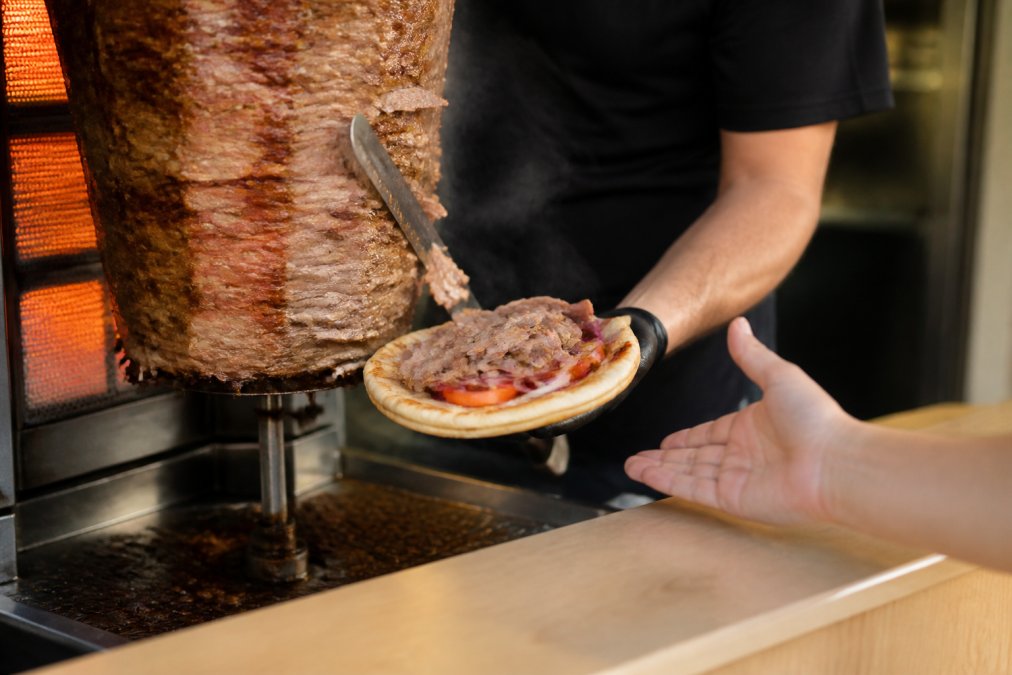
The Maillard reaction occurs when amino acids and reducing sugars interact at high heat, creating new flavor compounds and browning (peer-reviewed research). This process produces the crispy, charred edges that define an excellent gyro.
Fresh meat reaches optimal Maillard reaction temperature more efficiently than frozen meat. When frozen, the exterior thaws before the interior, creating uneven cooking. Fresh meat heats uniformly, allowing the reaction to occur across the entire surface simultaneously.
The vertical rotisserie creates ideal conditions for this reaction. As the spit rotates, the outer layer faces direct heat, moisture evaporates rapidly, and temperature climbs above water's boiling point. Frozen meat has excess surface moisture that prolongs evaporation, delaying the reaction and reducing flavor development.
The compounds created during Maillard reaction, pyrazines, aldehydes, and ketones, make gyro meat taste savory and complex. Fresh meat has higher concentrations of the amino acids and sugars needed to generate these compounds abundantly. Crispy edges provide both taste and mouthfeel, contrasting charred exteriors with tender interiors. Frozen meat often develops uniform, slightly rubbery texture throughout.
Hand-Stacked vs. Processed Meat: What's the Difference
Hand-stacked gyro meat is built layer by layer from whole cuts of lamb, beef, or chicken, with fat and seasonings carefully layered between them. Processed gyro meat is emulsified, ground meat, fat, and binders mixed into a uniform paste, then molded into cone shape.
Hand-stacked meat retains natural fiber structure, allowing it to stay moist during cooking as fibers hold onto juices. Processed meat, having been ground and emulsified, loses this structure and cooks faster while losing moisture more readily.
Whole cuts preserve distinct taste profiles and pockets of fat and seasoning throughout, creating flavor variation from bite to bite. Processed meat becomes homogenized and less interesting. Hand-stacked meat has tender but slightly fibrous quality; processed meat has dense, uniform texture that some describe as paste-like.
Processing adds binders like soy protein or starch to hold the mixture together. Hand-stacked meat relies on natural gelatin and collagen in the cuts themselves. Hand-stacked gyro requires skilled labor to balance fat and lean meat and ensure even cooking, which is why authentic gyros cost more. Processed gyro meat is cheaper to manufacture but sacrifices quality.
Authentic Lamb Gyro Recipe Components Explained
An authentic lamb gyro combines whole lamb cuts with specific seasonings that create the traditional Greek flavor profile. Primary meat is shoulder or leg with 15-25% fat content, necessary for flavor and moisture retention during extended rotisserie cooking.
Traditional seasoning includes oregano, garlic, black pepper, and often paprika or cumin. Oregano complements lamb's natural savory notes; garlic adds pungency that cuts through richness. Salt is applied during stacking and on the exterior as meat cooks, concentrating flavors through evaporation.
Some authentic recipes include breadcrumbs soaked in wine or stock as a traditional binder, different from industrial emulsified meat using chemical additives. Fresh lemon juice brightens savory flavors and adds complexity. A 70% lamb, 30% beef blend is common in quality establishments, providing lamb's distinctive flavor while beef adds body.
Gyro Meat vs. Souvlaki: Understanding the Key Differences
Gyro meat cooks on a vertical rotisserie where the meat stack rotates continuously in front of direct heat. Souvlaki is prepared on skewers or a flat griddle with meat sitting stationary. This difference creates entirely different results.
The vertical rotisserie exposes different meat parts to intense heat at different moments, creating characteristic charred, crispy exterior. Souvlaki develops crust on contact surface but cooks more gently elsewhere, resulting in less dramatic browning and textural contrast.
Gyro meat's layered structure allows Maillard reaction across many thin surfaces, creating more flavor compounds. Souvlaki's larger pieces cook more slowly and develop fewer caramelized surfaces. Gyro meat develops complex, deeply savory taste with umami richness; souvlaki tastes cleaner and more straightforward.
Gyro meat, when sliced from the rotisserie, has tender interior with crispy exterior and thin, easy-to-eat slices. Souvlaki pieces are chunkier and require more chewing. Both are authentic Greek preparations serving different purposes, gyro is street food meant for quick consumption, while souvlaki is more of a sit-down dish.
How to Identify Fresh Gyros: What to Look For
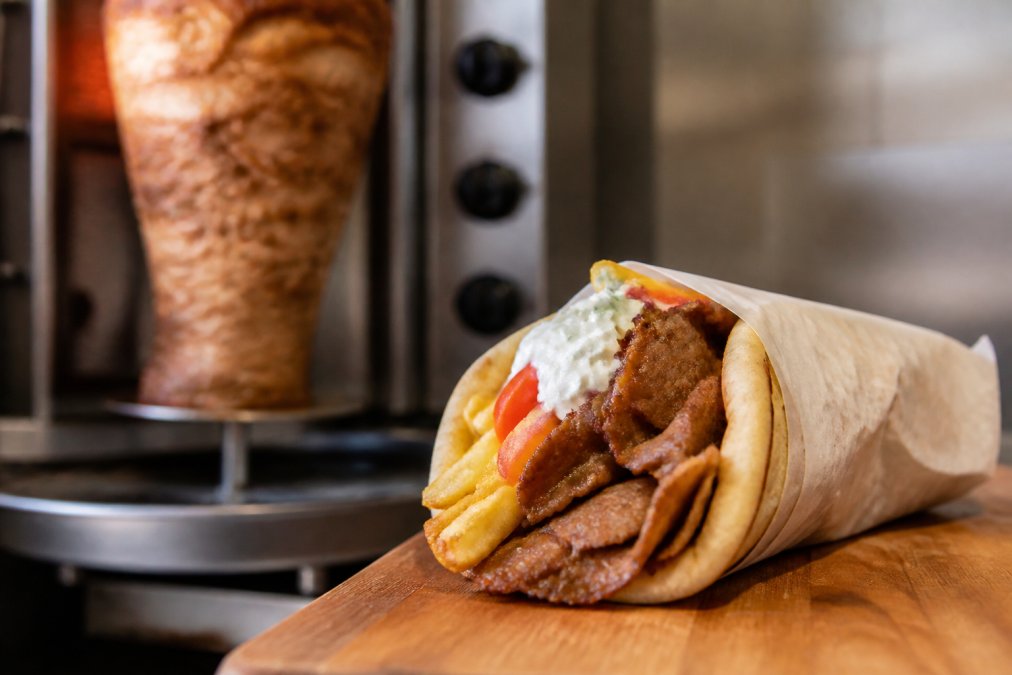
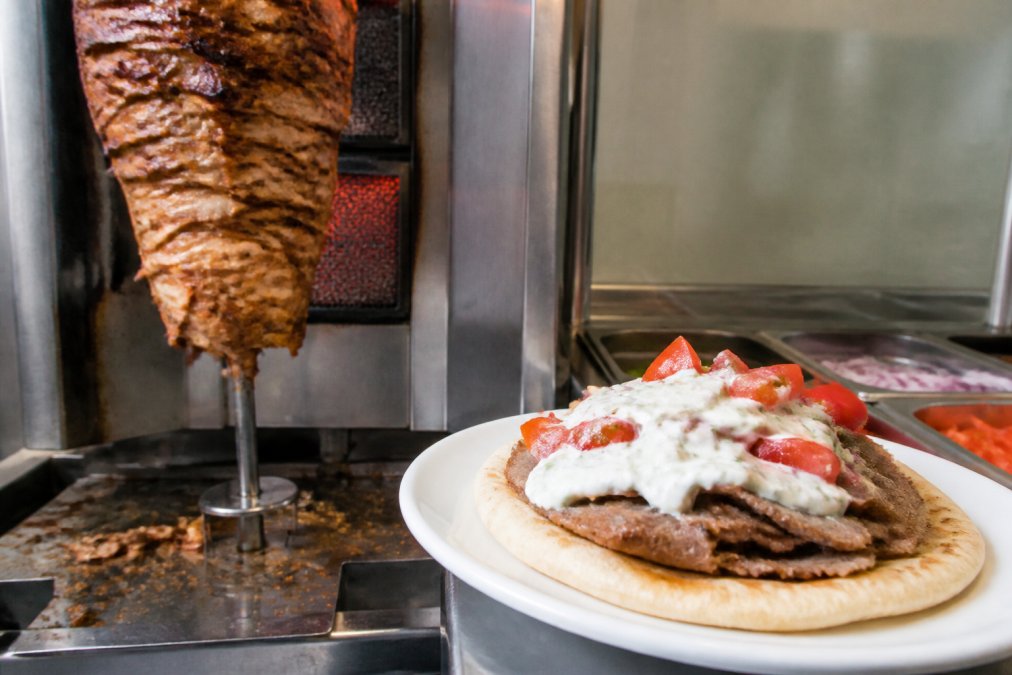
The exterior of fresh gyro meat should show distinct charring and browning, with dark brown to nearly black crispy edges and visible caramelization. Pale or uniformly brown meat suggests insufficient heat or frozen/reheated origins.
Sliced meat should glisten slightly with rendered fat, indicating active fat rendering during cooking. Dry-looking meat suggests moisture loss from sitting or freezing. The aroma should be intensely savory with distinct spice notes, oregano, garlic, and charred crust. Muted or chemical smells indicate frozen or preserved meat.
Texture should show clear distinction between crispy exterior and tender interior, shredding easily with teeth rather than requiring aggressive chewing. The pita bread should be genuinely warm, not just room temperature, indicating recent assembly. Toppings should look fresh, bright red juicy tomatoes, crisp onions, and thick creamy tzatziki.
Ask when the meat was cooked. Fresh gyro meat is typically cooked in batches throughout the day. If a restaurant is vague about timing or claims meat has been cooking for hours, that's a warning sign.
Fresh Gyros Deliver Superior Flavor and Texture
Fresh preparation creates an eating experience that frozen or processed gyros cannot match. As meat rotates in front of heat, the exterior chars while the interior cooks gently, fat renders, and Maillard reaction creates new flavor compounds. These processes create pockets of intense flavor and texture variation, making each bite slightly different and engaging.
Frozen meat cooks more uniformly with consistent texture throughout, which is monotonous. The savory depth of fresh gyro meat is distinctive, with umami compounds tasting clean and natural. Frozen meat often has slightly off taste from oxidation and preservation.
The crispy edges of fresh gyro are essential, providing textural contrast and concentrated flavor. Frozen meat rarely develops truly crispy edges due to high moisture content. Fresh accompaniments, bright tomatoes, crisp onions, creamy daily-made tzatziki, complement the meat and add nutritional value.
The temperature of fresh gyro matters significantly. Just-sliced meat is genuinely hot, activating taste receptors and making flavors more vivid. A gyro that's cooled for even 15 minutes has diminished eating experience. Fresh gyros should be eaten immediately after assembly.
At Gyro Kingdom, we believe authentic Greek cuisine deserves authentic preparation. Our gyros are freshly made daily with hand-stacked lamb, beef, and chicken, delivering flavor complexity and textural satisfaction that frozen alternatives cannot match. We source quality ingredients, maintain proper rotisserie temperatures, and assemble each gyro to order. Experience the difference fresh preparation makes. Mediterranean diet research supports the health benefits of fresh, whole-food Greek cuisine, and that's exactly what we deliver.
Frequently Asked Questions
How can you tell if a gyro is made with fresh ingredients?
Fresh gyros display charred, crispy edges from the vertical rotisserie's direct heat, not pale or uniform browning. The meat should be tender and succulent, releasing savory juices when sliced. Look for visible marbling and color variation within the meat itself, which indicates hand-stacked, quality ingredients rather than a uniform processed cone. Fresh gyros served immediately after slicing have a warm, inviting aroma and vibrant texture that frozen or reheated versions cannot replicate.
Is gyro meat processed, and does it matter?
Traditional gyro meat can be emulsified (finely ground and bound with spices), but authentic versions use high-quality lamb, beef, or chicken hand-stacked on a vertical rotisserie. Heavily processed gyro meat often contains fillers, binders, and preservatives that affect flavor and mouthfeel. Fresh gyros made from quality meat with proper seasoning deliver superior taste and texture. The difference is noticeable: authentic gyro meat has a tender, succulent quality, while over-processed alternatives taste flat and uniform.
What's the difference between gyro meat and souvlaki?
Gyro meat is traditionally hand-stacked or emulsified, cooked on a vertical rotisserie, and sliced thin for sandwiches. Souvlaki features cubed meat marinated and grilled on skewers, offering distinct charred edges and a different texture. Gyros provide a more compact, layered flavor profile from caramelization and heat distribution on the spit, while souvlaki delivers individual char marks and a chewier bite. Both are authentic Greek preparations, but gyros' vertical rotisserie method creates the signature crispy edges and tender interior that fresh gyros are known for.
Why do fresh gyros taste better than frozen ones?
Fresh gyros undergo the Maillard reaction on the vertical rotisserie, creating complex savory flavors and crispy edges impossible to replicate in frozen versions. Frozen gyros lose moisture and texture during thawing and reheating, resulting in dry, rubbery meat. Fresh preparation preserves the culinary heritage of traditional Greek technique, proper heat distribution, caramelization, and immediate slicing lock in succulence and umami. The flavor profile of fresh gyros is vibrant and authentic, while frozen alternatives taste muted and lack the signature tender-crispy contrast.