 blog
Best Finger Foods for Large Events: Party Guide
Table of Contents
- Best Finger Foods for Large Events: The Ultimate Party Menu
- Cold Finger Foods for a Crowd That Never Disappoint
- Make-Ahead Appetizers for a Crowd: Prep Now, Party Later
- How Many Appetizers Per Person? The Serving-Size Calculator
- Hot Appetizers and Warm Snacks That Keep the Party Going
- Finger Food Catering Ideas for Effortless Large Events
- Balanced Menu Planning: Vegetarian Options, Dietary Needs, and Allergen Labeling
- Budget and Cost Per Serving: Smart Ways to Feed a Crowd
- Frequently Asked Questions
Last Updated: October 14, 2026
Best Finger Foods for Large Events: The Ultimate Party Menu
Finger foods are the backbone of any successful large gathering: guests eat standing up, keep one hand free for a drink, and move through the room without hunting for a seat.
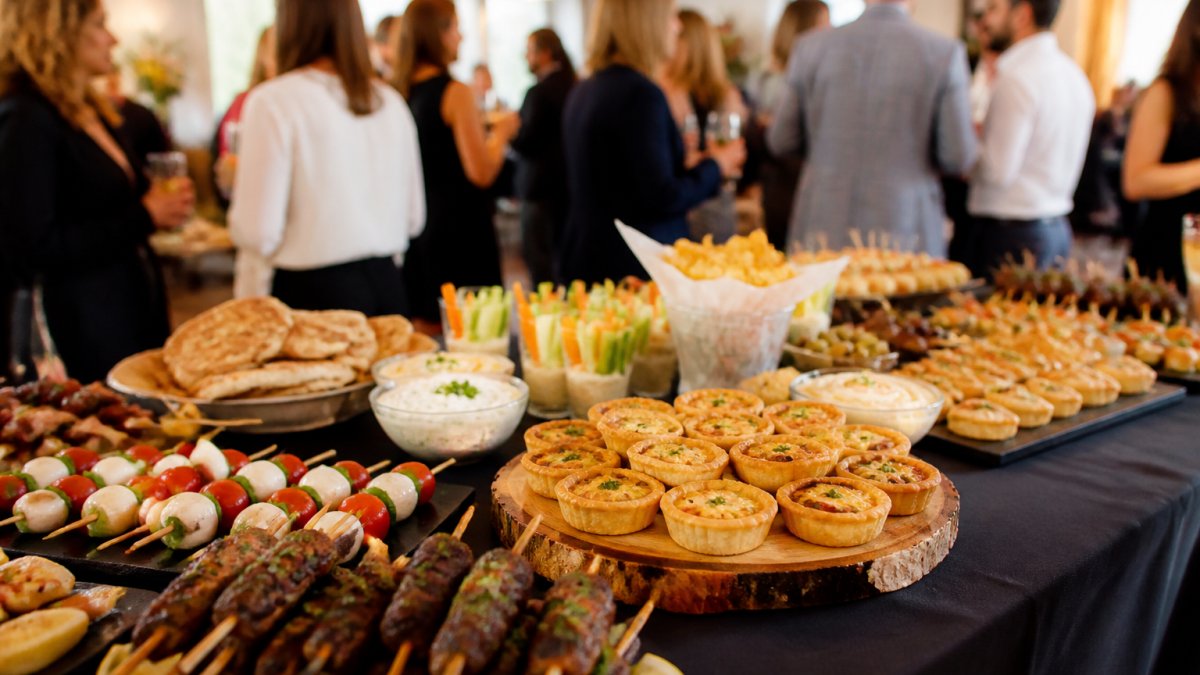
This guide covers the best finger foods for large events, cold platters, make-ahead bites, hot snacks, catering spreads, plus how much food you actually need.
Why Finger Foods Win at Big Gatherings
Finger foods solve three problems at once: they speed up service, cut cleanup, and let guests graze at their own pace.
Bite-sized items also stretch further per pound than plated meals, so you feed more people without a bigger kitchen.
The one catch is planning. Finger food menus fail when the mix is wrong: too many fried items, nothing vegetarian, or a dip that turns watery after an hour.
Cold Finger Foods for a Crowd That Never Disappoint
Cold finger foods are the safest bet for large events because they hold up without heat lamps or constant attention. Build your cold spread first, then add hot items around it.
Caprese Skewers and Cucumber Sandwiches
Caprese skewers are a reliable crowd-pleaser: cherry tomato, mozzarella, and basil on a toothpick, finished with balsamic. They look impressive, cost little per piece, and stay fresh for hours at room temperature. Cucumber sandwiches work the same way: slice thin, spread with seasoned cream cheese or herbed butter, and stack on a tiered tray.
Deviled Eggs and Seafood Bites
Deviled eggs remain one of the most requested appetizers at American gatherings: cheap, familiar, and easy to batch. Make them the day before and refrigerate.
Seafood bites, such as shrimp cocktail skewers or smoked salmon on crostini, add a premium feel. According to USDA food safety guidance on perishable foods, that two-hour window applies to any perishable item on a buffet table.
Make-Ahead Appetizers for a Crowd: Prep Now, Party Later
Make-ahead appetizers for a crowd are the difference between a calm host and a frantic one. Finish 80 percent of the work before the first guest arrives. Most fall into two groups: freezer-friendly bites you bake on the day, and cold dips that improve in the fridge.
Freezer-Friendly Bites: Mini Quiches and Sausage Rolls
Mini quiches freeze beautifully: assemble in mini muffin tins, freeze on the tray, transfer to bags, and bake straight from frozen on party day. Sausage rolls follow the same logic: roll, slice, and freeze ahead, then bake in batches as trays empty. Polenta fingers are a lesser-known option: cut cooled polenta into strips, chill, and pan-fry or bake before serving.
Dips and Spreads That Hold Up for Hours
Dips anchor a finger food table. Choose ones that do not separate or crust over.
- Hummus and baba ganoush: stable for hours, naturally vegetarian
- Tzatziki: thick yogurt-based dip that stays cool and fresh
- Spinach and artichoke dip: keep it warm in a slow cooker
Serve dips in shallow bowls with small spoons or spreaders so guests are not double-dipping with the same chip.
How Many Appetizers Per Person? The Serving-Size Calculator
Most hosts under-order by 20 to 30 percent because they plan by dish instead of by piece. The working rule for appetizer-only events is 6 to 8 pieces per person for the first hour, then 4 to 5 pieces per person for each additional hour. With a main course, cut that roughly in half.
Use this table to plan your quantities:
| Event Length | Appetizer-Only | With a Main Course |
|---|---|---|
| 1 hour | 6-8 pieces per guest | 3-4 pieces per guest |
| 2 hours | 10-13 pieces per guest | 5-6 pieces per guest |
| 3 hours | 14-18 pieces per guest | 6-8 pieces per guest |
| 4+ hours | Add 4-5 pieces per hour | Add 2-3 pieces per hour |
Adjustments That Change the Math
Four variables move the number more than the base rule:
- Mealtime overlap: Add 10 to 15 percent if the event runs over lunch or dinner, even with a main course. Guests eat a full meal's worth of appetizers at mealtime.
- Alcohol service: Add 15 to 20 percent. Drinking increases how much people eat, and a cocktail-hour crowd clears trays faster than a morning reception.
- Guest mix: More adults than children skews higher. Teenagers can eat double the per-person estimate for retirees.
Worked Examples
80 guests, 3 hours, appetizer-only, alcohol served: Base is 14 to 18 pieces per guest.
80 guests, 3 hours, with a main course: Base is 6 to 8 pieces per guest.
40 guests, 2 hours, appetizer-only, no alcohol, afternoon: Base is 10 to 13 pieces per guest. No adjustments apply.
Turning Pieces Into Batches and Trays
Piece counts only help if you can translate them into prep:
- A standard deviled egg tray holds 24 halves; a full egg yields 2 halves, so 120 halves means 60 eggs.
- Caprese skewers run about 12 to 15 per pound of mozzarella, depending on ball size.
- Mini quiches bake 24 to a standard mini muffin tin; a 200-piece order means roughly 9 tins.
The Over-Order Buffer
Order 10 percent above your calculated total. This covers no-shows who eat anyway, late arrivals who missed the first pass, and guests taking one more piece on the way out. For a 1,000-piece event, that buffer is 100 extra pieces, cheap insurance against running out halfway.
Hot Appetizers and Warm Snacks That Keep the Party Going
Hot appetizers and warm snacks bring energy to a table, but they need a plan. The mistake most hosts make is trying to keep everything hot at once. Instead, rotate: serve two hot items, then swap in two more as trays empty.
This keeps the table looking full and gives guests a reason to circle back.
Air Fryer and Oven Favorites: Risotto Balls, Pizza Rolls, and More
The air fryer has changed home catering. It reheats fried items without the oil smell and keeps a crisp exterior that a microwave destroys.
- Risotto balls: crispy outside, creamy inside, and a genuine crowd-pleaser
- Pizza rolls: cheap, fast, and universally liked
- Spring rolls: buy frozen or roll your own ahead of time
Chicken skewers are one of the few hot items that also works cold, making them flexible if your timing slips.
Finger Food Catering Ideas for Effortless Large Events
Finger food catering ideas work best when you hand off the hardest parts. Cooking for 20 is a party. Cooking for 80 is a logistics operation.
When you hire a caterer, you are buying three things: capacity, consistency, and cleanup.
Ask any caterer three questions before booking:
- How many events of this size have you handled?
- Do you provide chafing dishes and serving staff?
- Can you label items for allergens?
If the answer to any of those is vague, keep looking.
Balanced Menu Planning: Vegetarian Options, Dietary Needs, and Allergen Labeling
A balanced finger food menu means every guest finds at least three things they can eat, the standard we plan around, and it prevents a vegetarian guest being stuck with a plate of crackers.
Aim for this rough split across your total pieces:
- 40 percent vegetable or vegetarian
- 30 percent meat and poultry
- 20 percent cheese-based or dairy
Allergen labeling is not optional at a large event. Under FDA guidance on food allergen labeling, eight major allergens must be declared on packaged foods, and the same transparency is good practice on any buffet card.
Keep vegetarian and allergen-friendly items on a separate table or a clearly marked end of the main table. Cross-contact from shared tongs is the most common way a safe dish becomes unsafe.
Budget and Cost Per Serving: Smart Ways to Feed a Crowd
Cost per serving should drive your menu, not the total grocery bill. A dish that costs more per pound but yields more pieces can be cheaper per guest, and a cheap ingredient needing hours of hand assembly can cost more in labor than a premium pre-made item.
The Three Levers, Quantified
Batch size. Larger batches lower per-piece cost, but savings taper.
Ingredient choice. Eggs, beans, rice, and vegetables cost far less per serving than seafood or premium cuts.
Labor. Make-ahead items cost less because you are not paying for last-minute prep. A dish taking 10 minutes per guest to assemble at the venue blows any budget, however cheap the ingredients.
Economical Anchors vs. Premium Accents
Build your menu around two or three cheap anchors and one or two premium items. This keeps the average cost per piece down while still looking generous.
| Category | Examples | Cost Profile |
|---|---|---|
| Economical anchors | Deviled eggs, hummus, polenta fingers, cucumber sandwiches, pizza rolls | Lowest cost per piece; high yield per batch |
| Mid-tier fillers | Mini quiches, sausage rolls, stuffed mushrooms, caprese skewers | Moderate cost; strong visual appeal |
| Premium accents | Shrimp cocktail skewers, smoked salmon crostini, chicken skewers | Highest cost per piece; use sparingly |
A common pattern is a 60/30/10 split by piece count: 60 percent economical anchors, 30 percent mid-tier fillers, 10 percent premium accents, keeping the average cost per piece down while giving the table a premium look.
Building a Scalable Per-Guest Budget
Rather than quoting a single dollar figure that will not fit your event, build the budget from the piece count:
Total budget = (pieces per guest × guest count) × average cost per piece
Your average cost per piece depends on the mix above. A menu weighted toward economical anchors lands at the low end; one weighted toward premium accents lands at the high end. The spread between the two can be two to three times the per-piece cost, which is why the mix matters more than any single ingredient price.
Three ways to bring the average down:
- Swap one premium item for a mid-tier item. Replacing a seafood skewer with a stuffed mushroom cuts that item's per-piece cost significantly while keeping the tray full.
- Increase the anchor share. Moving from a 50/40/10 split to 60/30/10 lowers the average without changing the guest experience much.
- Cut the variety, not the volume. Four well-executed items cost less per piece than six mediocre ones, because you buy in larger batches and prep more efficiently.
Where Catering Pricing Actually Comes From
For catering, pricing depends on quantity, dates, delivery, and staffing, so request a quote rather than guessing from a menu. The three biggest cost drivers are guest count, service style (drop-off versus staffed), and menu complexity.
Compare quotes per guest, not per total. A quote that looks higher in total may be lower per guest once you account for piece count and service included.
Frequently Asked Questions
What are the best finger foods for a large event?
The best finger foods for large events are bite-sized, easy to serve, and appeal to a crowd. Top choices include caprese skewers, deviled eggs, mini quiches, stuffed mushrooms, chicken skewers, and spring rolls. For variety, mix cold options like cucumber sandwiches with warm bites like risotto balls. Choose items that can be made ahead and held at safe temperatures, and always include a few vegetarian options like bruschetta or cheese platters to accommodate different dietary needs.
How many finger foods should I serve per person?
Plan for 4-6 pieces per person if finger foods are the main attraction, or 2-3 pieces per person if they are part of a larger meal. For a 2-hour cocktail-style event, 6-8 pieces per guest is a safe bet. For a 4-hour party, increase to 10-12 pieces. Always round up, as guests tend to eat more at gatherings. Use our serving-size guide above to calculate exact quantities based on your guest count and event duration.
Which finger foods can be made ahead for a large party?
Many crowd-pleasing finger foods can be prepared 1-2 days in advance. Make-ahead options include mini quiches, sausage rolls, risotto balls, stuffed mushrooms, deviled eggs, and dips like hummus or tzatziki. Cold appetizers such as caprese skewers and cucumber sandwiches can be assembled a few hours ahead and refrigerated. For hot items, bake or fry them just before serving to keep them crispy and warm. Freeze uncooked bites like pizza rolls and polenta fingers for up to a month.
How do I choose finger foods for guests with dietary restrictions?
Offer a balanced mix that includes vegetarian, gluten-free, and dairy-free options. Label each dish clearly with allergen information. Popular choices for dietary needs include vegetarian stuffed mushrooms, gluten-free chicken skewers, and dairy-free spring rolls. For vegan guests, consider bruschetta with olive tapenade or veggie spring rolls. Always ask about allergies in advance and provide separate serving utensils to prevent cross-contamination. Including a few universally friendly options like fresh fruit skewers ensures everyone has something to enjoy.