 blog
Best Toppings for Authentic Greek Gyros: A Guide
Table of Contents
- What Goes on a Gyro: The Building Blocks
- Traditional Greek Gyro Toppings: The Authentic Lineup
- Tzatziki Sauce for Gyros: The Creamy Cornerstone
- Fries, Feta, and the American Additions
- Topping Pairings by Meat: Lamb, Chicken, Pork, and Beef
- Topping Substitutions and Dietary Adaptations
- Frequently Asked Questions
Last Updated: October 17, 2026
What Goes on a Gyro: The Building Blocks
A gyro is a Greek sandwich of seasoned, rotisserie-style meat served in a warm pita, and the best toppings for authentic greek gyros come down to fresh vegetables and a yogurt-based sauce. The best toppings for authentic greek gyros are diced tomatoes, thinly sliced red onions, and tzatziki, with fries, lettuce, and feta appearing as regional or American additions.
Here is the tension most guides ignore: a gyro is not a blank canvas. It is a balance. Meat, bread, sauce, and two or three sharp, fresh toppings. Add too much and the pita collapses. Add too little and you have eaten a dry sandwich.
Below, we break down every topping, what is traditional, what is American, and how to pair toppings with each meat.
Traditional Greek Gyro Toppings: The Authentic Lineup
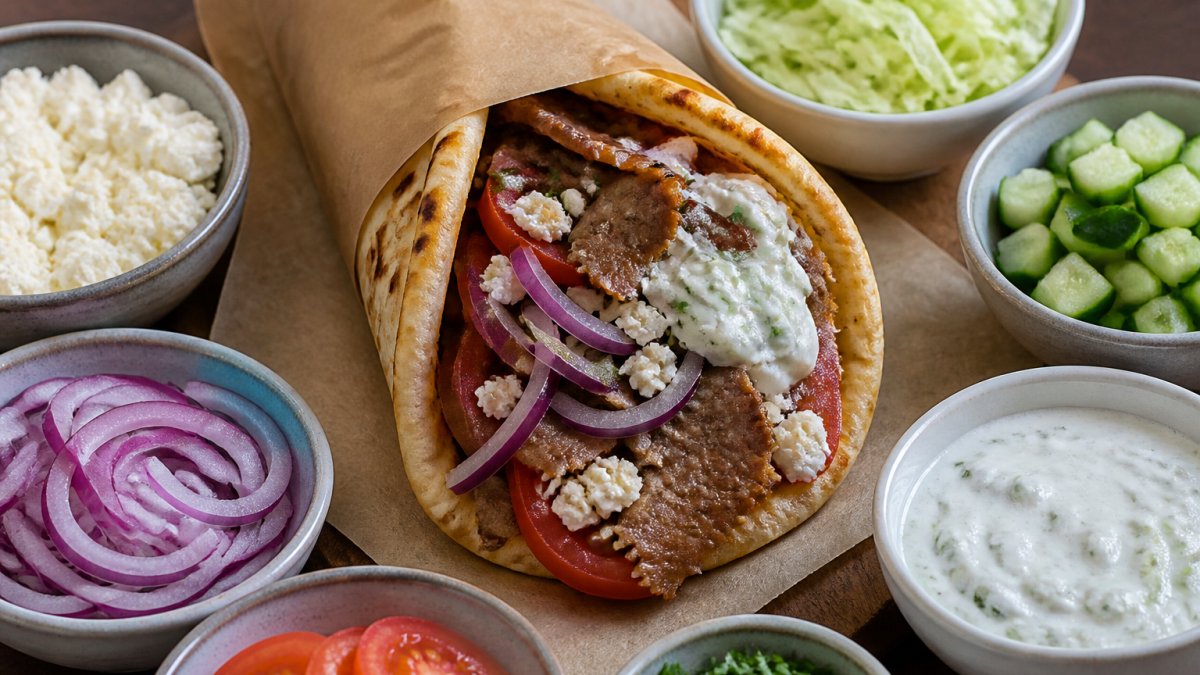
Authentic Greek gyro toppings are short and specific: tomatoes, onions, and tzatziki. That is the classic lineup in Greece. Everything else is a variation.
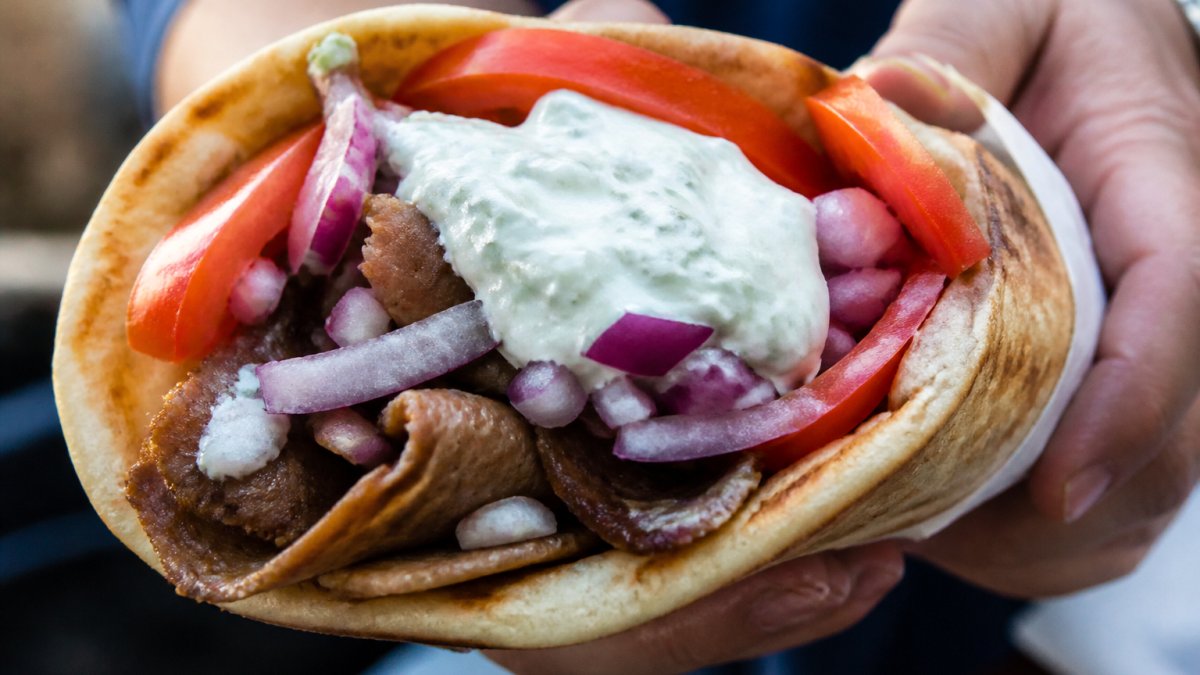
The Mediterranean diet guidance from the Harvard T.H. Chan School of Public Health explains why this combination works: fresh vegetables, herbs, and yogurt-based sauces are staples of the eating pattern, and they add flavor without heaviness.
Here is the full authentic set, ranked by how essential each one is:
| Topping | Traditional? | Amount per Gyro | Role |
|---|---|---|---|
| Diced tomatoes | Yes, essential | 2-3 tablespoons | Acidity and freshness |
| Sliced red onion | Yes, essential | 1-2 tablespoons | Sharp bite, crunch |
| Tzatziki | Yes, essential | 2-3 tablespoons | Creamy base and moisture |
| Paprika or oregano | Yes, finishing | A pinch | Aroma |
| Fries | Regional (common in Greece) | Small handful | Bulk and crunch |
| Lettuce | No (American) | Small handful | Cool crunch |
| Feta | Optional | 1-2 tablespoons crumbled | Salty richness |
Tomatoes and Onions: The Essential Pair
Tomatoes and onions do the real work on a gyro. Diced tomatoes bring acid and juice that cut through rich meat.
A common mistake is slicing tomatoes too thick. Thick slices slide out of the pita on the first bite.
For onions, slice them thin, not chunky. A quick soak in cold water for a few minutes tames the harshest bite without losing the crunch.
The Great Lettuce Debate
Lettuce is not traditional on a Greek gyro. It is an American addition, and there is nothing wrong with that, as long as you know what you are getting.
In Greece, the classic wrap is meat, tomato, onion, and tzatziki. Some shops add fries. Lettuce shows up more often in American-style gyro shops, where it adds cool crunch and volume.
Tzatziki Sauce for Gyros: The Creamy Cornerstone
Tzatziki is a Greek yogurt sauce made with grated cucumber, garlic, olive oil, and often dill or mint.
What most guides miss is the water problem. Cucumber holds a lot of moisture. If you grate it and mix it straight into the yogurt, the sauce turns thin and watery within an hour.
Proportions matter too. We use roughly two parts strained yogurt to one part squeezed cucumber, with a small grated garlic clove and a drizzle of olive oil.
Fries, Feta, and the American Additions
This is where most gyro guides get vague. They list fries, feta, lettuce, and hot sauce as if they were interchangeable, without saying which are traditional, which are regional, and which are American inventions. That distinction is the whole point of an authentic gyro, so here it is clearly.
| Addition | Status | Amount per Gyro | Notes |
|---|---|---|---|
| Fries | Regional, common in Greece | Small handful (about 1/4 cup) | Tuck inside the wrap to soak up juices |
| Feta | Optional, common in Greece | 1-2 tablespoons crumbled | Strong and salty; use sparingly |
| Lettuce | American | Small handful, shredded fine | Adds cool crunch and volume |
| Hot sauce or sriracha | American | A few dashes | Not traditional; competes with tzatziki |
| Ketchup and mustard | American | To taste | Controversial even in American shops |
| Extra paprika or dried oregano | Traditional finishing touch | A pinch | Reinforces the meat seasoning |
Fries: More Authentic Than You Think
Fries on a gyro are more authentic than most people assume. In Greece, a small handful of fries tucked into the wrap is common, and they serve a real function: they soak up the meat juices and tzatziki and add bulk and crunch. Use about 1/4 cup, and put them in before the sauce so they catch the drippings. This is one of the few additions that belongs in the traditional column, even though many American eaters assume it is a local invention.
Feta: Optional, Strong, and Easy to Overdo
Feta is optional in Greece but everywhere in American Greek food. It is salty and assertive, so 1-2 tablespoons crumbled is plenty. More than that and the feta takes over the wrap, masking the meat and the tzatziki. Pair it with beef or lamb, where the hearty flavor can carry it, and go light or skip it with chicken.
Lettuce: The American Addition
Lettuce is not traditional on a Greek gyro. It is an American addition, and there is nothing wrong with that, as long as you know what you are getting. In Greece, the classic wrap is meat, tomato, onion, and tzatziki, sometimes with fries. Lettuce shows up more often in American-style gyro shops, where it adds cool crunch and volume. If you want the authentic experience, skip it.
Hot Sauce, Ketchup, and Mustard: The American Drift
The American additions are where gyros drift furthest from the original. Hot sauce and sriracha are common in American shops but not Greek, and they compete with the garlic and cucumber in the tzatziki rather than complementing them. Ketchup and mustard are a real American habit and a controversial one; they push the sandwich toward a different food entirely. If you use any of these, pick one, not several.
The Finishing Touch: Paprika and Oregano
A pinch of paprika or dried oregano at the end is a traditional finishing touch that reinforces the seasoning already in the meat. It costs nothing, adds aroma, and is the one addition that is both traditional and nearly universal. Use it after the tzatziki so it sits on top and hits the nose first.
Topping Pairings by Meat: Lamb, Chicken, Pork, and Beef
The right toppings change with the meat, and the reason is fat content and flavor intensity. Lamb is rich and gamey, chicken is mild, pork is savory, and beef is hearty. Match the topping to the meat and the wrap tastes balanced instead of muddled. This is the pairing guidance most topping lists skip, and it is where a gyro goes from good to memorable.
| Meat | Best Toppings | Why It Works | Skip |
|---|---|---|---|
| Lamb | Diced tomato, thin red onion, tzatziki, dried oregano | Acidity and herbs cut the richness | Heavy feta |
| Chicken | Diced tomato, thin onion, tzatziki, shredded lettuce | Mild meat needs fresh crunch | Extra oil |
| Pork | Diced tomato, thin onion, tzatziki, small handful of fries | Fries soak up the savory juices | Hot sauce |
| Beef | Diced tomato, thin onion, tzatziki, crumbled feta | Salty feta matches the hearty flavor | Lettuce |
Lamb: The Classic Choice
Lamb is the meat most closely tied to the traditional gyro, and it is the richest of the four. That richness is why the classic topping set works so well: diced tomato brings acid, thin red onion brings a sharp bite, and tzatziki cools and moistens. A pinch of dried oregano at the end reinforces the seasoning already in the meat.
Chicken: The Mild, Forgiving Option
Chicken is the mildest of the four and the most forgiving for picky eaters. It benefits from fresh crunch, which is why a little shredded lettuce earns its place here even though it is not traditional. Use 2-3 tablespoons of diced tomato, 1-2 tablespoons of thin onion, and 2-3 tablespoons of tzatziki. Go easy on added oil, since chicken is lean and the sauce already brings richness.
Pork: The Natural Fit for Fries
Pork is common in Greece and pairs naturally with fries, which is one of the few places where the fries-on-gyro habit is genuinely rooted rather than an American add-on. The fries soak up the savory juices and tzatziki, and the pork's fat carries the oregano and paprika in the seasoning. Keep the tomato and onion amounts the same as for lamb, and skip hot sauce, which fights the pork rather than complementing it.
Beef: The Hearty American Favorite
Beef is the American favorite and stands up well to feta. The salty richness of crumbled feta matches the hearty flavor of beef in a way it does not match chicken. Use 1-2 tablespoons of crumbled feta, 2-3 tablespoons of diced tomato, 1-2 tablespoons of thin onion, and 2-3 tablespoons of tzatziki. Skip lettuce here; the beef and feta already carry enough weight, and lettuce adds volume without adding balance.
Topping Substitutions and Dietary Adaptations
Most gyro toppings adapt easily to dietary needs, and the swaps are simple.
- Dairy-free: replace tzatziki with a dairy-free yogurt sauce, or use hummus thinned with lemon juice
- Vegan: skip the meat and feta, double the tomatoes and onions, and add roasted vegetables or falafel
- Low-carb: skip the pita and serve the meat and toppings over a bed of lettuce with tzatziki on the side
- Gluten-free: confirm the pita is gluten-free, or serve the gyro as a bowl
If you are watching portions, ask for extra tomato and onion and a lighter hand on the sauce. A gyro does not have to be a heavy meal.
At Gyro Kingdom, we make our gyros fresh daily with your choice of chicken, lamb, beef, or pork, and we are happy to adjust the build.
Frequently Asked Questions
What is the name of the sauce on a Greek gyro?
The sauce is called tzatziki. It's a creamy, tangy sauce made from Greek yogurt, grated cucumber, garlic, olive oil, and often a splash of lemon juice or vinegar. Tzatziki sauce for gyros is essential because its cool, refreshing flavor balances the rich, savory taste of the seasoned meat. It's a traditional Greek condiment that is also served with souvlaki and as a dip for pita bread.
Does an authentic Greek gyro have fries in it?
In Greece, gyros are often served with fries, but they are typically on the side or wrapped inside the pita, depending on the region. In the U.S., fries inside the wrap are a common American adaptation. You can add fries for extra crunch and texture, but they are not a traditional Greek topping in the strictest sense.
What toppings go best with lamb gyros?
Lamb gyros pair well with classic traditional Greek gyro toppings. A generous amount of tzatziki sauce is a must to cut through the richness of the lamb. Diced tomatoes and red onions add freshness and a bit of bite. A sprinkle of dried oregano and a squeeze of lemon juice can brighten the flavors.
Should gyro toppings be served warm or cold?
Gyro toppings are best served at a mix of temperatures. The pita and meat should be warm, while the tzatziki and fresh vegetables like tomatoes and onions should be cool or at room temperature. This contrast in temperatures is part of the authentic experience. If you're assembling at home, keep your tzatziki chilled until the last moment and warm your pita just before serving.
A great gyro comes down to balance, and balance is hard to get right at home. If you want the real thing without the guesswork, Gyro Kingdom serves freshly made gyros daily with your choice of chicken, lamb, beef, or pork, traditional Mediterranean flavors, and generous portions in a welcoming atmosphere. Order delivery or stop in, and try it today.