 blog
How to Choose Between Homemade and Store Bought Pita
Quick Summary
Store bought pita is the practical choice for quick weeknight meals, since it requires no preparation and warms in minutes. Homemade pita is softer and fresher, but takes roughly 1.5 to 2.5 hours, most of it unattended, so it suits weekend batches better.
- Homemade pita uses inexpensive pantry staples, so ingredient cost per pita is usually low.
- A homemade batch takes about 1.5 to 2.5 hours, with 20 to 30 minutes of hands-on time.
- Store bought pita needs no preparation, and warming it in a dry skillet takes about 30 seconds per side.
- Homemade pita is best within a day or two, and freezing it once cooled extends storage.
- Packaged pita often contains preservatives, while a basic homemade pita uses five ingredients.
Table of Contents
- Homemade Pita Versus Store-Bought: What Actually Differs
- Cost per Pita and Time Trade-Offs
- Reading the Label: Nutrition and Ingredients Compared
- Best Pita Bread for Gyros: Testing Store-Bought Formats
- How to Make Store-Bought Pita Bread Better at Home
- Making Homemade Pita: Dough, Rising and Baking Steps
- Storing Homemade Pita Bread and Troubleshooting Failed Batches
- Choosing Your Pita for Your Next Meal
- Frequently Asked Questions
Homemade Pita Versus Store-Bought: What Actually Differs
Last Updated: October 31, 2026
Homemade pita and store-bought pita look alike on the shelf, but a store bought pita behaves differently in your hands and on your plate. The bread shapes the final bite of any gyro, and the choice between homemade and store-bought pita is worth understanding. The honest answer to whether homemade is worth the effort depends on what you value most: softness, cost, time, or convenience.
Texture, softness and pocket formation
Homemade pita tends to be softer and more pliable straight out of the oven. A well-made round puffs into a pocket because steam builds inside the dough during high-heat baking. A store bought pita often sits longer before it reaches you, which can dry the crumb and make it more likely to tear when filled.
A common mistake is judging store-bought pita only after it has been refrigerated. Learn how to judge whether pita is fresh. Chilling firms the dough, so the same product can taste noticeably different at room temperature.
Flavor and freshness
Freshly baked homemade pita has a warm, fragrant flavor that fades within a day or two. Store-bought bread is designed for longer shelf life, which usually means added preservatives or dough conditioners. Neither approach is wrong, but they serve different needs.
The flavor gap is easiest to notice when pita is served alongside something bold, like seasoned gyro meat and tzatziki. Softer, fresher bread holds up better under those fillings.
Cost per Pita and Time Trade-Offs
Homemade pita is typically made from inexpensive pantry staples such as flour, yeast, olive oil and salt, so ingredient cost per pita is usually low. Your actual cost depends on local ingredient prices and batch size.
Store-bought pita is usually sold per package, so comparing the shelf tag's unit price against your own per-pita cost gives the clearest picture. Prices vary by brand, store and format.
Time is the larger trade-off, and it breaks into two very different numbers:
- Hands-on time: 20 to 30 minutes for mixing, kneading, dividing, and rolling.
- Waiting time: 60 to 90 minutes for the first rise, plus 10 to 20 minutes of bench rest before rolling.
- Baking time: 2 to 4 minutes per round at high heat, done in batches.
That puts a homemade batch at roughly 1.5 to 2.5 hours from start to finished bread, most of it unattended. Store-bought pita is zero minutes of preparation and a few minutes of warming. For a weeknight dinner, the convenience of store-bought pita is often worth it; for a weekend batch that feeds a family and freezes well, homemade can be the more economical choice per serving.
USDA food price data and grocery unit-pricing guidance
The article's cost and time comparison breaks down into the following figures.
| Stage | Homemade pita | Store-bought pita |
|---|---|---|
| Hands-on time | 20 to 30 minutes | Zero minutes |
| Waiting time | 60 to 90 minutes rise, plus 10 to 20 minutes rest | None |
| Baking or warming | 2 to 4 minutes per round at high heat | A few minutes of warming |
| Total start to finish | Roughly 1.5 to 2.5 hours | Immediate |
| Cost basis | Pantry staples, low per pita | Per package, compare unit price |
Reading the Label: Nutrition and Ingredients Compared
This is the section where a side-by-side comparison actually pays off, because the gap between a commercial pita and a homemade one shows up clearly on the ingredient list. Packaged white pita often contains ingredients such as enriched wheat flour, water, yeast and salt, along with other additives that can extend shelf life and texture. A homemade pita made from flour, water, yeast, salt, and olive oil has five ingredients and none of the conditioners.
Use per-pita numbers, not per-package numbers, when you compare. Nutrition varies by brand and recipe, so check the label on a store-bought pita and calculate the figures for your own homemade batch. The amount of salt you add is the main driver of homemade sodium, and whole-wheat flour generally raises fiber while adding a nuttier flavor.
A few label-reading habits make the comparison fast:
- Ingredient order: ingredients are listed by weight, so if sugar or oil appears in the first four, the product leans sweeter or fattier than a basic recipe.
- Sodium per pita: compare the milligrams per serving against the serving size, since some packages list a half-pita as a serving.
- Fiber source: whole-wheat flour or added oat or wheat bran signals more fiber than enriched white flour alone.
- Preservatives: calcium propionate and similar mold inhibitors are why packaged pita can sit on a shelf for weeks, while homemade pita is best within a day or two.
FDA nutrition labeling and serving-size guidance
Best Pita Bread for Gyros: Testing Store-Bought Formats
For gyros, look for pita that is thin, pliable and wide enough to hold meat and toppings without splitting. See which pita this business recommends for authentic gyros. Thicker pocket pita works for stuffed sandwiches but can feel heavy under a gyro's sauce. Some packages are labeled "Greek style" or "gyro pita," which are often flatter and softer.
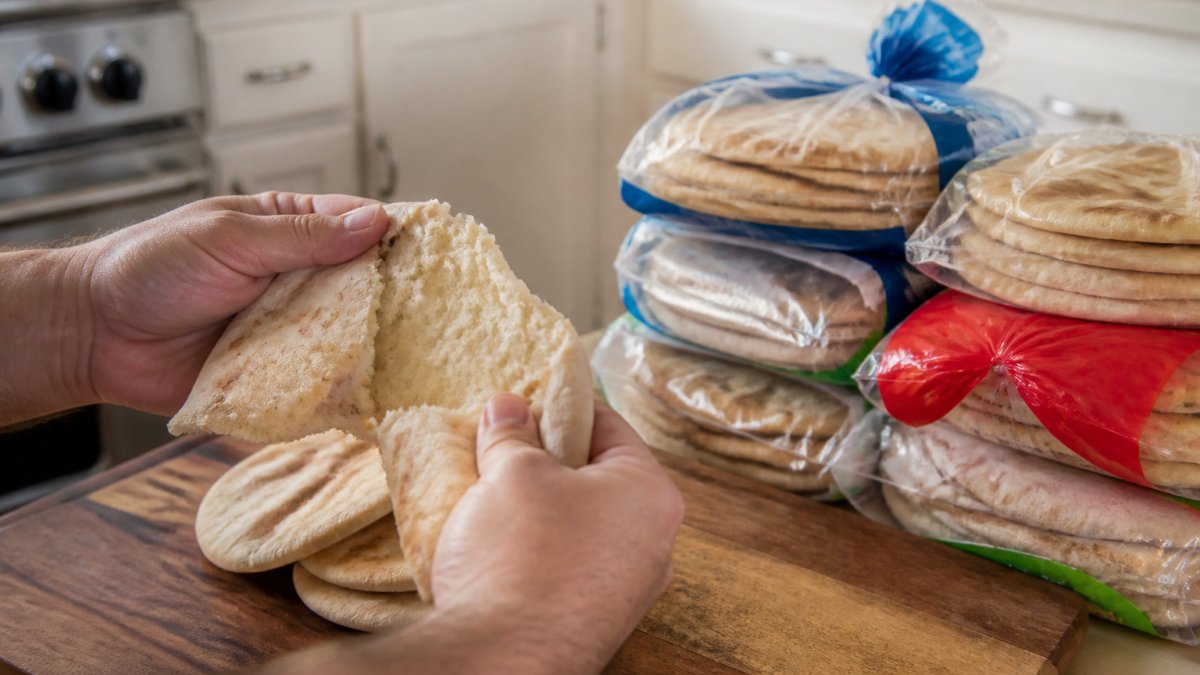
Store-bought options vary in size and texture, so testing a single pack with your usual filling is a practical first step. Warm the bread briefly before serving, since that restores softness and makes it easier to fold.
How to Make Store-Bought Pita Bread Better at Home
You can improve store-bought pita with a few simple steps. Warm it in a dry skillet for about 30 seconds per side, or wrap it in foil and heat it in the oven for a few minutes. Brushing lightly with olive oil adds flavor and keeps the bread from drying out.
Avoid microwaving alone, since it can make pita rubbery. Warming briefly in a covered pan works better.
Making Homemade Pita: Dough, Rising and Baking Steps
Homemade pita starts with flour, water, yeast, salt and a little olive oil. Review the essential ingredients for authentic Greek cooking. Mix the dough, knead it until smooth, then let it rise until doubled. Divide it into rounds, rest them briefly, and roll each into a thin disk.
Bake on a preheated baking stone or steel at a very high oven temperature until the pita puffs and lightly browns, usually a few minutes. Work quickly so the rounds keep their moisture.
An oven that is not hot enough can produce flat, dense pita that does not puff. Preheat thoroughly before the first batch.
Storing Homemade Pita Bread and Troubleshooting Failed Batches
Homemade pita keeps best at room temperature in an airtight bag for one to two days. For longer storage, freeze it once cooled, then reheat from frozen. Freezing is generally a good way to keep pita for longer storage.
If your pita does not puff, check your oven temperature, dough hydration and rolling thickness. Rolling too thick or too thin are both common causes of failure.
Before you decide which pita fits your next meal, consider how much effort you want to invest.
Choosing Your Pita for Your Next Meal
For a weeknight dinner, store-bought pita is the practical choice, especially when you warm it before serving. For a weekend project or a dish where bread is the star, homemade pita rewards the extra time. Many home cooks alternate between the two.
When you are building a full meal, pair your pita with a fresh side. A tzatziki recipe makes a natural companion to pita. Find a homemade tzatziki recipe to serve alongside it. Whichever bread you choose, the best results come from matching texture and freshness to what you are serving.
Frequently Asked Questions
What's better for you, pita bread or white bread?
Both can fit a balanced diet, and the difference depends on the specific product. Check the nutrition label for fiber, sodium and added sugar, since store-bought pita varies widely between brands. Whole-wheat pita generally contains more fiber than refined white bread, while white bread made with enriched flour may be lower in fiber per serving. Compare the serving size on each label, because a pita pocket and a slice of sandwich bread are not equal portions, and choose the option whose ingredients you prefer.
Does homemade pita bread taste better than store-bought?
Many home cooks find homemade pita softer, fresher and more pliable, especially when it is eaten warm soon after baking. Store-bought pita can be perfectly good, particularly when it is warmed briefly before serving. Results vary with the dough, the oven temperature and how the bread is stored, so a side-by-side test with your own preferences is the most reliable way to decide.
Is it cheaper to make pita bread at home?
Homemade pita usually uses inexpensive pantry staples such as flour, yeast, salt and olive oil, so the ingredient cost per pita is often low. Your actual savings depend on local ingredient prices, the batch size you make and the time you spend preparing and baking. Count your own preparation time and compare it with the package price per pita to see whether the trade-off makes sense for your household.
How long does homemade pita bread last?
Homemade pita without preservatives is best eaten within a day or two when stored in an airtight bag at room temperature. For longer storage, cool the pita completely, freeze it in a sealed bag and reheat it briefly before serving. Freezing keeps the bread soft for several weeks, though texture gradually declines the longer it stays frozen.