 blog
Traditional Greek Pork Souvlaki in Brick
Table of Contents
- What Is Traditional Greek Pork Souvlaki
- The Marinade: Lemon, Olive Oil, and Oregano
- Pork Souvlaki with Pita and Tzatziki
- Pork Souvlaki vs Gyro: Understanding the Difference
- Fresh Vegetables and Sides That Complete the Plate
- Greek Takeout in Brick: Freshly Made Daily
- How to Order and Enjoy Pork Souvlaki
- Frequently Asked Questions
Last Updated: October 6, 2026
What Is Traditional Greek Pork Souvlaki
Pork souvlaki is a classic Greek dish of marinated pork pieces threaded onto skewers and grilled until golden and juicy. The word "souvlaki" comes from the Greek word for skewer, and the dish has been a cornerstone of Greek cuisine for centuries.
At Gyro Kingdom, we prepare authentic pork souvlaki daily using time-honored methods and the freshest ingredients, so every skewer delivers the flavors that define traditional Mediterranean cooking.
The History and Origins
Souvlaki emerged from the practical cooking methods of ancient Greece, where shepherds and travelers threaded meat onto wooden sticks and cooked it over open flames. Over centuries, this simple method evolved into the refined dish served in tavernas across Greece today.
The tradition emphasizes quality ingredients and minimal preparation: authentic pork souvlaki lets the meat's natural flavor shine through, and the marinade of lemon, olive oil, and oregano enhances rather than masks the pork's taste.
Why Pork Is the Classic Choice
While chicken and lamb souvlaki exist, pork remains the traditional favorite in many Greek regions. Its natural fat keeps the meat moist during grilling, and its mild flavor pairs perfectly with the bright, herbaceous marinade that defines the dish.
Pork also absorbs the marinade's flavors without overpowering them, and it cooks quickly on the grill, typically in 8-10 minutes, making it ideal for casual dining and takeout.
The Marinade: Lemon, Olive Oil, and Oregano
The marinade is where pork souvlaki's distinctive character emerges.
Lemon provides acidity that tenderizes the pork while brightening its flavor. Olive oil carries fat-soluble compounds from the oregano and keeps the meat moist.
The ratio matters: too much lemon creates sourness, too little leaves the pork bland.
This simple marinade works because it enhances pork without hiding it, a principle that runs through all authentic Greek cooking.
Pork Souvlaki with Pita and Tzatziki
Serving pork souvlaki properly means pairing it with equally authentic accompaniments. Pita bread and tzatziki aren't optional extras, they're essential components that complete the dish.
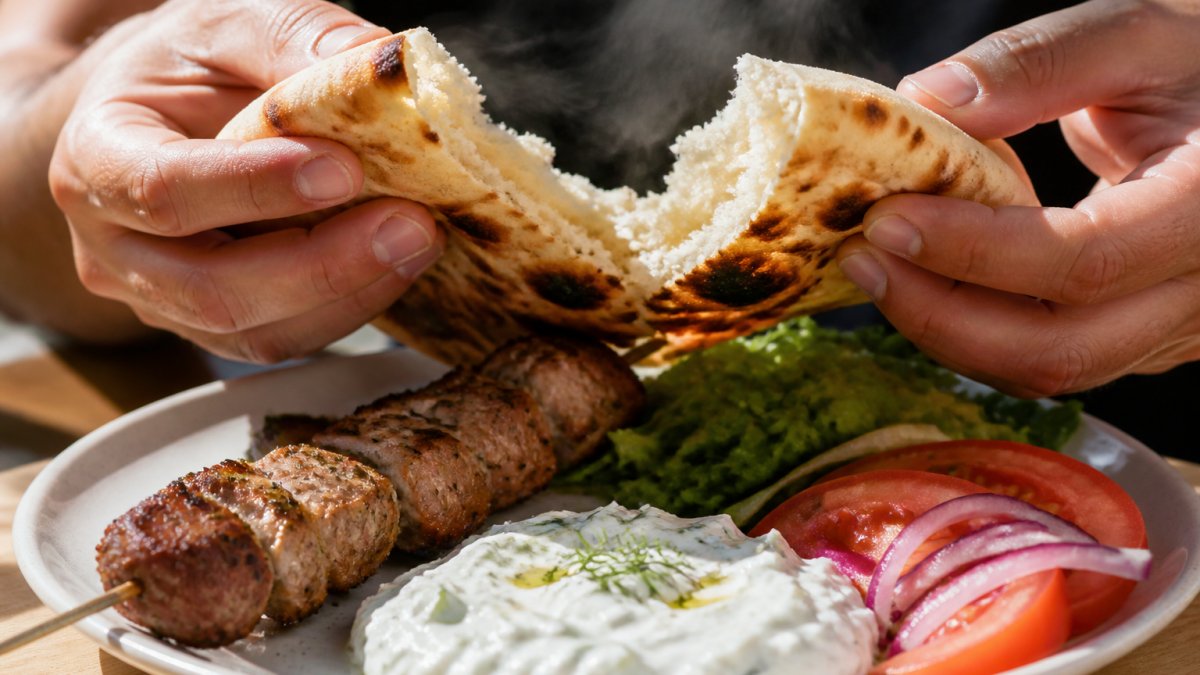
Authentic Pita Bread Selection
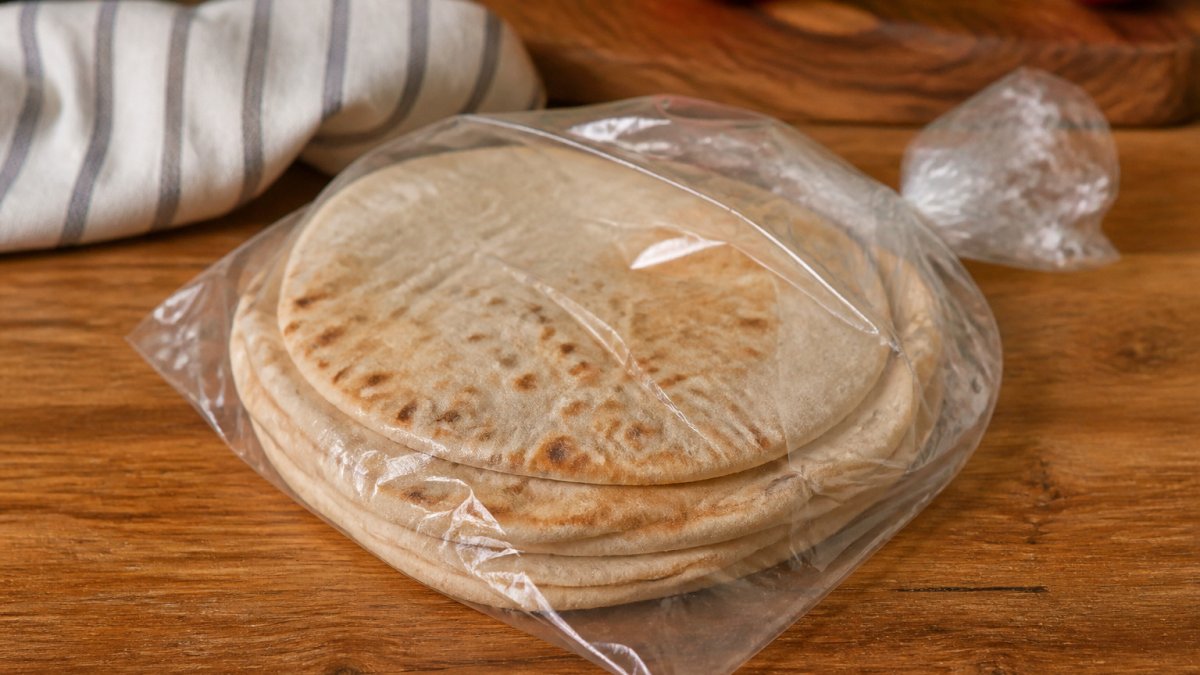
Traditional Greek pita differs from the thick, fluffy pita common in many American restaurants. Authentic pita is thinner, softer, and slightly chewy, designed to wrap around the skewer without falling apart, and it should be served warm so it stays pliable.
Quality pita is made with simple ingredients: flour, water, salt, and yeast. It's cooked quickly at high heat, creating steam that puffs the dough.
Tzatziki and Other Essential Sauces
Tzatziki is the cooling counterpoint to grilled pork's richness. This yogurt-based sauce combines thick Greek yogurt, grated cucumber, garlic, dill, and olive oil, making it a perfect complement to hot, smoky meat.
Authentic tzatziki uses full-fat Greek yogurt, which is tangier and thicker than American yogurt.
Beyond tzatziki, traditional accompaniments include a simple tomato-onion salad dressed with olive oil and oregano, and sometimes a yogurt-based garlic sauce called skordalia.
Pork Souvlaki vs Gyro: Understanding the Difference
These two Greek classics get used interchangeably, but they are made, seasoned, and eaten differently. If you want the traditional skewered pork dish rather than a rotisserie sandwich, the distinction matters. Achieving the ideal char on these skewers requires a marinade enriched by the traditional Greek oil pressing method that preserves the integrity of the fat and flavor.
The Cooking Method Is the Core Difference
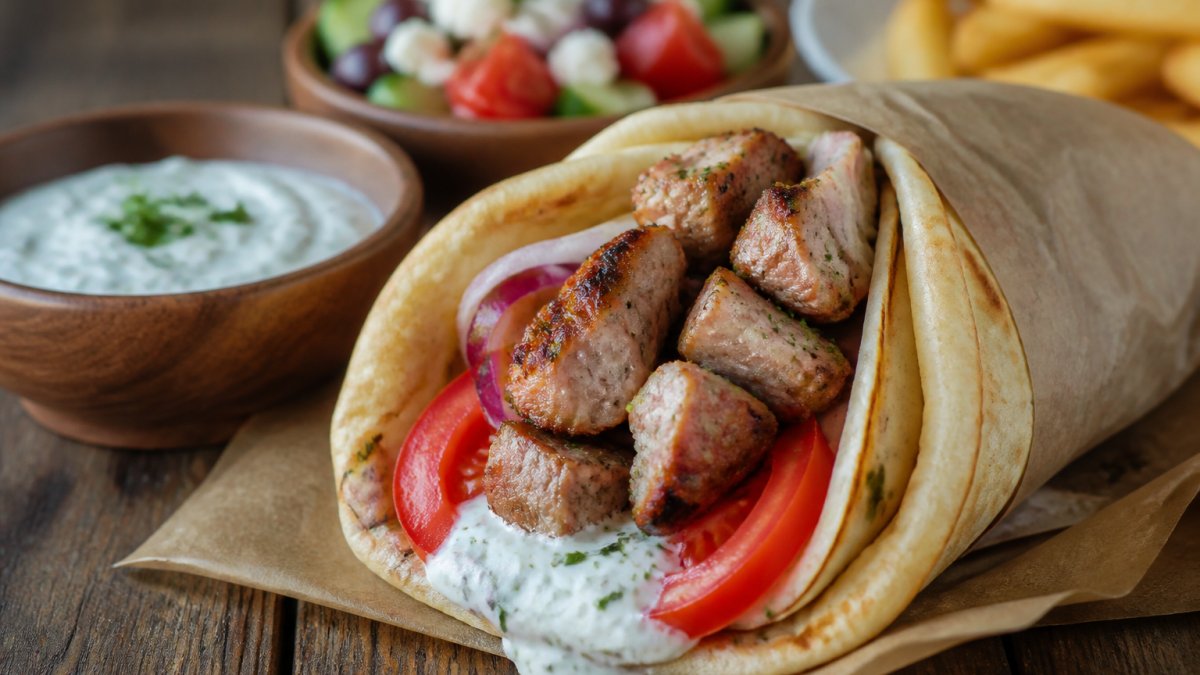
Pork souvlaki is built from cubed pork threaded onto skewers and grilled over direct heat. Each piece cooks individually, so every cube gets its own charred exterior and juicy center, in a short 8 to 10 minutes over a hot fire.
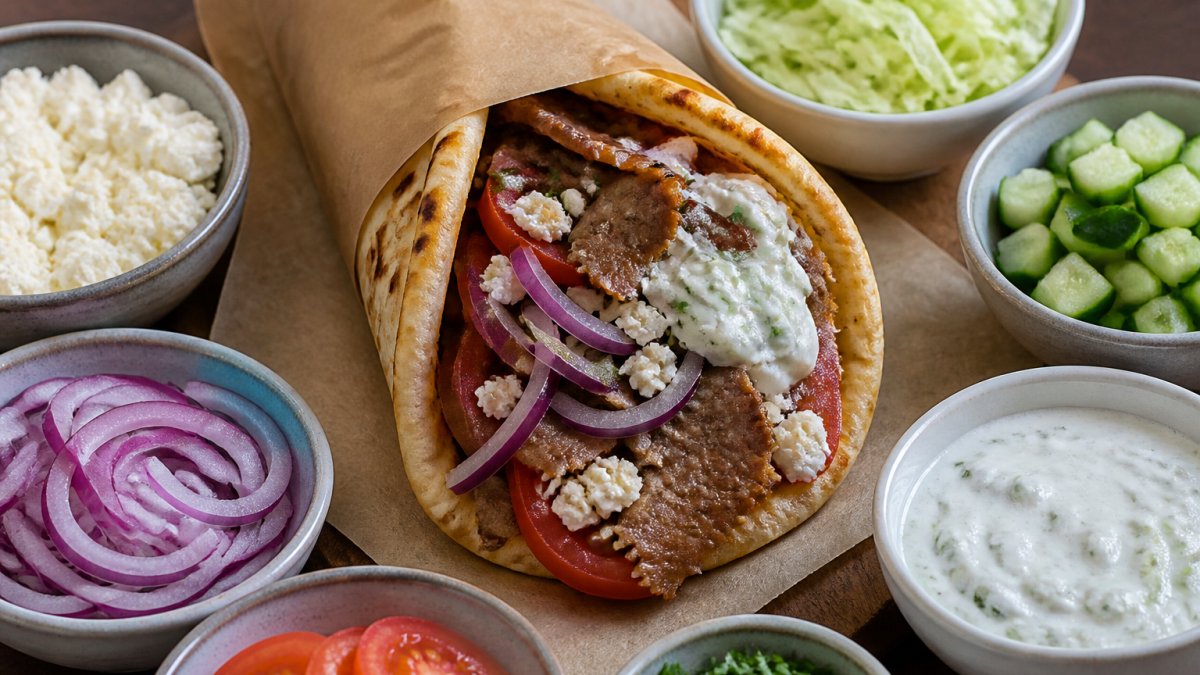
A gyro starts with thin slices of seasoned meat stacked into a cone on a vertical rotisserie.
Marinade and Seasoning
Traditional pork souvlaki leans on a simple, bright marinade: lemon juice, olive oil, and oregano, often with garlic and onion.
Gyro seasoning tends to be deeper and more spice-forward, layered through the stack as the meat cooks. That is why a gyro reads as richer and more savory, while souvlaki reads as fresher and more herbaceous.
Cut, Texture, and Serving Style
Pork shoulder and similar well-marbled cuts are common for souvlaki because their fat keeps the cubes moist under high heat.
Gyro meat is shaved thin and piled into a pita or on a platter with similar toppings. The texture is the giveaway: souvlaki gives you distinct, juicy cubes with charred edges, while gyro gives you thin, crisp-edged ribbons.
Why This Matters When You Order
When a menu lists both, they are not substitutes, and asking for "the pork one" can land you on either dish. If traditional skewered pork is what you want, say "pork souvlaki" specifically and confirm it comes on a skewer.
Fresh Vegetables and Sides That Complete the Plate
The vegetables and sides surrounding pork souvlaki are never afterthoughts. They provide textural contrast, brightness, and nutritional balance that makes the meal complete.
Tomato, Onion, and Crisp Vegetables
Fresh tomato and onion are the foundational vegetable toppings. Tomato adds acidity and sweetness; onion provides sharpness and crunch. Both should be sliced fresh to order, not pre-cut and sitting under heat lamps.
Beyond these basics, authentic preparations include crisp lettuce (usually romaine), cucumber slices, and sometimes bell peppers, which add nutritional value and balance the richness of the meat and sauces. The crispness matters: wilted or warm vegetables undermine the dish's freshness.
Salad and Chip Options
Many Greek restaurants serve pork souvlaki with a side salad or chips. A proper Greek salad includes tomato, cucumber, red onion, Kalamata olives, and feta dressed simply with olive oil and oregano, echoing the flavors in the souvlaki itself.
Chips (French fries) are equally traditional, particularly in casual settings, and are standard in Greek tavernas. The salty, starchy contrast complements grilled meat perfectly, and hand-cut fries made from good potatoes taste dramatically different from frozen varieties.
Greek Takeout in Brick: Freshly Made Daily
Most pages tell you what souvlaki is. Fewer tell you how to get a good one locally, what to check before you order, and how to tell fresh preparation from reheated.
What to Confirm Before You Order
Because menus, hours, and availability change, treat any listing as a starting point. Before you order, confirm four things directly with the restaurant:
- Current hours and kitchen cutoff. Grills often shut down before the front door does. Ask when the last souvlaki order is accepted, not just when the restaurant closes.
- Whether pork souvlaki is on the menu today. Skewered pork is sometimes a special rather than a permanent line item. A quick phone call settles it.
- Portion format. Souvlaki is commonly sold two ways: as a platter (skewers with pita, sides, and sauce) or wrapped in pita as a handheld. Ask how many skewers come with each so you can match it to your appetite.
- Ordering channels. Confirm whether the restaurant takes phone orders, walk-in counter orders, or third-party delivery, since not every kitchen offers all three.
confirm current hours and ordering options directly with the restaurant
Pickup vs. Delivery: A Real Trade-off
Pork souvlaki is at its best in the first few minutes off the grill. That timing reality should drive how you order.
- Pickup keeps the window between grill and plate short. If you live or work within a short drive, this is usually the better call.
- Delivery adds transit time, and steam is the enemy: a wrapped pita in a closed container turns soggy. Ask for the sauce and wet toppings packed on the side so the bread stays intact.
- Distance matters more than app choice. A closer kitchen with a slightly higher delivery fee usually beats a farther one with free delivery, because the food spends less time in transit.
How to Tell Fresh Preparation from Reheated
A few signals do most of the work:
- Char pattern. Freshly grilled pork shows uneven, caramelized edges from direct contact with the fire. Uniformly pale or gray meat usually means it was cooked earlier and held.
- Bread temperature. Warm, pliable pita that folds without cracking points to fresh service. Cold or stiff pita is a tell.
- Vegetable crunch. Tomato and onion sliced to order have structure and juice. Pre-cut toppings that have sat out look dull and weep onto the bread.
- Sauce texture. Tzatziki should be thick and hold its shape. Watery sauce that pools is a sign it was made ahead and separated.
Why Fresh Daily Costs More
Making souvlaki to order is labor-intensive: marinating takes hours, skewering is hands-on, and grilling each order to spec means the kitchen cannot batch-cook ahead. That is why a freshly made skewer typically costs more than a mass-produced alternative, and the gap shows up on the plate.
How to Order and Enjoy Pork Souvlaki
Ordering Options and Delivery
Ordering pork souvlaki should be straightforward. At Gyro Kingdom, you can order in person, by phone, or through delivery platforms.
Pork souvlaki is best eaten immediately after cooking, while the meat is hot and the pita is warm.
For the best experience, pick up your order rather than having it delivered. The short time between cooking and eating preserves the quality that makes fresh souvlaki special.
Tips for the Best Experience
Order during off-peak hours if you want to watch the preparation.
Eat souvlaki while it's hot: the contrast between hot meat, warm pita, and cool tzatziki is essential, and cold souvlaki loses its appeal quickly.
Try it without heavy modifications first.
Finally, ask questions. A restaurant proud of its food will happily explain its ingredients and methods; evasiveness about how souvlaki is prepared is a signal that corners are being cut.
Finding traditional Greek pork souvlaki in your area means seeking out restaurants that prioritize authenticity and freshness. Our generous portions, fresh pita, and house-made tzatziki deliver the authentic Mediterranean experience you're looking for. Visit Gyro Kingdom today to experience pork souvlaki prepared the way it should be.
Frequently Asked Questions
Where can I get traditional Greek pork souvlaki in Brick?
Gyro Kingdom brings authentic Greek pork souvlaki to Brick, serving freshly made souvlaki daily with marinated pork pieces grilled to golden perfection. The restaurant offers dine-in, takeout, and delivery options to fit your schedule. Visit their website or call to place your order and experience traditional Greek grilled meat prepared with fresh, high-quality ingredients.
What is the difference between pork souvlaki and a gyro?
Pork souvlaki features individual marinated pork pieces skewered and grilled over an open flame, delivering a charred exterior and juicy interior with visible grill marks. Gyros, by contrast, use stacked, compressed meat that rotates on a vertical spit. Souvlaki emphasizes the distinct flavor of marinated pork with lemon, olive oil, and oregano. Both are traditional Greek street food, but souvlaki offers a more authentic grilled experience.
Is pork souvlaki usually served with pita and tzatziki?
Yes. Traditional Greek pork souvlaki is served in warm pita bread alongside tzatziki, a cooling yogurt-based sauce with cucumber and garlic. Fresh tomato, onions, and crisp vegetables are standard accompaniments. This combination balances the warm, juicy grilled pork with cool, refreshing sides. Many restaurants also offer salad or chips as platter options, making it a complete, satisfying meal.
How is traditional Greek pork souvlaki prepared?
Pork souvlaki begins with pork pieces marinated in a blend of lemon juice, olive oil, oregano, and garlic for several hours or overnight. The marinated pork is then threaded onto skewers and grilled over high heat until golden and cooked through. The marinade infuses the meat with authentic Greek flavor while grilling creates a charred, flavorful crust. Fresh ingredients and proper grilling technique are essential to achieving the traditional taste and texture that define quality pork souvlaki.