 ultimate-guide
Mediterranean Diet for Families: A Practical Guide
Table of Contents
- Why the Mediterranean Diet Works for Families
- Health Benefits of the Mediterranean Diet
- Mediterranean Diet Food List for Beginners
- Easy Mediterranean Recipes for Kids
- Creating a Mediterranean Diet Meal Plan for Families
- Budget-Friendly Meal Prep and Family Strategies
- Getting Started: Your First Week
- Frequently Asked Questions
Last Updated: September 19, 2026
Why the Mediterranean Diet Works for Families
The Mediterranean diet is a practical, sustainable way for mediterranean diet families to build better eating habits that stick. Mediterranean principles transform family meals from stressful into genuinely enjoyable.
This approach requires no perfection or restrictive rules. Families find meals simpler to plan, easier to prepare, and more satisfying. The diet emphasizes whole foods, olive oil, fresh vegetables, and seafood, ingredients that work as well in busy households as in Mediterranean villages.
The appeal is flexibility: no calorie counting or food group elimination. Build meals around nutrient-dense foods that taste good and satisfy. Children who grow up this way develop natural preferences for whole grains, legumes, and fresh produce over processed alternatives.
Health Benefits of the Mediterranean Diet
A Mediterranean diet for families delivers measurable health advantages beyond weight management. It emphasizes heart health through omega-3 fatty acids from seafood, unsaturated fats from olive oil, and fiber-rich vegetables and whole grains.
Mediterranean eating's anti-inflammatory nature addresses chronic conditions common in modern families. Plant-based proteins from legumes and omega-3-rich seafood reduce inflammation markers and support metabolic health, helping manage hypertension and diabetes.
Mediterranean foods' nutrient density supports brain development and cognitive function. Families report children show improved focus and sustained energy throughout the school day, without afternoon crashes from processed snacks.
Mediterranean Diet Food List for Beginners
Start by understanding the foundation foods: olive oil, fresh vegetables (tomatoes, peppers, cucumbers, leafy greens), whole grains (brown rice, quinoa, whole wheat bread), legumes (chickpeas, lentils, beans), and seafood at least twice weekly.
Proteins include poultry, eggs, and plant-based options. Dairy appears in moderate amounts: Greek yogurt, feta, and traditional cheeses. Nuts, seeds, and fresh herbs provide healthy fats and flavor without added sodium.
Foods to minimize or avoid include processed foods, refined grains, added sugars, and excess red meat. This isn't about elimination, it's about prioritizing whole foods and saving processed items for occasional treats rather than daily staples.
Foods to embrace:
- Olive oil, nuts, seeds
- Fish and seafood (salmon, sardines, cod)
- Vegetables (spinach, tomatoes, eggplant, peppers, zucchini)
- Whole grains and legumes
- Greek yogurt, feta, and traditional cheeses
- Fresh herbs and spices
Foods to limit:
- Refined grains and white bread
- Processed snacks and sugary drinks
- Processed meats
- Excess red meat (save for occasional meals)
- Foods high in added sugars
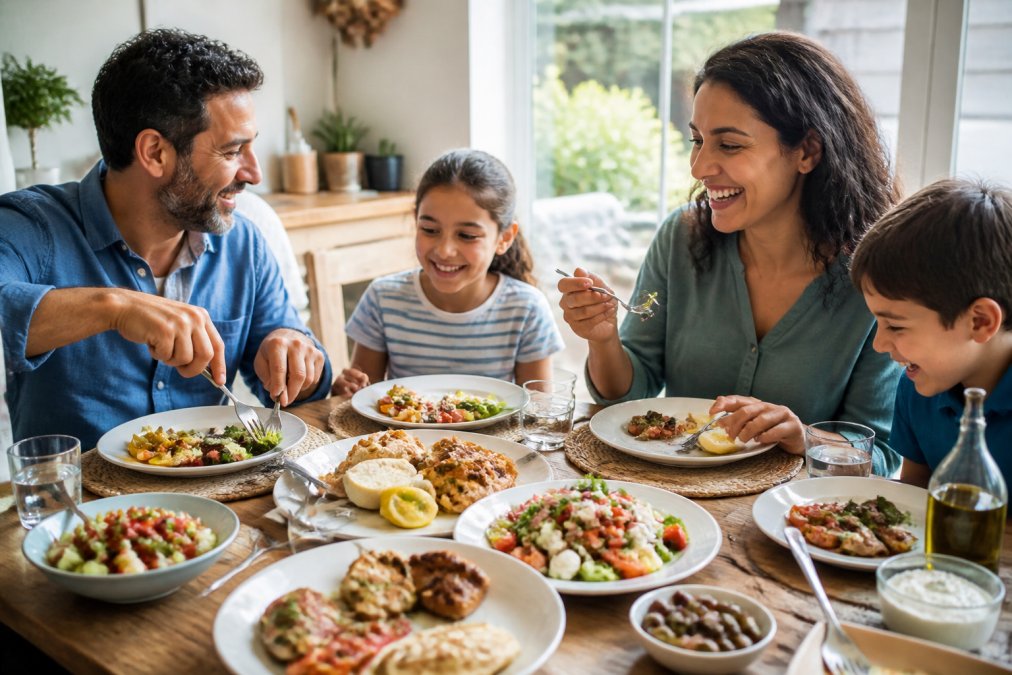
Easy Mediterranean Recipes for Kids
Getting kids to eat Mediterranean meals requires recipes that account for how children actually eat. Simple recipes highlighting fresh ingredients work best, combining familiar formats (pasta, bowls, wraps) with Mediterranean flavors.
Sheet Pan Lemon Herb Chicken with Roasted Vegetables Arrange chicken breasts on a sheet pan with zucchini, bell peppers, and cherry tomatoes. Drizzle with olive oil, season with oregano, garlic powder, and lemon juice. Roast at 400°F for 20-25 minutes until chicken reaches 165°F. For younger children (ages 3-7), cut chicken into strips and vegetables smaller to prevent choking. This yields 4 servings and costs approximately $8-10 total.
Whole Grain Pasta with Hidden-Vegetable Tomato Sauce Sauté diced zucchini, minced carrots, and spinach in olive oil until soft (8 minutes), then add crushed tomatoes, white beans, and dried basil. Simmer 15 minutes. Vegetables break down into the sauce, adding fiber and nutrients invisibly. Serve over whole wheat pasta. This recipe serves 4-5 and costs $6-8.
Customizable Mediterranean Grain Bowls Grain bowls succeed because children choose their own toppings. Cook brown rice or quinoa on Sunday. Set out roasted chickpeas, cucumber, cherry tomatoes, feta, and lemon-olive oil dressing. Let each family member assemble their bowl. Toddlers need softer components; school-age children manage whole chickpeas and raw vegetables. This costs $10-12 for 4 servings and takes 10 minutes.
Whole Wheat Wraps with Mediterranean Fillings Whole wheat tortillas filled with hummus, roasted vegetables, feta, and turkey or tuna make portable meals for lunch boxes and dinner. Roast vegetables at 425°F for 15 minutes, then assemble. For children under 5, chop vegetables finely. These cost $7-9 for 4 wraps and take 20 minutes total.
Breakfast: Greek Yogurt Parfaits with Granola Pair Greek yogurt with berries, honey, and whole grain granola. For children under 3, use mashed berries to avoid choking. This takes 3 minutes and costs $2-3 per serving.
Addressing Picky Eaters Use the "division of responsibility" approach: you decide what Mediterranean foods are offered, when meals happen, and where you eat; your child decides whether to eat and how much. Serve one familiar component alongside new Mediterranean elements. Research suggests children need 10-15 tastes of a new food before accepting it. Offer vegetables prepared multiple ways: raw with hummus, roasted with olive oil, or mixed into sauces.
Time-Saving Strategies for Busy Families Batch cook on weekends: prepare brown rice or quinoa, roast vegetables, and cook beans or lentils. These combine into different meals throughout the week, reducing daily cooking to 10-15 minutes. Frozen vegetables work identically to fresh, cost less, and prevent waste. Dried beans cost roughly 60% less per serving than canned.
Creating a Mediterranean Diet Meal Plan for Families
Mediterranean diet families should build a meal plan that accounts for different ages, school schedules, and budget constraints. Repeat 3-4 dinner recipes weekly, establish 2-3 breakfast options, and include school lunch and snack components that don't require separate cooking.
Sample Weekly Meal Structure
Monday: Whole grain pasta with tomato-white bean sauce, side salad with olive oil vinaigrette, fresh fruit Tuesday: Sheet pan lemon herb chicken with roasted vegetables, brown rice, Greek yogurt with berries Wednesday: Mediterranean grain bowls (brown rice base, roasted chickpeas, cucumber, tomatoes, feta, lemon dressing) Thursday: Baked fish (cod or salmon) with roasted sweet potato and steamed broccoli, whole grain bread Friday: Whole wheat wraps with hummus, roasted vegetables, turkey or tuna, side of olives and cheese Saturday: Vegetable and lentil stew with whole grain bread, side salad Sunday: Grilled chicken souvlaki with Greek salad, brown rice pilaf
Breakfast rotates between: Greek yogurt with granola and berries, whole grain toast with mashed avocado and tomato, vegetable omelets with whole grain toast, and oatmeal with nuts and fresh fruit.
Snacks remain consistent throughout the week: hummus with vegetable sticks, cheese cubes, olives, fresh fruit, nuts, and whole grain crackers. Consistency reduces decision fatigue and makes shopping predictable.
Age-Appropriate Portion Sizes
Families need age-specific portions to avoid waste and under-feeding growing children.
Toddlers (ages 1-3): Offer 1/4 to 1/3 of an adult portion. Use soft or finely chopped vegetables and mashed beans. Offer 2-3 tablespoons protein, 1/4 cup grains, and 2-3 tablespoons vegetables per meal. Use whole milk or full-fat Greek yogurt. Avoid honey (botulism risk under age 1), whole grapes, and hard nuts.
School-Age Children (ages 4-8): Typically eat 1/2 to 2/3 of an adult portion: 2-3 ounces protein, 1/2 to 3/4 cup grains, and 1/2 cup vegetables per meal. Involve them in portion selection; children self-regulate better when given choices.
Older Children and Teens (ages 9+): Approach adult portions, with teen boys potentially needing full adult amounts or slightly more due to growth and activity.
School Lunch Integration
Cold Mediterranean Lunch Box (for ages 4+):
- Whole grain wrap or pita filled with hummus, roasted vegetables, and sliced turkey or canned tuna
- Small container of Greek yogurt or cheese cubes
- Fresh fruit (berries, apple slices, grapes)
- Handful of nuts or seeds (if school permits)
- Small container of olives or roasted chickpeas
- Water bottle
Budget-Conscious Planning
Budget-Friendly Meal Prep and Family Strategies
Batch cook on weekends: prepare brown rice, roast vegetables, and prepare a bean-based sauce. These components combine into different meals throughout the week, reducing time and waste.
Getting Started: Your First Week
Your first week should feel manageable. Pick 3-4 simple recipes your family will like. Shop for basic ingredients: olive oil, vegetables, whole grains, legumes, and one type of seafood or poultry.
Frequently Asked Questions
Is the Mediterranean diet safe for children?
Yes, the Mediterranean diet is safe and beneficial for children. It emphasizes whole grains, fresh vegetables, legumes, seafood, and healthy fats like olive oil, all nutrient-dense foods that support growth and development. The diet naturally includes age-appropriate portions and avoids processed foods, making it ideal for families. Consult your pediatrician before making major dietary changes, especially for very young children or those with specific health conditions.
What are the primary health benefits of the Mediterranean diet for families?
The Mediterranean diet supports cardiovascular disease prevention, reduces hypertension risk, and promotes metabolic health for both adults and children. The anti-inflammatory properties from olive oil and omega-3 fatty acids in seafood help prevent chronic conditions and cognitive decline. Families also benefit from improved satiety and better portion control, making weight management easier without restrictive eating patterns.
How can I get my picky eaters to try Mediterranean foods?
Start with familiar foods and gradually introduce new flavors. Serve whole grains and legumes in forms kids recognize, like pasta with olive oil and tomatoes. Involve children in meal planning and cooking, kids are more likely to eat foods they help prepare. Offer Mediterranean foods family-style, allowing each person to choose portions and combinations. Keep trying new foods without pressure; repeated exposure increases acceptance over time.
How do I create a Mediterranean diet meal plan for families with different tastes?
Build meals around a flexible framework: whole grains as the base, plant-based proteins (legumes, nuts), seafood 2-3 times weekly, and abundant vegetables. Prepare components separately so family members can customize portions and combinations. Use school lunchbox integration by packing leftovers in divided containers. This approach reduces decision fatigue, accommodates preferences, and saves time during busy weeknights.