 listicle
7 Ways to Enjoy Authentic Greek Food at Home
Table of Contents
- What Defines Authentic Greek Flavor
- Essential Greek Pantry Staples to Stock First
- Traditional Greek Side Dishes That Complete Any Meal
- Time-Saving Prep Techniques for Traditional Dishes
- Sourcing Authentic Greek Ingredients Locally
- Pairing Greek Beverages for a Complete Experience
- How to Recreate the Greek Dining Experience at Home
- Frequently Asked Questions
Last Updated: September 13, 2026
What Defines Authentic Greek Flavor
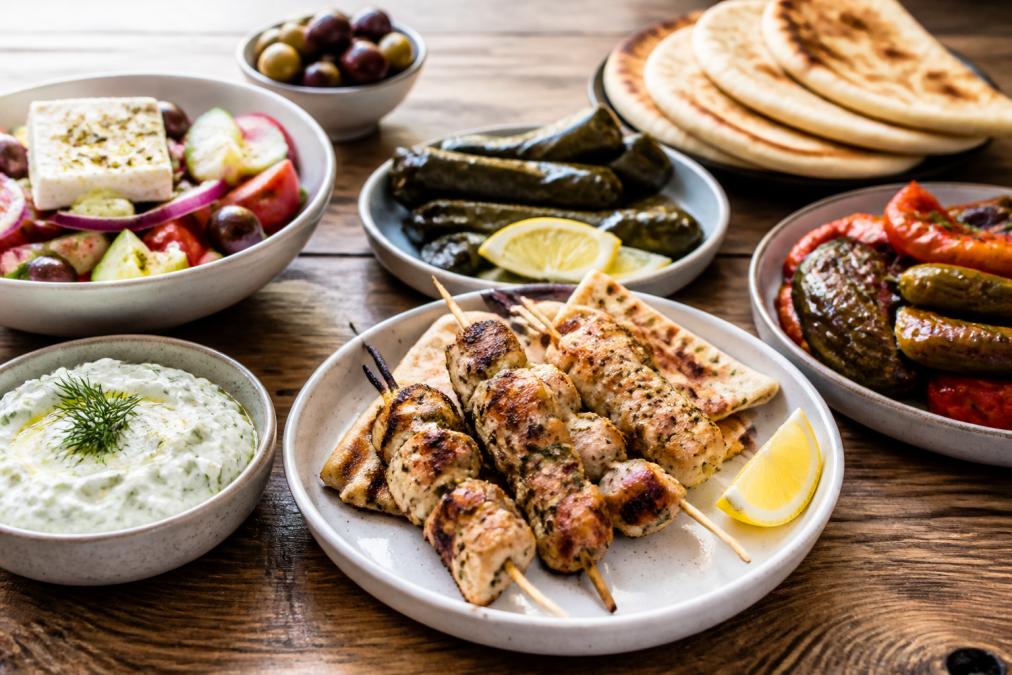
Authentic Greek food is the balance of four elements working together: extra virgin olive oil, lemon juice, garlic, and oregano, layered over fresh, seasonal ingredients rather than heavy sauces. This guide from Gyro Kingdom covers seven practical ways to bring that flavor profile into your own kitchen, whether you're feeding a family on a weeknight or hosting a dinner party.
The good news is that you don't need a plane ticket to eat well. What you need is the right pantry, a handful of techniques, and a willingness to let simple ingredients do the work. Below, we'll show you exactly how to build that foundation, starting with what belongs on your shelf.
USDA Dietary Guidelines for Americans
That balance is what separates a Greek salad that tastes alive from one that tastes like a bag of groceries. Olive oil carries the fat-soluble flavors. Lemon and vinegar cut through them. Oregano and garlic sit on top. Get the ratio right and even a basic dish reads as authentic.
Essential Greek Pantry Staples to Stock First
Stock these eight staples before you cook anything else: extra virgin olive oil, dried oregano, garlic, lemons, red wine vinegar, kalamata olives, feta cheese, and phyllo dough. With those on hand, most traditional Greek side dishes and mains become a matter of assembly.
A few buying notes matter more than people expect:
- Olive oil: Buy extra virgin, in a dark bottle, and use it within a year. It is a finishing oil as much as a cooking oil.
- Oregano: Greek oregano is more pungent than the Mexican variety. If you can only find one, buy Greek.
- Feta: Look for blocks packed in brine, not pre-crumbled. Crumbled feta dries out and loses its tang.
- Phyllo dough: Keep a box in the freezer. It thaws in the refrigerator overnight and unlocks spanakopita, baklava, and dozens of other dishes.
Traditional Greek Side Dishes That Complete Any Meal
Traditional Greek side dishes are where most home cooks win or lose the meal. A roast chicken with lemon potatoes and a bowl of tzatziki feels like a Greek dinner. The same chicken with a plain baked potato feels like a Tuesday.
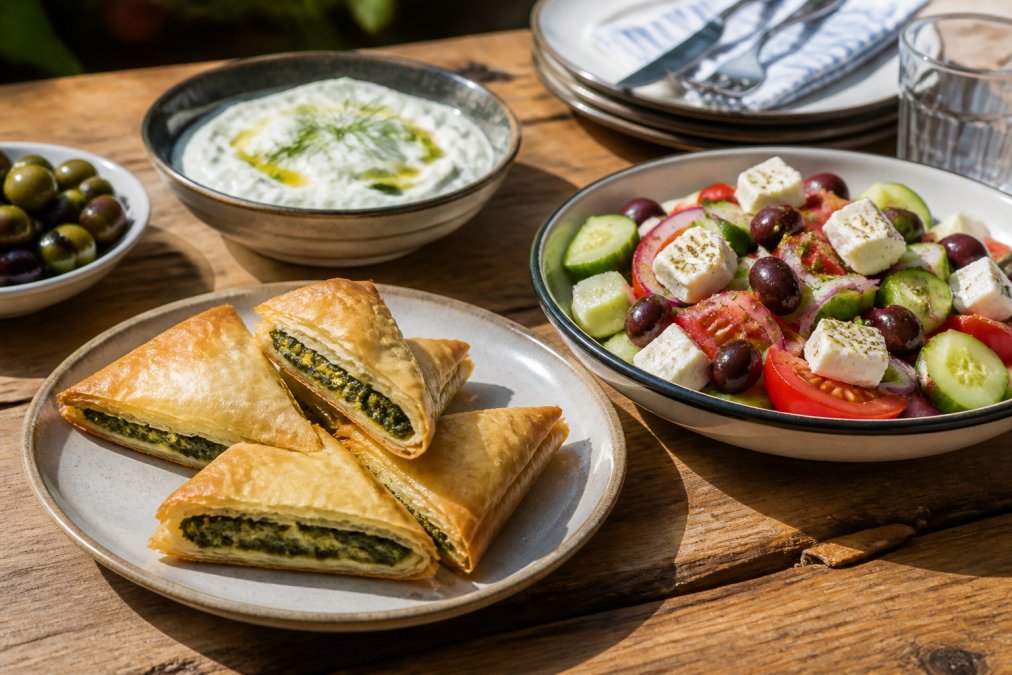
Start with these four, which cover most occasions, then use the technique notes to make each one taste like it came from a taverna rather than a recipe card:
- Horiatiki (village salad). Tomatoes, cucumber, red onion, kalamata olives, and a slab of feta on top. No lettuce. The mechanism that matters: salt the tomatoes 10 minutes before serving and drain the excess liquid, then dress with olive oil and red wine vinegar at roughly a 3:1 ratio. Skip the vinegar entirely if your tomatoes are peak-season and sweet.
- Tzatziki. Greek yogurt, grated cucumber, garlic, olive oil, and a splash of vinegar. Grate the cucumber, then squeeze it in a clean kitchen towel until it stops dripping, otherwise the dip turns watery within an hour. Use full-fat Greek yogurt; low-fat versions separate under the acid.
- Spanakopita. Spinach, feta, and herbs wrapped in phyllo. Cut into triangles for a dinner party. The filling needs to be dry: wilt the spinach, cool it, and squeeze out the water before mixing with feta, dill, and scallions. Brush every phyllo sheet with olive oil or butter, not just the top layer.
- Dolmades. Stuffed grape leaves, served cold with lemon. Buy them jarred if you're short on time. If you make them from scratch, use short-grain rice and plenty of dill and mint, and weight the rolled leaves down with a plate while they simmer so they hold their shape.
That last point matters. Not every component needs to be made from scratch, and pretending otherwise is how home cooks burn out.
Substitutions when the authentic ingredient isn't on the shelf. This is the part most guides skip. If you can't find Greek feta, a domestic sheep's-milk feta packed in brine is the closest match, avoid cow's-milk feta labeled "salad cheese," which is milder and saltier in the wrong way. If grape leaves are unavailable, thin Swiss chard leaves blanched for 30 seconds work as a wrapper. If Greek oregano is out of stock, use half the amount of Mexican oregano and add a pinch of dried marjoram to soften the edge. None of these are identical, but each keeps the dish in the right flavor family instead of pushing it toward something else entirely.
Timing the sides so they land together. Tzatziki and horiatiki are assembly-only and take about 15 minutes total. Spanakopita needs 45 minutes if you're using thawed phyllo and 90 minutes if you're starting from frozen. Dolmades from a jar need 5 minutes; from scratch, budget two hours. If you're serving all four, start the dolmades first, assemble the spanakopita second, and make the cold dishes last so they hit the table fresh.
Time-Saving Prep Techniques for Traditional Dishes
Time-saving prep for traditional Greek cooking comes down to three habits: batch your aromatics, build flavor in layers ahead of time, and use your freezer strategically. None of these shortcuts sacrifice authenticity.
Batch your aromatics. Mince a whole head of garlic and chop onions once a week. Store them in small containers with a little olive oil. You'll cut prep time on every dish that follows.
Marinate overnight, not for an hour. Souvlaki and roasted meats benefit enormously from a long soak in olive oil, lemon, oregano, and garlic. The flavor penetrates the meat instead of sitting on the surface.
Par-cook and refrigerate. Moussaka and pastitsio both taste better the next day. Assemble them a day ahead, refrigerate, and bake before serving. This is the single biggest time saver for a dinner party.
Use the freezer for phyllo work. Assemble spanakopita or tiropita, freeze them unbaked on a sheet pan, then transfer to bags. Bake from frozen when you need them.
Sourcing Authentic Greek Ingredients Locally
Sourcing authentic Greek ingredients locally is easier than most people assume. Mediterranean specialty markets, larger grocery chains, and online retailers all carry the staples, and the difference in quality between a specialty store and a standard supermarket is often significant.
Here's where to look, in order of payoff:
- Local Mediterranean or Middle Eastern markets. Best selection of feta, olives, olive oil, and phyllo, usually at lower prices than specialty chains.
- Warehouse clubs. Good for bulk olive oil and large-format feta blocks if you cook Greek food often.
- Supermarket international aisles. Reliable for dried oregano, jarred dolmades, and basic olives.
- Online retailers. The best route for Greek oregano, specific olive oil producers, and hard-to-find items like grape leaves.
For authentic Greek food, check labels for country of origin. A block of feta labeled "Product of Greece" is worth the extra dollar over a domestic imitation. The same applies to olive oil: single-origin Greek oil tastes noticeably different from a blended "Mediterranean" bottle.
If you're in the Jersey Shore area and want the real thing without the shopping trip, Gyro Kingdom in Brick serves freshly made gyros daily with your choice of chicken, lamb, beef, or pork, alongside traditional Mediterranean classics.
Pairing Greek Beverages for a Complete Experience
Pairing Greek beverages with your meal is the step most home cooks skip, and it's the one that turns dinner into an experience. The traditional pairing logic is simple: match the drink to the weight of the food and the acidity of the dish.
| Dish Type | Traditional Pairing | Why It Works |
|---|---|---|
| Grilled meats and souvlaki | Red wine or lager | Tannins and carbonation cut through fat |
| Seafood and lighter mezze | Assyrtiko or dry white wine | High acidity mirrors lemon-forward dishes |
| Mezze and appetizers | Ouzo, diluted with water | Anise notes complement herbs and olive oil |
| Desserts like baklava | Strong Greek coffee | Bitterness balances honey sweetness |
For a family dinner, a simple lager or a chilled white works fine. For a dinner party, a bottle of Assyrtiko or a small pour of ouzo before the meal sets the tone.
How to Recreate the Greek Dining Experience at Home
Recreating the Greek dining experience at home is less about the food and more about how you serve it. Greek meals are built around shared plates, a slow pace, and a table that stays full for hours. But the part most guides leave out is the sequence, what arrives when, and what you pour alongside it. That sequencing is what separates a Greek dinner from a Mediterranean-themed potluck.
Build the table in courses, not in a single spread. A traditional meal moves through three phases: mezze (small plates and dips), the main course with its sides, and a sweet finish with coffee. Set the mezze out first and let people graze while you finish the main. Keep the bread, olive oil, and a small dish of kalamata olives on the table the entire time, they're the through-line that ties the courses together.
Pair the drink to the course, not the whole meal. This is the gap most home guides miss, and it's the single easiest upgrade to the experience:
- Mezze and dips: Ouzo, served in a small glass with cold water on the side. The anise note cuts through the olive oil and garlic in tzatziki and taramosalata. If ouzo isn't your thing, a dry sparkling wine does the same job.
- Seafood and lighter plates: Assyrtiko, a Greek white with bracing acidity that mirrors lemon-forward dishes like grilled octopus or shrimp saganaki. A dry Vermentino is a reasonable stand-in if Assyrtiko isn't available.
- Grilled meats and souvlaki: A red with enough tannin to cut the fat, Xinomavro from northern Greece is the traditional choice, though a domestic Syrah or a chilled lager works for a casual family dinner.
- Desserts like baklava: Strong Greek coffee, brewed in a briki and served in a small cup. The bitterness balances the honey syrup in a way that wine can't.
Set the table for sharing, not for plating. Use small plates and let people serve themselves. Put the olive oil, oregano, and lemon on the table so guests can adjust their own plates. Serve bread with olive oil for dipping while the main course finishes. Open the wine before the food arrives so the first pour is ready when the mezze hits the table.
A few practical touches go a long way:
- Keep the mezze course going while the main dish cooks, refill the olives and bread rather than letting the table go empty.
- Finish with strong coffee and a small sweet, not a heavy dessert.
- Let the meal run long. The pace is part of the experience, and rushing it undoes the work you put into the food.
If cooking the full spread feels like too much on a given night, ordering in from a local Greek restaurant is a legitimate shortcut. Gyro Kingdom offers convenient delivery across Brick and the surrounding area, so you can build the same table without the prep.
Frequently Asked Questions
What are some traditional Greek dishes I can make at home?
Start with approachable classics: tzatziki, Greek salad, and souvlaki. For something more involved, try moussaka or spanakopita. Authentic Greek food relies on fresh ingredients and simple techniques, so even beginners can get good results. Focus on quality extra virgin olive oil, oregano, and lemon juice to build the right flavor profile.
What are the essential ingredients for authentic Greek cooking?
Stock extra virgin olive oil, feta cheese, kalamata olives, oregano, garlic, and lemons. Phyllo dough is useful for spanakopita and baklava. Greek yogurt is essential for tzatziki and many sauces. These pantry staples appear in most traditional recipes and define the authentic flavor profile of Greek cuisine.
How can I recreate the Greek dining experience at home?
Set the table with multiple small plates, called meze, rather than one large main course. Serve traditional Greek side dishes like dolmades, tzatziki, and horiatiki salad alongside grilled souvlaki or roasted lamb. Pair with a Greek beverage such as retsina or a light Assyrtiko wine. The shared, relaxed pacing is as important as the food itself.
What are some time-saving prep techniques for traditional Greek dishes?
Make tzatziki and marinades a day ahead so flavors meld. Use a food processor for chopping herbs and garlic. For moussaka, roast eggplant slices in the oven instead of frying them individually. Phyllo-based dishes like spanakopita can be assembled and frozen before baking, then baked straight from frozen when needed.
Do I need special equipment to cook authentic Greek food at home?
No. A sheet pan, a skillet, and a baking dish cover most traditional recipes. A grill or grill pan helps with souvlaki and kebabs. For phyllo dough, a pastry brush for olive oil or butter is useful. Simple preparation is a hallmark of Greek home cooking, so you can start with what you already own.
Authentic Greek food at home comes down to a stocked pantry, a few time-saving habits, and the willingness to serve things simply. If you'd rather skip the cooking and enjoy the real thing, Gyro Kingdom makes it easy: freshly made gyros daily with chicken, lamb, beef, or pork, traditional Mediterranean flavors, and generous portions, all available for delivery or catering for your next gathering. Get started with Gyro Kingdom and bring the flavors of Greece to your table tonight.