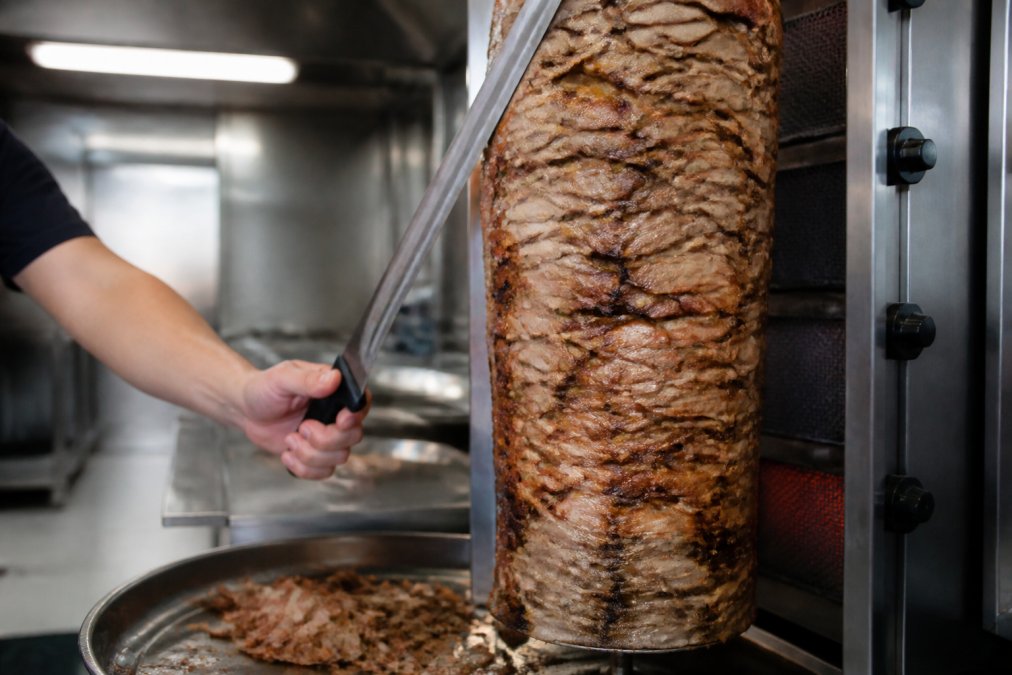
 how-to
How to Identify Fresh Gyro Meat: A 2026 Guide
Table of Contents
- What Is in Gyro Meat? The Ingredients That Affect Freshness
- Gyro Meat Texture and Appearance: What Fresh Looks and Feels Like
- Visual Signs of Fresh vs. Spoiled Gyro Meat
- How to Identify Fresh Gyro Meat Through Smell and Touch
- Authentic Lamb Gyro Recipe Components and What They Tell You About Quality
- Internal Temperature and Food Safety Guidelines for Gyro Meat
- Sourcing High-Quality Gyro Meat: What to Look For
- Frequently Asked Questions
Last Updated: September 15, 2026
What Is in Gyro Meat? The Ingredients That Affect Freshness
Gyro meat is a seasoned blend of ground meat, traditionally lamb or a lamb-and-beef mix, pressed into a dense loaf and cooked on a vertical rotisserie. The ingredients themselves tell you a lot about how fresh the meat can be and how it should look, smell, and taste when it reaches your plate.
Authentic versions keep the ingredient list short: ground lamb, sometimes ground beef, onion, garlic, oregano, and other herbs, plus salt and a small amount of binder. That simplicity is the point. When a gyro tastes muddy or the texture feels spongy, the problem usually traces back to filler, excess binder, or meat that sat too long before it was cooked.
Here is what most guides miss: fat is not the enemy. A proper meat-to-fat ratio keeps the loaf juicy as it rotates against the heat. Strip the fat out and you get a dry, crumbly slice that no amount of sauce can rescue. This is why traditional preparation protects the fat content rather than trimming it away.
Gyro Meat Texture and Appearance: What Fresh Looks and Feels Like
Fresh gyro meat has a firm, slightly springy texture and a uniform color with visible crispy edges from the rotisserie. Press it gently and it should hold together, not fall apart or feel mushy.
Texture consistency is one of the clearest quality signals, and it is hard to fake. A well-made loaf slices into thin, even ribbons that stay intact. When the protein blend is off or the meat is old, slices crumble at the edges or turn pasty in the middle.
Look at the color, too. Freshly cooked gyro meat shows a deep, savory brown on the caramelized exterior and a lighter, moist interior. Gray patches, a dull surface, or a slick sheen that looks wet rather than juicy all point to problems. The flavor profile follows the appearance: fresh meat tastes clean and herb-forward, while older meat turns flat and slightly sour.
- Firm and springy: holds its shape when pressed
- Uniform color: deep brown outside, moist and light inside
- Clean edges: slices stay together instead of crumbling
- Bright aroma: herbs and roasted meat, never sour
Visual Signs of Fresh vs. Spoiled Gyro Meat
The clearest visual sign of spoiled gyro meat is a dull, grayish or greenish tint paired with a slick, tacky surface. Fresh meat looks moist but not wet, with crisp charred edges and a consistent color throughout the stack.
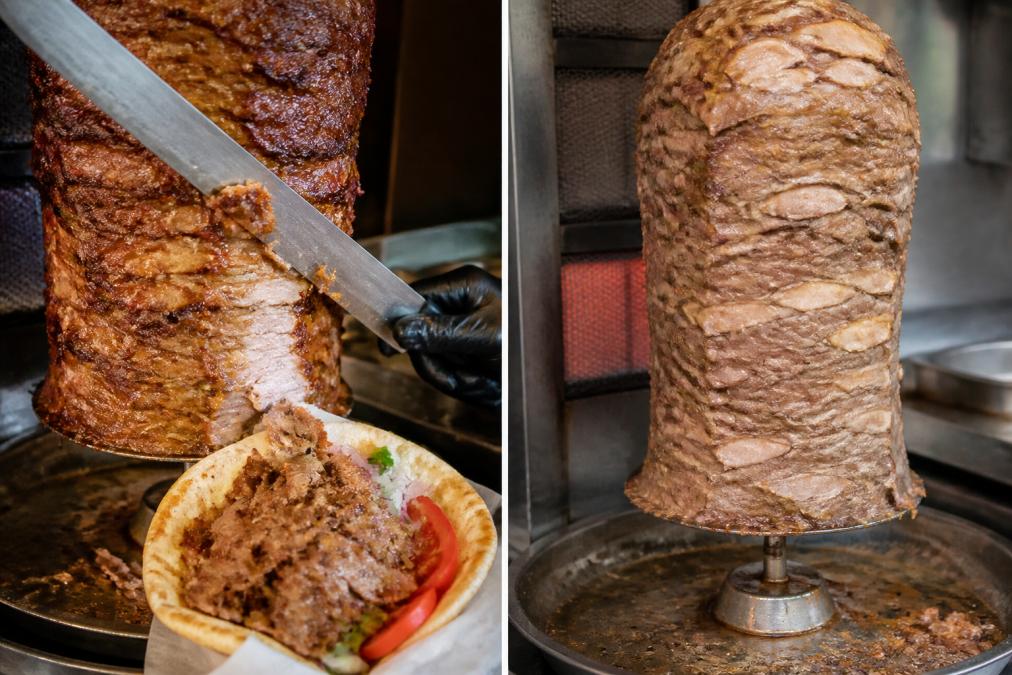
Spoilage rarely hides. It shows up as discoloration first, then as texture changes. If the surface feels slimy or the meat looks like it is sweating a cloudy liquid, that is a stop sign. For anyone learning how to identify fresh gyro meat, this visual check is the fastest filter you have.
| Sign | Fresh Gyro Meat | Spoiled Gyro Meat |
|---|---|---|
| Color | Deep brown, even | Gray, green, or patchy |
| Surface | Moist, not wet | Slimy or tacky |
| Edges | Crispy, caramelized | Soft, no char |
| Aroma | Herbs and roasted meat | Sour or ammonia-like |
How to Identify Fresh Gyro Meat Through Smell and Touch
Fresh gyro meat smells of roasted lamb, oregano, and garlic, and feels firm and slightly damp, never sticky. Your nose and fingers catch what your eyes miss, especially once the meat is sliced and plated, and they catch it earlier than color changes do.
A quick touch test tells you plenty. Press a slice between your fingers. Fresh meat springs back and leaves only a faint sheen. Old meat leaves a greasy, tacky residue and feels limp. If the surface is tacky enough to cling to your skin, treat it as spoiled. The reason is mechanical: as meat proteins break down, they release moisture that mixes with surface bacteria into a biofilm, that film is the tackiness you feel, and it forms before visible discoloration.
The aroma check works the same way. Lean in and breathe. You want herb seasoning and browned meat, the smell of a busy grill. A sour, yeasty, or ammonia-like note means bacteria have been busy, and no amount of reheating fixes that. Ammonia is the giveaway for advanced protein breakdown; a yeasty or sour note shows up earlier, when the meat is still borderline. When in doubt, trust the smell over the look.
Temperature changes what these signals mean. Gyro meat held on a vertical rotisserie above 140 degrees Fahrenheit stays safe for hours because the surface keeps drying and re-crisping. The moment it drops below that, off the spit, in a takeout box, on a counter, the clock starts. A common pattern in food safety guidance is the two-hour rule for perishable food left in the 40-to-140-degree range; sliced gyro meat is no exception (fsis.usda.gov).
Here is the part most guides skip: pre-cooked, vacuum-sealed gyro slices from a grocery store behave differently from fresh rotisserie meat. The seal traps moisture, so the tackiness test is unreliable until you open the package and let the surface breathe for a minute. Judge those slices on aroma first, then texture. If the package hisses or smells sour when you peel it back, that is your answer.
- Springs back: fresh, properly cooked protein
- Leaves a faint sheen: normal surface moisture
- Feels tacky or clings: biofilm forming, treat as spoiled
- Smells herby and roasted: fresh
- Smells sour, yeasty, or of ammonia: spoiled, discard
Authentic Lamb Gyro Recipe Components and What They Tell You About Quality
An authentic lamb gyro recipe relies on ground lamb, onion, garlic, oregano, and a modest binder, with the meat-to-fat ratio doing the heavy lifting for flavor. The components are simple, which makes shortcuts easy to spot, and the shortcuts are exactly where freshness problems start.
Start with the protein blend. Traditional recipes favor ground lamb on its own or blended with ground beef for a milder, leaner profile. A meat emulsion forms when the seasoned mince is mixed and pressed so the loaf holds together on the spit. Skip that step and the slices fall apart, a telltale sign of rushed preparation. The emulsion also matters for freshness: a tight, well-bound loaf traps less surface moisture, so it resists spoilage longer than a loose, crumbly one.
Herb seasoning matters more than most people realize. Oregano, thyme, rosemary, cumin, and black pepper build the savory, aromatic backbone. When a gyro tastes one-dimensional, the spice blend is usually thin or the meat is old enough that the herbs have faded. Freshness and seasoning reinforce each other; you cannot have one without the other.
Binder is the ingredient that separates a real gyro loaf from a filler-heavy imitation. A small amount of breadcrumb or a similar binder helps the loaf hold its shape; a large amount is a cost-cutting move that dilutes the meat and masks off-flavors. If the ingredient list leads with breadcrumb or starch rather than lamb or beef, you are looking at a product built to hide age, not showcase it.
This is where authenticity markers matter, and almost no guide covers them. Mass-produced gyro often arrives as a pre-formed frozen loaf or a stack of uniform slices engineered to reheat evenly. Authentic gyro is built as a cone or loaf that cooks on a vertical rotisserie, where gravity and radiant heat create the crispy exterior and juicy interior in the same slice.
Internal Temperature and Food Safety Guidelines for Gyro Meat
Sourcing High-Quality Gyro Meat: What to Look For
Frequently Asked Questions
How is authentic gyro meat made?
Authentic gyro meat is made by stacking thin slices of seasoned meat on a vertical rotisserie. The meat is typically a blend of ground lamb and ground beef, mixed with spices like oregano, garlic, and cumin, then pressed into a loaf shape. As it rotates, the outer layer caramelizes and gets crispy while the inside stays juicy. The cook shaves off thin slices as the outer layer cooks.
What are the visual signs of fresh gyro meat?
Fresh gyro meat has visible charred edges from the rotisserie. It looks moist and juicy, not dry or gray. The texture is uniform but with some visible meat fibers. Avoid meat that looks dull, has a greenish tint, or shows white slimy patches. Fresh gyro meat also releases clear juices, not cloudy or thick liquid.
How can you tell the difference between fresh and frozen gyro meat?
Fresh gyro meat has a springy texture when pressed and smells savory with herbs and spices. Frozen and thawed gyro meat often feels mushy, releases excess water, and has a flatter, less complex flavor. The color may also be paler or uneven. When cooked, fresh gyro meat develops crispy edges and a juicy interior, while frozen versions tend to be drier and crumbly.
Is gyro meat supposed to be uniform in texture?
Gyro meat should have a consistent texture throughout the loaf, but you should still see some meat fibers and small bits of fat. It should not be perfectly smooth like a hot dog or pate. A good gyro meat slice holds together when cut but pulls apart easily when you bite into it. If the texture is rubbery or overly dense, it may have been over-processed or contain too many fillers.