 ultimate-guide
How to Host an Authentic Greek Dinner Party: 2026 Guide
Table of Contents
- Why a Greek Dinner Party Centers on Sharing, Not Serving
- Building Your Traditional Greek Meze Platter Ideas
- The Greek Wine Pairing Guide for Every Course
- Greek Dinner Party Etiquette: What to Do (and Skip) at the Table
- Your 3-Day Prep Schedule for an Authentic Greek Dinner Party
- Dietary Adaptation and Kid-Friendly Twists for a Greek Dinner Party
- Set the Scene: Music, Ambiance, and Regional Variations
- Frequently Asked Questions
Last Updated: September 19, 2026
Why a Greek Dinner Party Centers on Sharing, Not Serving
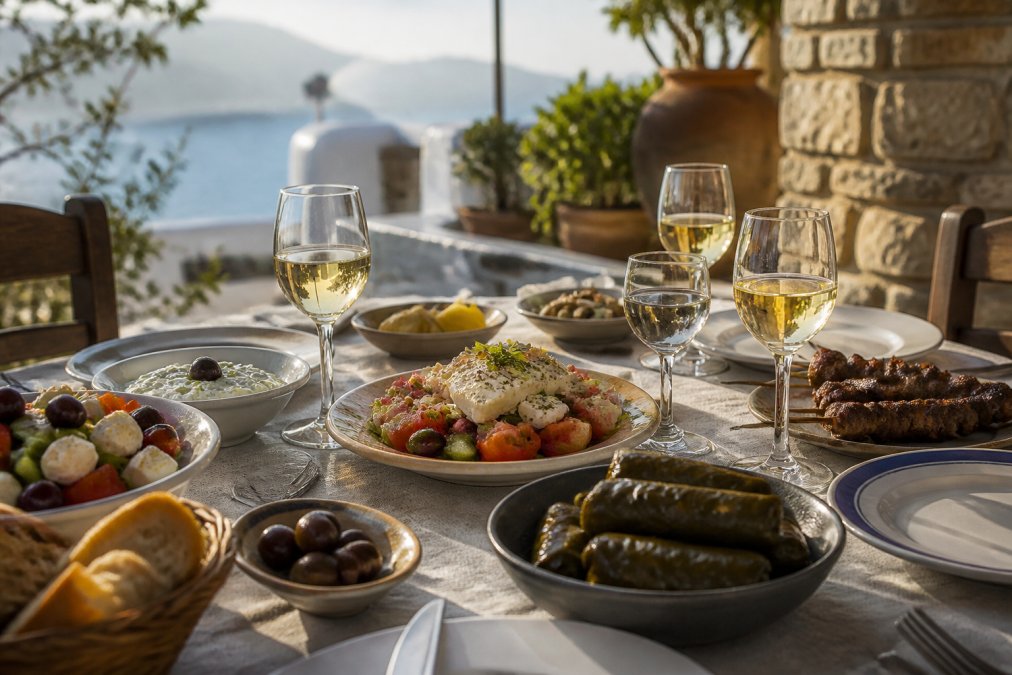
A Greek dinner party is a communal meal built around shared platters and small plates rather than individual portions, and it works because the table itself becomes the entertainment. This guide from Gyro Kingdom breaks down how to host an authentic greek dinner party, from the meze spread to the prep schedule that keeps you out of the kitchen when guests arrive.
The throughline here is simple: most hosts treat a dinner party as a performance. Greek hospitality, or philoxenia, treats it as an act of welcome. Get that distinction right and everything else, the menu, the pacing, the seating, falls into place.
The Philoxenia Mindset: Hospitality as the Main Course
Philoxenia translates roughly to "friend to the stranger," and it's the cultural engine behind every Greek table. The host's job isn't to impress. It's to make people feel like they belong there.
That changes your planning. You stop asking "what will wow them" and start asking "what keeps people lingering." A mezze table that never fully empties does more for the evening than a perfectly timed plated course ever will.
Building Your Traditional Greek Meze Platter Ideas
A traditional Greek meze platter is a spread of small sharing plates, typically 6-10 items, built from a base of dips, cheeses, olives, and wrapped or stuffed bites. The goal is variety and contrast, not volume in any single dish.
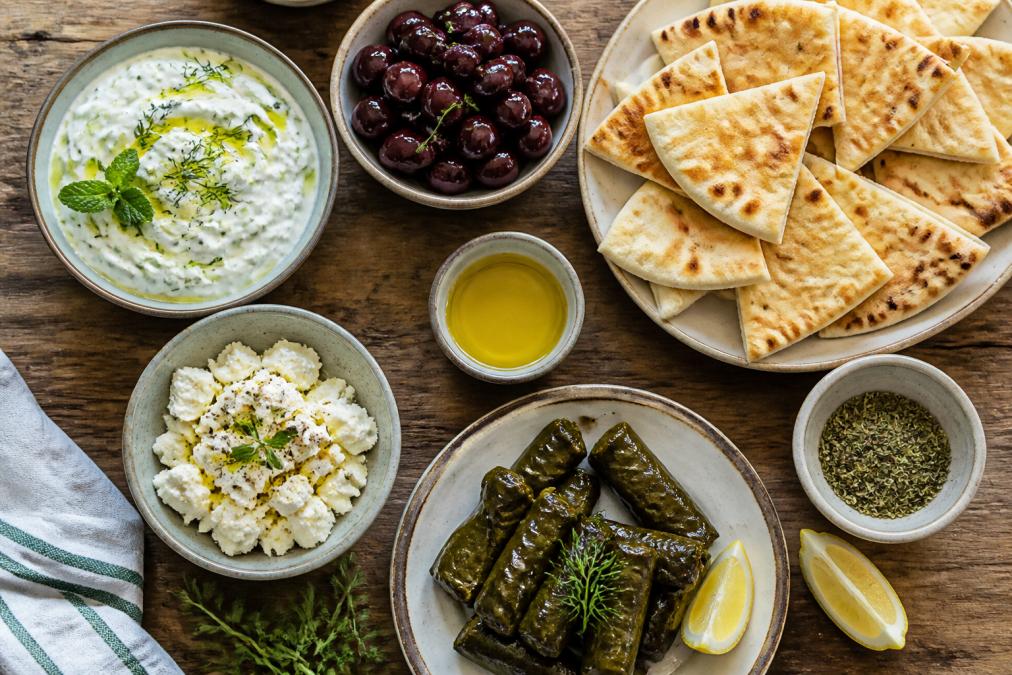
Start with the anchors most guests already recognize, then add one or two items that spark conversation:
- Tzatziki: Greek yogurt, cucumber, garlic, and dill. Make it a day ahead; it tastes better cold and settled.
- Feta: served in blocks with oregano and extra virgin olive oil, not crumbled into a bowl.
- Kalamata olives: room temperature, never straight from the fridge.
- Dolmades: stuffed grape leaves, served chilled or at room temperature.
- Spanakopita: phyllo triangles with spinach and feta, baked in batches so warm ones keep arriving.
- Warm pita: cut into triangles, brushed with olive oil, stacked in a cloth-lined basket.
A common mistake is overloading the dips and underbuilding the cold items. Dips take ten minutes. Dolmades and phyllo take an afternoon. Front-load the labor-intensive pieces.
The Greek Wine Pairing Guide for Every Course
Greek wine pairing follows one rule above all others: match the wine to the weight of the dish, not to a rigid tradition. Lighter plates take crisp whites, charcoal-grilled meats take fuller reds, and dessert takes something sweet enough to stand up to honey and walnuts. What separates a Greek table from a generic Mediterranean one is that the wines themselves carry regional identity, and naming them at the table gives guests something to talk about.
Here's how the courses line up:
| Course | Dish Type | Wine Style | Greek Bottle to Look For |
|---|---|---|---|
| Meze | Dips, feta, olives | Crisp dry white, high acid | Assyrtiko (Santorini) |
| Seafood | Grilled fish, octopus | Unoaked white or light rosé | Moschofilero or Roditis |
| Grilled meats | Lamb, chicken, pork | Medium to full red | Xinomavro (Naoussa) or Agiorgitiko (Nemea) |
| Dessert | Baklava, honey pastries | Sweet dessert wine | Mavrodaphne or Samos Muscat |
The whites. Assyrtiko is the workhorse white for meze, especially with seafood. It's grown on volcanic soil in Santorini, which gives it a saline, almost smoky edge that cuts through olive oil and brined olives better than most Sauvignon Blancs. Moschofilero, from the Peloponnese, is lighter and more floral, a good pick if your crowd leans toward Pinot Grigio. Roditis is the everyday table white you'll find poured by the carafe in tavernas.
The reds. Xinomavro from Naoussa is often described as the Greek answer to Nebbiolo: high acid, firm tannin, and it needs food to show well. Agiorgitiko from Nemea is softer and fruitier, the safer pour if your guests aren't adventurous red drinkers. For lamb and charcoal-grilled meats, either holds up without overwhelming the plate.
The sweet finish. Mavrodaphne from Patras is a fortified, raisin-and-chocolate red dessert wine that pairs with baklava the way Port pairs with chocolate. Samos Muscat is the lighter, honeyed alternative if your dessert course is fruit-forward.
If you can't source Greek labels, a dry Sauvignon Blanc and a medium-bodied Syrah will do the job without embarrassing you. But most large American liquor stores and every Greek or Mediterranean grocer carry at least one Assyrtiko and one Agiorgitiko, so the Greek option is usually within reach.
Serving temperatures. Serve whites colder than you think, around 45-50°F, and pull reds out of the cellar 20 minutes before pouring.
Greek Dinner Party Etiquette: What to Do (and Skip) at the Table
Greek dinner party etiquette rewards generosity over formality. The host serves first and serves generously, guests are encouraged to take second helpings without being asked, and nobody waits for a formal signal to start eating once the table is set.
What to do:
- Put more food on the table than any group could finish. Running out signals a failed host.
- Pour for your guests before yourself, and keep their glasses topped up.
- Accept a second helping when offered. Refusing twice reads as coldness.
What to skip:
- Don't plate individual portions for a communal meal. Let people serve themselves.
- Don't clear plates the moment someone sets their fork down. The table should stay full.
- Don't apologize for the food. It sets a nervous tone that spreads.
Your 3-Day Prep Schedule for an Authentic Greek Dinner Party
A 3-day prep schedule splits the work so that on the day of the party you're assembling, not cooking. This is the single biggest difference between a relaxed host and a frantic one.
Day 1 (three days out)
- Shop for non-perishables: olive oil, olives, phyllo, honey, walnuts, dried oregano, bay leaf
- Make tzatziki and refrigerate it
- Confirm guest count and any dietary restrictions
Day 2 (two days out)
- Roll and freeze dolmades and spanakopita unbaked
- Marinate any lamb or chicken
- Chill the wine
Day 3 (day of)
- Bake phyllo items in batches, 30 minutes before guests arrive
- Assemble the meze platter
- Set the table and start the music before the first guest rings the bell
Dietary Adaptation and Kid-Friendly Twists for a Greek Dinner Party
Dietary adaptation for a Greek menu is easier than for most cuisines because so much of the spread is already vegetable-forward. The Mediterranean diet, built on olive oil, legumes, vegetables, and fish, aligns naturally with meze-style eating.
Set the Scene: Music, Ambiance, and Regional Variations
Ambiance is the gap most hosts leave wide open. Music, lighting, and regional framing do as much work as the food, and none of it is hard to get right. This is where a Greek dinner party stops feeling like a themed potluck and starts feeling like a table in someone's yiayia's courtyard.
- Rebetiko, the Greek blues, born in the 1920s port districts. Bouzouki-driven, minor-key, and atmospheric at low volume. Good for the meze phase.
- Laïko, the mid-century popular style that followed rebetiko. Warmer and more melodic, works well once the main course lands.
- Nisiotika, island folk music, often with violin and lute. Lighter and more celebratory, a good fit for dessert and the lingering hour.
A quick regional cheat sheet:
- Crete, dakos (barley rusk with tomato and myzithra), wild greens, grilled octopus, lamb with stamnagathi.
- Peloponnese, olive oil-forward, roasted lamb, hilopites (egg pasta), and the Nemea reds mentioned above.
- Northern Greece, paprika-braised pork, hearty bean dishes, and phyllo pies with leek and cheese.
- Islands, grilled fish, tomato keftedes, capers, and a lighter, more acidic hand with the olive oil.
Frequently Asked Questions
What to serve for a Greek dinner party?
Start with a meze spread: tzatziki, feta, dolmades, kalamata olives, and warm pita. For mains, serve charcoal-grilled lamb or chicken souvlaki, moussaka, or spanakopita. Add Greek side dishes like horiatiki salad and roasted lemon potatoes. Finish with baklava and Greek yogurt drizzled with honey and walnuts. Pair with a Greek wine like Assyrtiko or Xinomavro.
What are some traditional Greek dinner traditions?
Greek dinners are communal and relaxed, often lasting hours. Meze plates are shared before the main course. The host offers the first bite and pour. Bread is never served without olive oil. Toasting with 'Yamas' is common. Expect lively conversation, music, and second helpings. The meal ends with strong coffee and a sweet like baklava or fresh fruit.
What appetizers go well with Greek food?
Classic Greek appetizers include tzatziki with pita, feta drizzled with olive oil and oregano, dolmades (stuffed grape leaves), kalamata olives, and spanakopita (spinach pie). Add grilled halloumi, melitzanosalata (eggplant dip), and fresh vegetables like cucumber and cherry tomatoes. These meze items pair well with ouzo or a light white wine.
How do you set a table for a Greek-style dinner?
Use a simple, rustic table setting. Place a blue-and-white checkered tablecloth or a plain linen runner. Set out small plates for sharing, with forks and knives. Put olive oil, sea salt, and oregano in small bowls. Arrange meze platters in the center. Add a carafe of wine and water glasses. Finish with a small vase of fresh herbs or wildflowers for a Mediterranean feel.