 ultimate-guide
Traditional Greek Dips and Spreads: A Complete Recipe Guide
Last Updated: November 4, 2026
Quick Summary
Greek dips and spreads are small shared plates built from staples such as yogurt, feta, eggplant, fava, fish roe, garlic and bread, finished with lemon, herbs and good olive oil. They form the core of a meze table. Tzatziki, tirokafteri, taramosalata and melitzanosalata are among the most traditional examples.
- Drain the grated cucumber well before making tzatziki, since excess water thins the yogurt.
- Use room-temperature feta and a spoonful of yogurt for a smooth tirokafteri.
- Add olive oil slowly to taramosalata while the processor runs to keep it from turning greasy.
- Roast eggplant until the flesh collapses, then drain it well to keep melitzanosalata from tasting diluted.
- Plan about 2 to 3 ounces of dip per guest when dips are the main appetizer.
Table of Contents
- Tzatziki: Yogurt, Cucumber, Garlic and Herbs
- Greek Dip Recipes for Tirokafteri, Taramosalata and Melitzanosalata
- Easy and Vegetarian Greek Dips You Can Make at Home
- Skordalia, Fava and Other Greek Spreads for Bread
- Building a Greek Meze Spread: Serving Ideas and Quantities
- Storing, Troubleshooting and Adapting Your Greek Dips This Week
- Frequently Asked Questions
Greek dips and spreads are the backbone of a meze table, and Greek dips are traditionally made simply, with good olive oil and fresh herbs. Few dishes show the cuisine's character more clearly.
Greek dips are served as part of a larger spread called meze, a loose category of small plates shared at the table. You can review the essential ingredients for authentic Greek cooking before you start.
The essential building blocks are:
- Creamy bases: Greek yogurt, feta, or mashed legumes
- Vegetables and starches: Cucumber, eggplant, roasted peppers, potato
- Acid and aromatics: Lemon juice, red wine vinegar, garlic, dill, parsley, mint
- Finishing touches: Good extra-virgin olive oil, Kalamata olives, a sprinkle of paprika
Most of these dips are quick to prepare, and many benefit from resting in the refrigerator for an hour.
Tzatziki: Yogurt, Cucumber, Garlic and Herbs
Tzatziki is the most recognizable of all Greek dips. For a dedicated step-by-step guide, see how to make authentic tzatziki at home. Its success depends on draining the cucumber well, since excess water thins the yogurt and dilutes the flavor.
Ingredients:
- 1 large English cucumber, grated and squeezed dry
- 2 cups strained Greek yogurt
- 2 cloves garlic, finely grated
- 1 tablespoon fresh dill, chopped
- 1 tablespoon extra-virgin olive oil
- 1 teaspoon red wine vinegar and salt to taste
Steps:
- Grate the cucumber, salt it lightly, and press out the liquid in a clean towel.
- Stir the yogurt, garlic, dill and vinegar together in a bowl.
- Fold in the cucumber and olive oil, then season with salt.
- Refrigerate for at least one hour so the garlic mellows.
A common mistake is using regular yogurt without straining it first. The result is loose and watery. Use thick, strained Greek yogurt for the best texture.
Greek Dip Recipes for Tirokafteri, Taramosalata and Melitzanosalata
These three dips show the range of Greek flavors, from spicy to briny to smoky. Each one rewards a specific technique, and each has a traditional ingredient that home cooks sometimes substitute.
Tirokafteri: Spicy Whipped Feta
Tirokafteri combines salty feta with roasted red peppers and a little heat. The name means "cheese that burns," and the heat level is entirely up to you.
Ingredients:
- 8 ounces feta, crumbled (a firm Greek-style feta in brine works best)
- 3 tablespoons strained Greek yogurt
- 1 roasted red pepper, drained and chopped
- 1 small fresh chili or 1/2 teaspoon red pepper flakes, or to taste
- 1 tablespoon extra-virgin olive oil
- 1 teaspoon red wine vinegar
- A squeeze of lemon juice
Steps:
- Let the feta come to room temperature for about 15 minutes so it blends smoothly.
- Pulse the feta and yogurt in a food processor until mostly smooth, scraping down the bowl once.
- Add the roasted pepper, chili, olive oil, vinegar, and lemon, and blend until creamy but still a little textured.
- Taste and adjust the heat, then chill for at least 30 minutes before serving.
Watch out: blending cold feta straight from the refrigerator produces a grainy, stiff spread. Room-temperature feta and a spoonful of yogurt give the whipped texture the dip is known for.
Taramosalata: Fish Roe Spread
Taramosalata is made from salted fish roe (tarama), blended with bread or potato, lemon, and oil. It has a pale pink color and a tangy, briny taste.
Ingredients:
- 3 to 4 ounces tarama (salted carp or cod roe), available at Greek and Mediterranean markets
- 2 slices day-old white bread, crusts removed, soaked in water and squeezed dry (or 1 medium boiled potato, mashed)
- 1/4 cup finely grated onion, squeezed dry
- 1/2 cup extra-virgin olive oil, added gradually
- Juice of 1 lemon, or to taste
Steps:
- Soak the bread in water for a few minutes, then squeeze it dry in a clean towel.
- Blend the tarama and onion in a food processor until pale.
- Add the bread (or potato) and pulse to combine.
- With the processor running, drizzle in the olive oil slowly, then add lemon juice to taste. The spread should be pale pink, light, and mousse-like.
Watch out: adding the oil all at once can cause the emulsion to break and turn greasy.
If tarama is hard to find, home cooks sometimes substitute other roe or a jarred base from Greek markets. Neither is identical to the original.
Melitzanosalata: Smoky Eggplant Dip
Melitzanosalata is a smoky eggplant dip.
Ingredients:
- 2 large eggplants (about 2 pounds total)
- 2 cloves garlic, finely grated
- 3 tablespoons extra-virgin olive oil
- Juice of 1 lemon
- 1 tablespoon red wine vinegar
- 2 tablespoons chopped fresh parsley
- Salt and black pepper to taste
Steps:
- Roast the whole eggplants directly over a gas flame, under a broiler, or on a grill, turning occasionally, until the skin is charred all over and the flesh is completely soft, about 20 to 30 minutes.
- Set the eggplants aside to cool, then peel away the charred skin and discard the excess liquid that collects.
- Chop or mash the flesh with a fork, leaving some texture.
- Stir in the garlic, olive oil, lemon, vinegar, and parsley, then season.
Watch out: eggplant flesh holds a lot of water, and a wet dip tastes diluted. Let the drained pulp sit in a colander for 10 minutes and press out the liquid before mixing.
All three dips keep their character best when served at room temperature rather than straight from the refrigerator, so pull them out about 20 minutes before the table is set.
Easy and Vegetarian Greek Dips You Can Make at Home
Several Greek dips need no meat and only a few ingredients, which makes them ideal for vegetarian guests.
- Fava: Simmer yellow split peas until soft, blend with olive oil, lemon and onion, and serve warm or at room temperature.
- Tzatziki: Already vegetarian, and it pairs well with any spread.
- Melitzanosalata: Naturally vegetarian and easy to make in advance.
Skip the fish roe if you are cooking for vegetarians, and use a plant-based yogurt for a dairy-free tzatziki.
Skordalia, Fava and Other Greek Spreads for Bread
Skordalia is a garlic-heavy dip thickened with potato or bread and loosened with olive oil and vinegar. It is traditionally served with fried vegetables or grilled fish. Serve it with warm pita or crusty bread for dipping. Which pita bread is best for authentic gyros covers the styles that work best for dipping. Choose a good-quality extra-virgin olive oil, since it is the main flavor in the spread. Guidance on choosing the best Greek olive oil can help you pick one.
Building a Greek Meze Spread: Serving Ideas and Quantities
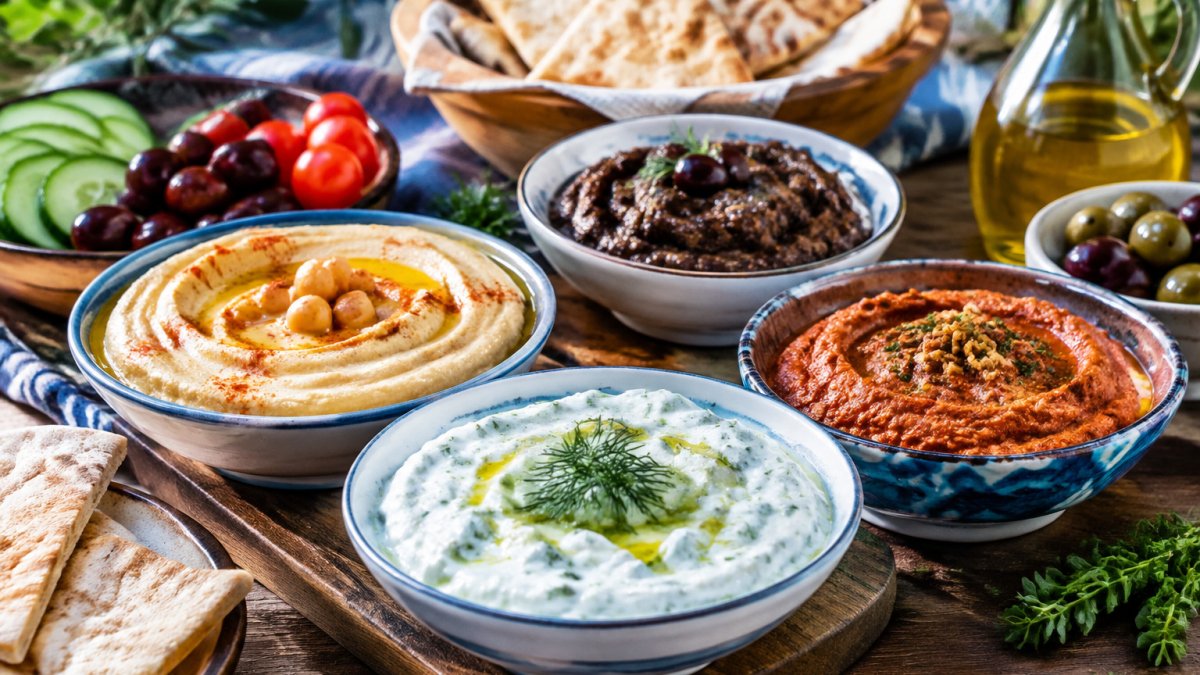
A balanced meze table usually includes three to five dips, plus bread, olives and fresh vegetables. A common guideline is about 2 to 3 ounces of dip per guest when dips are the main appetizer. For planning the full table, see how to host an authentic Greek dinner party. Offer one creamy dip, one smoky dip and one fresh option such as tzatziki for contrast.
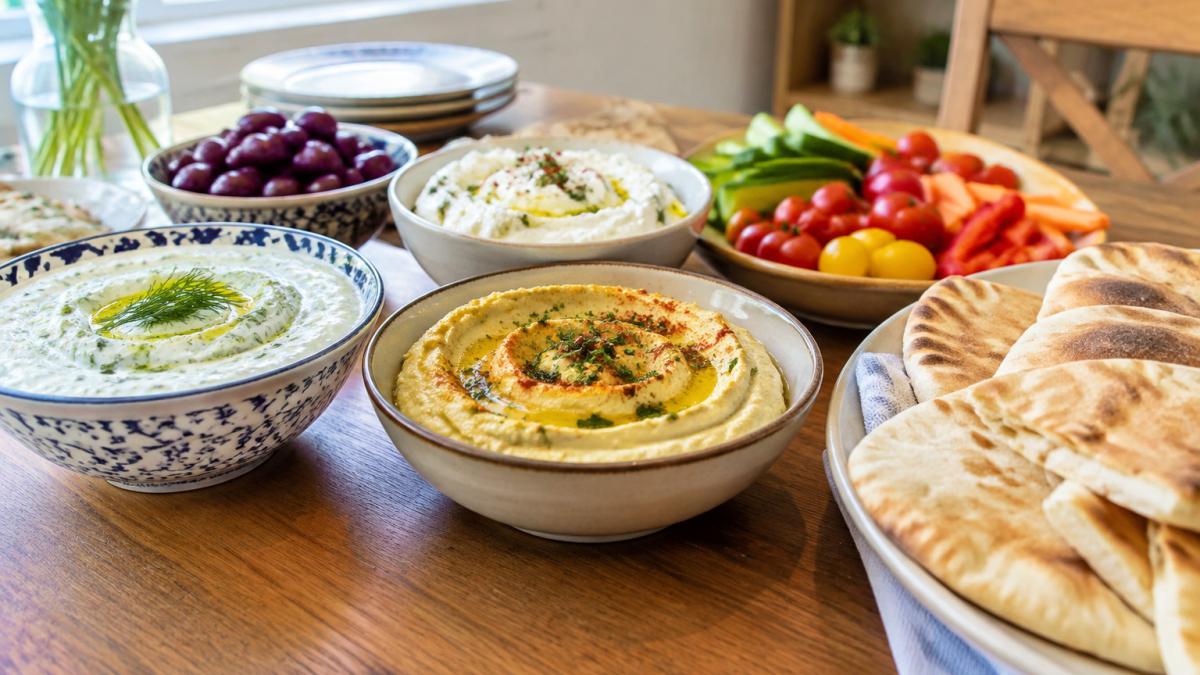
!A wooden table set with bowls of tzatziki, fava and whipped feta, warm pita bread, Kalamata olives and fresh vegetables, in a bright home dining room
Pair each dip with a different texture: warm pita, cold cucumber slices, crisp bell pepper strips and crusty bread.
Storing, Troubleshooting and Adapting Your Greek Dips This Week
Most dips keep well for three to four days in an airtight container in the refrigerator, but the exact window depends on the ingredients. Dairy-based dips such as tzatziki and tirokafteri are best eaten within a few days, since the garlic grows stronger and the cucumber continues to release water. Eggplant and legume dips such as melitzanosalata and fava hold for three to four days. Taramosalata, because it contains raw fish roe, should be eaten within three days and kept cold the whole time.
Bring dips to room temperature for 20 minutes before serving so the flavors open up. This matters most for fava and skordalia, which taste flat when cold.
For make-ahead planning, tzatziki, tirokafteri, and melitzanosalata can be made the day before and refrigerated overnight.
If tzatziki turns watery, the cucumber was not drained enough; grate it, salt it for 10 minutes, and squeeze it in a clean towel until it feels dry. If taramosalata tastes flat, add a little more lemon; if it tastes too fishy, a spoonful of mashed potato balances it. If melitzanosalata tastes bitter, the eggplant was undercooked or the flesh was not drained; roast until the flesh collapses completely and press out the liquid. If skordalia turns gluey, the potato was overworked in the processor; mash it by hand and fold in the oil.
For a lighter version of any dip, swap part of the olive oil for water and blend until smooth.
The article gives clear storage windows for each dip, which are easy to scan at a glance.
| Dip | Refrigerator shelf life | Make-ahead note |
|---|---|---|
| Tzatziki | Within a few days | Make the day before; drain cucumber well |
| Tirokafteri | Within a few days | Chill at least 30 minutes; can be made the day before |
| Melitzanosalata | Three to four days | Can be made the day before and refrigerated overnight |
| Fava | Three to four days | Best made same day; reheat with a splash of water |
| Taramosalata | Within three days | Keep cold; best made within a few hours of serving |
| Skordalia | Not stated | Thickens as it sits; stir in oil or warm water |
Frequently Asked Questions
What are some authentic Greek dips?
The most traditional Greek dips include tzatziki, made from strained yogurt, grated cucumber, garlic, olive oil and dill; tirokafteri, a spicy whipped feta; taramosalata, a pale pink spread built on cured fish roe; and melitzanosalata, a smoky eggplant dip. Skordalia, a garlic and potato puree, and fava, a smooth yellow split pea puree, are also staples served across Greece. Each one is usually served with crusty bread, fresh vegetables or as part of a larger meze platter.
What is the difference between a Greek dip and a spread?
In practice the line is loose. Dips such as tzatziki and melitzanosalata are typically looser and meant to be scooped with bread or vegetables, while spreads such as tirokafteri or skordalia are thicker and can be spread onto bread. Many Greek recipes move between the two depending on how long they are blended and how much liquid is added. Both are commonly served together on a meze board.
Which traditional Greek dips are vegetarian?
Most traditional Greek dips are vegetarian. Tzatziki, melitzanosalata, skordalia (when made without anchovy), fava and tirokafteri contain no meat. Taramosalata is the main exception because it is made from fish roe, so it is not suitable for vegetarians. When cooking for vegetarian guests, check labels on store-bought feta and yogurt for animal rennet, and choose a vegetable-based stock if a recipe calls for one.
What do you serve with Greek dips and spreads?
Warm pita, crusty bread and toasted bread slices are the classic choices. Cucumber, carrot, bell pepper, cherry tomatoes and radishes add crunch, and olives, pickled vegetables and grilled vegetables complete a meze platter. For a fuller meal, pair dips with grilled chicken or lamb skewers, dolmades and a simple Greek salad. Plan roughly 2 to 3 ounces of each dip per guest as a starter for a casual gathering.
How do you keep homemade Greek dips fresh?
Most homemade Greek dips keep well in an airtight container in the refrigerator for several days. Tzatziki tends to release liquid, so drain the grated cucumber well and stir before serving. Dips containing fish roe, such as taramosalata, should be eaten within 2 to 3 days. Keep them cold, avoid leaving them out for more than two hours, and add a drizzle of olive oil on top to slow surface drying.
If you would like these dips without the work, Gyro Kingdom in Brick, NJ, serves fresh Greek classics daily, and you can order them for delivery or catering. Pricing depends on quantity, date and delivery, so check the Gyro Kingdom website or call for a current quote before planning your next gathering.